WDFW presents 2025 wolf report: 270 minimum wolves, growth concentrated in North Cascades; human-caused mortality dominates
Loading...
Summary
Department presenters reported a minimum winter count of 270 wolves in 49 packs and 23 successful breeding pairs for 2025, documented 28 known mortalities (about 90% human-caused), and described $~2 million in statewide wolf-management expenditures including nonlethal prevention and some lethal removals tied to depredations.
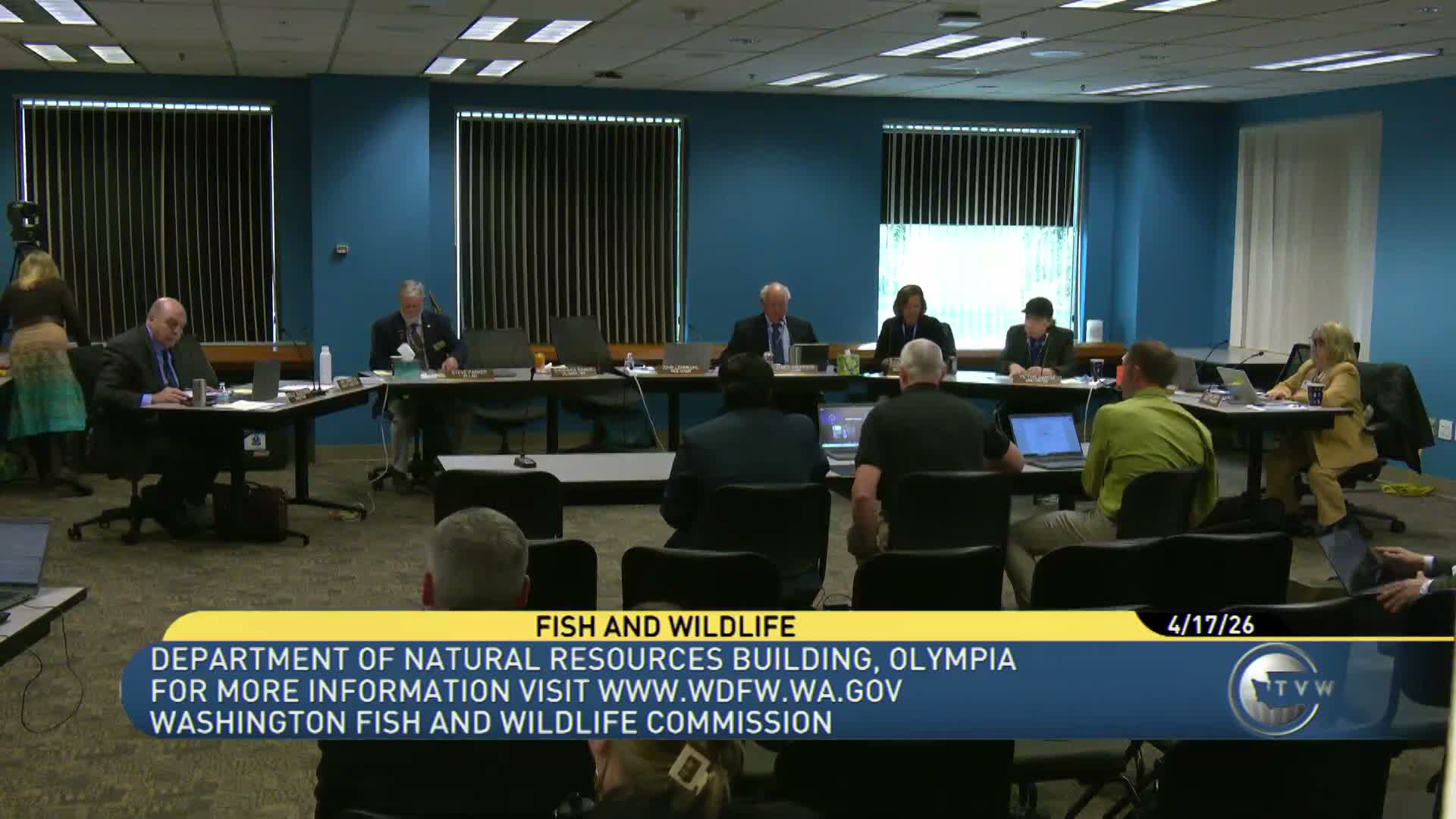
Department staff delivered the Washington Department of Fish and Wildlife’s 2025 annual wolf report to the commission on March 17, reporting rising counts in several recovery areas, a predominance of human-caused mortalities and continued investment in prevention and monitoring.
Dr. Shubhadeep Bhattacharjee introduced the briefing and turned it over to wolf biologists Gabriel Spence and Trent Rosine. Spence said the department captured 26 wolves from 13 packs during the year, monitored 50 collared wolves from 24 packs at some point in the year, and currently maintains collars on 20 wolves representing 14 packs. The department’s minimum winter count was 270 wolves, distributed across 49 packs with 23 successful breeding pairs; South Cascades had no breeding pairs detected in the winter survey.
Rosine said the agency documented 28 known mortalities in 2025, roughly 90% of which were human-caused. Legal tribal harvest accounted for the largest identifiable share of known mortalities with 12 harvests by the Confederated Tribes of the Colville Reservation; the agency removed four wolves in response to livestock depredations, and staff documented three unlawful takes and two natural mortalities (including one animal believed swept away in flooding). Rosine emphasized that the reported mortalities are a minimum and primarily reflect collared animals and known events.
On livestock conflict, staff recorded depredations attributable to a handful of packs; five packs were involved in one or more depredation events and four wolves were lethally removed in response to livestock depredations in 2025. To reduce conflicts, the department said it ran damage-prevention cooperative agreements with 27 producers (cost-share) and contracted eight range riders; the department spent over $100,000 on cooperative agreements, nearly $150,000 on contracted range riders, $92,000 on lethal-removal operations, and about $1.5 million on other wolf-management activities (capture, collars, staff time), for a total just under $2 million for the year.
Commissioners asked about underreported depredations and claims; staff said the report reflects minimum known counts and that some producers choose not to file direct or indirect claims for a variety of reasons. Commissioners also discussed regional growth rates: Spence and Rosine said the Eastern Recovery Area appears close to capacity with lower growth rates, whereas the North Cascades is still showing stronger growth and added new breeding pairs.
Ending: Staff closed by describing ongoing research (range-riding effectiveness, human-dimensions work) and pointing to public resources for reporting sightings. The commission thanked staff for the annual update and moved to an executive session.