Lifetime Citizen Portal Access — AI Briefings, Alerts & Unlimited Follows
Public commenters urge reinstatement of spring bear hunt and criticize commissioners’ conduct
Loading...
Summary
At April 18 testimony to the Washington Fish and Wildlife Commission, dozens of public commenters criticized commissioners under investigation, urged science-based wildlife decisions and asked the agency to restore a regulated spring bear hunt that staff had deemed sustainable.
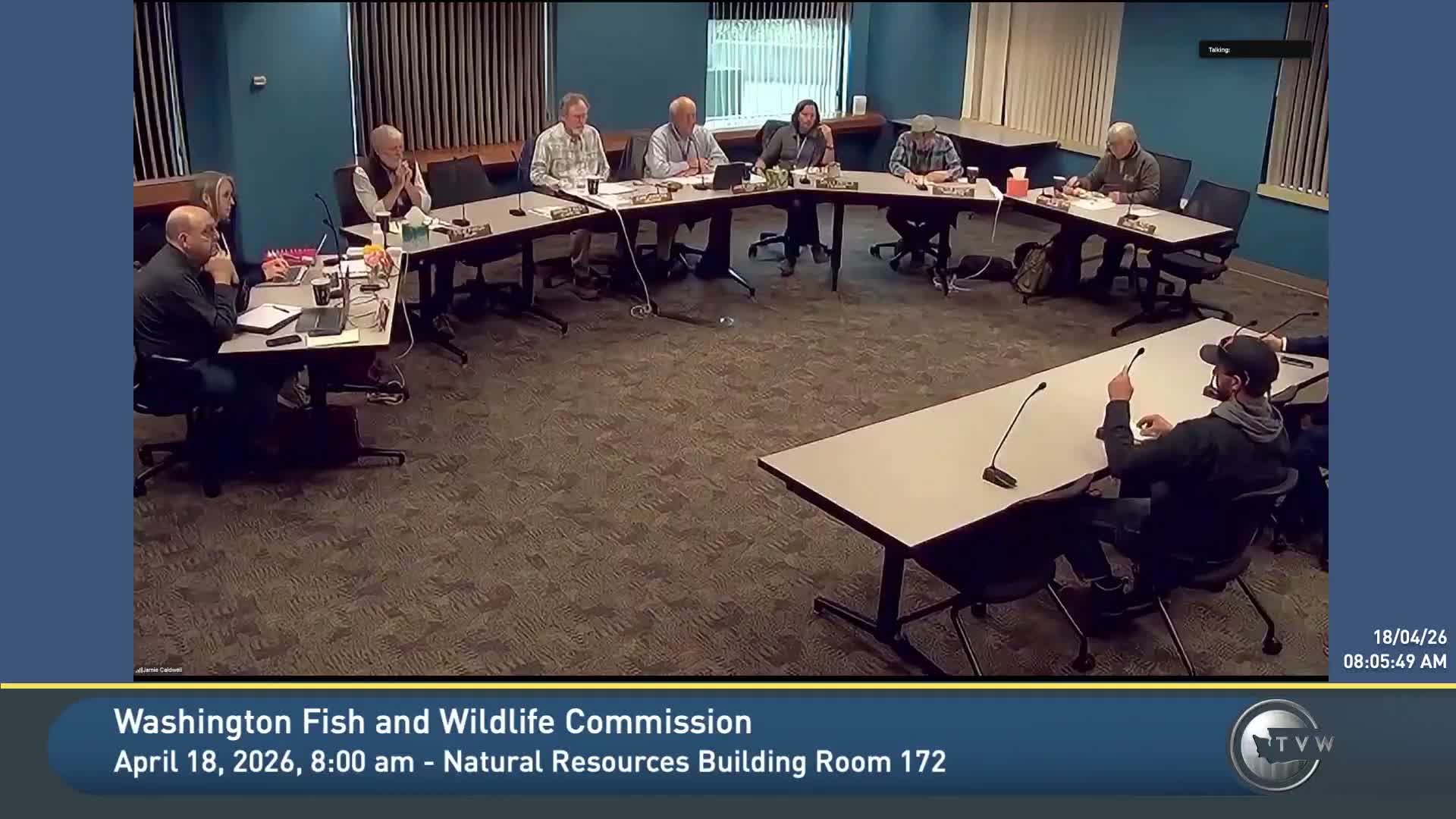
Dozens of public commenters on April 18 pressed the Washington Fish and Wildlife Commission to keep decisions grounded in science and to address alleged ethical and procedural failures by some commissioners.
Daniel Fisk Bennett, a Washington resident and social-media personality, told the commission he supported “reinstating a carefully regulated spring bear hunt,” saying “WDFW’s own professional staff concluded that a limited spring hunt was biologically sustainable.” Bennett argued the hunt’s cancellation was driven by emotional campaigning rather than population-level science and called for transparent, science-led decisionmaking.
Several other commenters framed the meeting in stark terms. Douglas Bose, acting president of the American Bear Foundation of Washington, referenced an internal memorandum he called the “null memo” and accused certain commissioners of records mishandling, potential conflicts of interest and conduct that he said had forced costly litigation. Bose told commissioners that the canceled spring bear draw previously produced “over $400,000 annually,” and accused the commission of costing the department “a $2,000,000 loss in revenue since its cancellation.”
Speakers on multiple sides of the debate urged the commission to rely on the best available science while addressing public concerns about process and transparency. Philip Olsen, who said he has been critical of the director in the past, told the commission he believed the director acted appropriately in ordering an investigation and that “anyone who sits up here and says the investigation shouldn't have happened is just as guilty as someone who witnessed abuse and does nothing.”
Environmental and conservation advocates also testified. Dr. Susan Kane Ronning, co-chair of the Washington Sierra Club Wildlife Committee, urged uniform enforcement of the commission’s code of conduct and warned that abusive public behavior can chill participation, particularly among women and other targeted groups. Several speakers asked the commission to confront intimidation and threats and to make public engagement safer and more accessible.
Advocates and hunters framed their concerns around habitat, data and long-term conservation funding. Jared Anderson asked the commission to prioritize habitat acquisition and rehabilitation, invoking the North American model of conservation, while David Lin of Washington Wildlife First reviewed wolf-report methodology and urged clearer presentation of counts and mortality figures.
The commission did not act on these public requests during the session. Commissioners and staff heard the testimony and recorded follow-up items for later discussion, including requests for briefings and potential communications updates.
The commission reconvened after a break to proceed with a meeting debrief and future meeting planning; several follow-ups were scheduled for staff to return with more detail.