Lifetime Citizen Portal Access — AI Briefings, Alerts & Unlimited Follows
Senator from Oregon says Trump order to build national voter database would threaten vote-by-mail and privacy
Loading...
Summary
A U.S. senator from Oregon told the Senate the president’s executive order to create a national voter database is unconstitutional and would give the federal government unprecedented access to private voter data, risking access for rural residents and seniors who rely on vote-by-mail.
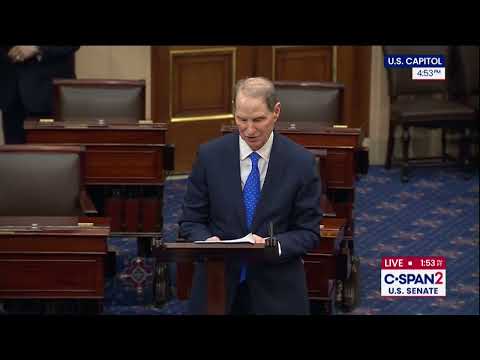
A U.S. senator from Oregon used remarks on the Senate floor to denounce President Donald Trump’s executive order aimed at creating a national voter database, calling it unconstitutional and a threat to states’ vote-by-mail systems.
The senator said the order would "coerce the states into handing over their voter lists" and accused the administration of seeking a database that could be used to "pick and choose who can vote." "This executive order is unconstitutional," the senator said, arguing the Constitution grants states authority over the time, place and manner of elections and the management of voter lists.
The senator defended vote-by-mail, noting, "I'm the country's first United States Senator elected completely by mail," and said Oregon and other mail-in states have used the system for decades. He told the Senate that states using mail voting "experience fewer instances of voter fraud than any other system."
Citing a review by Oregon's legislative fiscal office, the senator said the number of convictions related to vote-by-mail is very small; the transcript's numeric phrasing was garbled and the senator's precise figures are not clearly recorded in the public text. He said the low conviction count demonstrates an extremely small fraud rate and argued that the executive order would impose an unnecessary federal intrusion on a secure state-run process.
The senator said he wrote to the Social Security Commissioner, named in the transcript as "Grama Frank Visignano," requesting details about any plan that would force the agency to share private data with another body. "Forcing the Social Security office to share private voter data with another agency is a clear violation of the Privacy Act," he said, and warned that such a requirement would divert Social Security employees from serving beneficiaries.
He said the policy would disproportionately harm rural residents, seniors and people with disabilities who rely on mail ballots or face long travel times to polling places. The senator gave the example of "an elderly woman living in Eastern Oregon" who could be forced to drive hours to vote if mail ballots were limited.
The senator also alleged past mishandling of government data, saying the administration had previously given outside parties access to internal systems and that the proposed database would risk repeating those errors. He framed the push for a national database and related legislation such as the "Save Act" as politically motivated efforts to suppress turnout ahead of upcoming elections.
The senator concluded by saying he would "fight to make sure Trump's election rigging scheme dies" on the Senate floor and yielded the floor to the presiding officer.
The remarks are a floor statement without a recorded vote or formal motion attached; the senator cited constitutional and statutory (Privacy Act) concerns and requested administrative information from Social Security.