Get Full Government Meeting Transcripts, Videos, & Alerts Forever!
Get email alerts on the Business Regulation topic
No spam. Unsubscribe anytime.
Carbondale shop owners and retailers urge council to change proposed tobacco and cannabinoid licensing and taxes
Summary
Multiple local business owners and retailers told the Carbondale City Council they face duplicate inspections and high fees under proposed tobacco and cannabinoid licensing rules and asked the council to lower application fees and suspend a proposed 3% cannabinoid retail tax until state actions are settled.
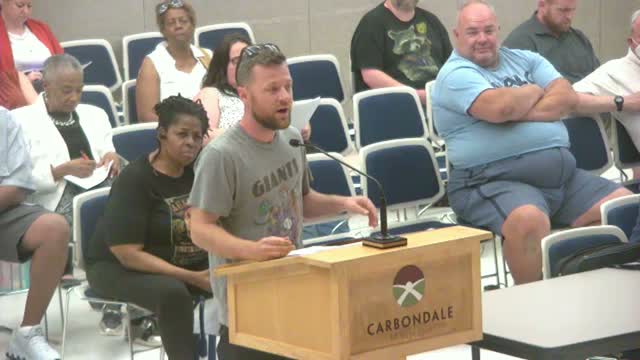
Carbondale — Small-business owners, tobacco and vape retailers, and a smoke-shop owner told the Carbondale City Council on April 14 that proposed tobacco and cannabinoid licensing rules would duplicate state inspections, impose high fees and harm small, local businesses.
Jacob Buckman, owner of Legal Smile, asked the council to reduce an annual business license fee and to suspend or delay a proposed 3% cannabinoid retail tax, proposing an annual $250 fee for local businesses instead of the higher amounts discussed previously. Buckman warned that many small shops sell a wide variety of items and that a percentage-based tax on cannabinoid products would be hard to monitor and could be avoided by larger specialty sellers.
"So if you guys would consider suspending that 3% cannabinoid tax, at least until November whenever that's gonna be, for the government to take care of it," Buckman said.
Retailers raised parallel concerns about a proposed tobacco licensing ordinance. Jane Patel and Tap Parikh told the council that stores already face inspections by the FDA, state tobacco regulators and the liquor commissioner and questioned whether the city should add another inspection regime, particularly if the police department would be the inspector. Brian Weaver asked for a clear accounting of a cited $5,500 annual fee and asked whether city inspectors would be qualified, whether penalties would double when both state and city rules apply and how window-obstruction rules would affect in-store safety practices.
Council members acknowledged the concerns and said staff will supply details. Council member Lowes reiterated that the 3% number for cannabinoids was chosen because similar taxes exist for other cannabis-related revenues and that sellers of similar products should contribute; other council members said they want to be mindful of the impact on small businesses.
What’s next: The licensing ordinance and tax details were discussed during public comment and are part of the consent and general-business materials; council members requested more detailed fee breakdowns and enforcement plans before final action.