Lifetime Citizen Portal Access — AI Briefings, Alerts & Unlimited Follows
Nantucket board orders more testing and negotiations on stadium turf after heated public debate
Loading...
Summary
After hours of technical briefings and public comment, the Nantucket Board of Health empowered health staff, the Land & Water Council and the school district to finish a joint PFAS testing and monitoring agreement for the Vito Capizzo Stadium turf project; town counsel said any moratorium would require a formal regulation and public hearing.
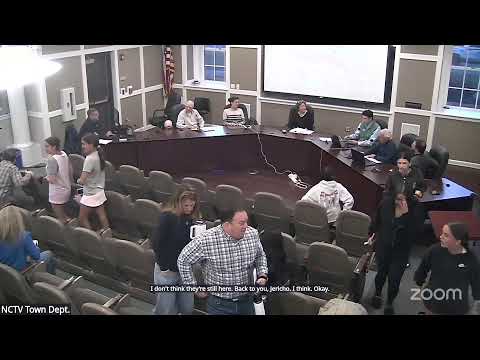
The Nantucket Board of Health on April 16 stopped short of imposing a moratorium on new artificial-turf installations but unanimously authorized continued negotiations among health department staff, the Nantucket Public Schools and the Nantucket Land & Water Council to finalize a pre-installation testing and monitoring agreement for the Vito Capizzo Stadium project on Surfside Road.
The board’s vice chair, Meredith Raffery, proposed an emergency pause to installations “just until the testing is done,” citing concerns about PFAS, micro- and nanoplastics, heavy metals and long-term groundwater risks. “I am asking, as a parent and as a community member and as a board of health member, that we take a minute and really look what is in this because we haven't looked at that,” Raffery said.
Town counsel John Georgio told the board a moratorium would need to be adopted as a health regulation under Chapter 111, Section 31, and would require a public hearing with at least 21 days’ notice. “If the Board of Health is interested in considering a moratorium, I would recommend the following procedures,” Georgio said, adding that any regulation must be “rationally related to a stated public health purpose” and be measurable and enforceable.
The board heard a technical update from Andrew Shapiro, the health department’s environmental contamination administrator, and from Jericho Miele on a draft testing protocol. Shapiro said proposed pre-installation testing would sample turf carpet, infill and shock pad with eight samples per material, each analyzed by three methods: EPA Method 1633, a TOP assay and a synthetic precipitation leaching procedure (SPLP). He said samples would be compared to MassDEP soil standards and EPA drinking-water MCLs. “For the SPLP . . . the MassDEP standard is 20 for the PFAS6 and the EPA MCL is 4 parts per trillion for PFOA and PFOS,” Shapiro said.
Members of the Nantucket Land & Water Council urged broader testing and ongoing monitoring, including testing of the track surface and adhesives, and asked that monitoring requirements be written into bid specifications so protections travel with the contract. “All components of the artificial turf field must be subject to testing,” said Willa Arsenal of the Land & Water Council.
School officials and consultants said they had cooperated in drafting a pre-installation testing protocol and pledged to meet established safety limits. Chip Clooney, director of facilities for Nantucket Public Schools, read a statement saying the district and its consulting team “remain firmly committed to ensuring that all materials used for the Vito Capizzo Stadium synthetic playing field meet applicable safety standards and fall below all established EPA and MassDEP safety limits for PFAS.” Representatives from manufacturers and independent consultants said some proposed moratorium criteria in earlier drafts—such as requiring “0” detection of PFAS or microplastics—are scientifically unattainable and would amount to a de facto ban.
Public comment filled more than 90 minutes and split sharply. Parents, coaches and students urged the board to allow the community to decide the project at town meeting and warned delays raise costs and curtail athletic opportunities. Environmental advocates and some residents demanded more exhaustive testing before any installation, pointing to data gaps on long-term leaching and microplastics. Several technical witnesses testified about appropriate analytical methods and limits.
After the presentations and public comment, the board voted unanimously to authorize the three negotiating parties—health department staff, the Land & Water Council and school representatives—to continue drafting a joint testing and monitoring agreement and to present a draft to the board at a future meeting. Health staff said materials would be tested before installation and that unacceptable material would be rejected.
Town counsel and staff cautioned that final testing thresholds, sampling frequencies and enforceable monitoring plans remain to be agreed, and that a legally defensible moratorium would require clear, measurable standards and the 21-day notice period. The board’s action was procedural: it directed continued, collaborative work on a testing protocol rather than enacting new rules that night.
The board will review the draft agreement when it returns; if members want a moratorium they were told they must follow the regulation-and-public-hearing route Georgio described. The meeting adjourned after the board passed the negotiation motion unanimously.