Mi Familia Vota outlines outreach strategies to engage Latino and marginalized voters
Loading...
Summary
At a League of Women Voters of Colorado training, Mi Familia Vota presenters described culturally informed outreach tactics—bilingual materials, community-based events and youth-led programs—to address mistrust and increase Latino voter engagement, and offered resources for local partners.
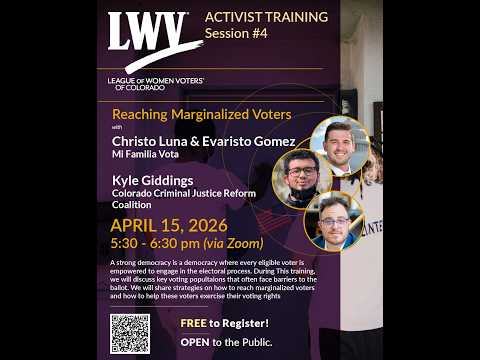
At a League of Women Voters of Colorado training session, Evaristo Gomez, civic engagement director/manager for Colorado at Mi Familia Vota (also called Mi Familia Nacion), and Christo Luna, deputy state director for Mi Familia Vota, described practical, culturally informed tactics for reaching Latino and other marginalized voters.
Gomez told attendees the group’s work centers on “engage, educate, mobilize, and then reengage,” and said Mi Familia Vota has been focusing on Congressional District 8 and accountability work this year, including a sign-on letter that gathered nearly 1,100 sign-ons. He added that environmental-justice issues—such as data-center regulation and air-quality bills affecting the Denver metro area—have been priority legislative concerns for the organization.
Why it matters: Presenters framed outreach as both a trust-building exercise and a practical campaign of information. Gomez and Luna described fear and mistrust as major barriers to participation and argued that outreach must meet people where they are—both culturally and geographically—to overcome those barriers.
The presenters recommended multiple tactics. Gomez emphasized bilingual, culturally resonant materials and recruiting volunteers who reflect the community. “Being seen is, like, ultimately, what we’re trying to see a little bit more,” he said, urging use of art, local musical traditions and imagery that communities recognize. He also suggested adapting venues and schedules—registering voters at late parent-teacher conferences, sporting events, state fairs, concerts or even dispensaries—to reach working families and young adults.
Luna described hands-on youth engagement programs. He said coalition partners ran a youth-led lobby day that brought “over a 100 youth at the Capitol,” and outlined plans for a youth governors forum in June at Aurora Community College to let young people pose interactive questions to top candidates. Gomez said they also run a local cohort in Jefferson County of about seven to 10 students focused on civic education and health issues.
During a question-and-answer period, a participant asked for concrete examples of culturally tailored materials. Gomez pointed to Soul to Soul Sisters’ Black Women’s Voter Guide and to Green Latinos as models, and offered to share presentation slides, voter guides and other resources with League members.
Local partnership emphasized: Both presenters repeatedly said successful outreach depends on partnering with trusted local leaders and organizations rather than “parachuting in.” In response to a Greeley League leader who described pushback and mistrust in that community, Luna recommended that local League leaders introduce outside groups so organizers can establish credibility through existing relationships.
Next steps and follow-up: Gomez offered to send resource packets and presentation slides to the League. Beth Hendricks, executive director of the League of Women Voters of Colorado, said the League would coordinate follow-up connections. A scheduled second speaker, Kyle Giddings of the Colorado Criminal Justice Reform Coalition, canceled due to illness; Hendricks said the League will try to arrange a separate session on assisting voters who are incarcerated.
The session closed with contact-sharing and an agreement among attendees to continue collaboration in CD-8 and in Greeley.