DOC cites population decline, expanded services in Plummer Center closure as advocates raise search and access concerns
Loading...
Summary
At a Senate Corrections and Public Safety Committee hearing, DOC Commissioner Tara Taylor defended the March transfer of level 4 work-release residents from the Plummer Center to the Smyrna Community Corrections Treatment Center as a data-driven move that cuts costs and concentrates services, while residents and advocates criticized strip-search procedures, lost jobs and transportation barriers.
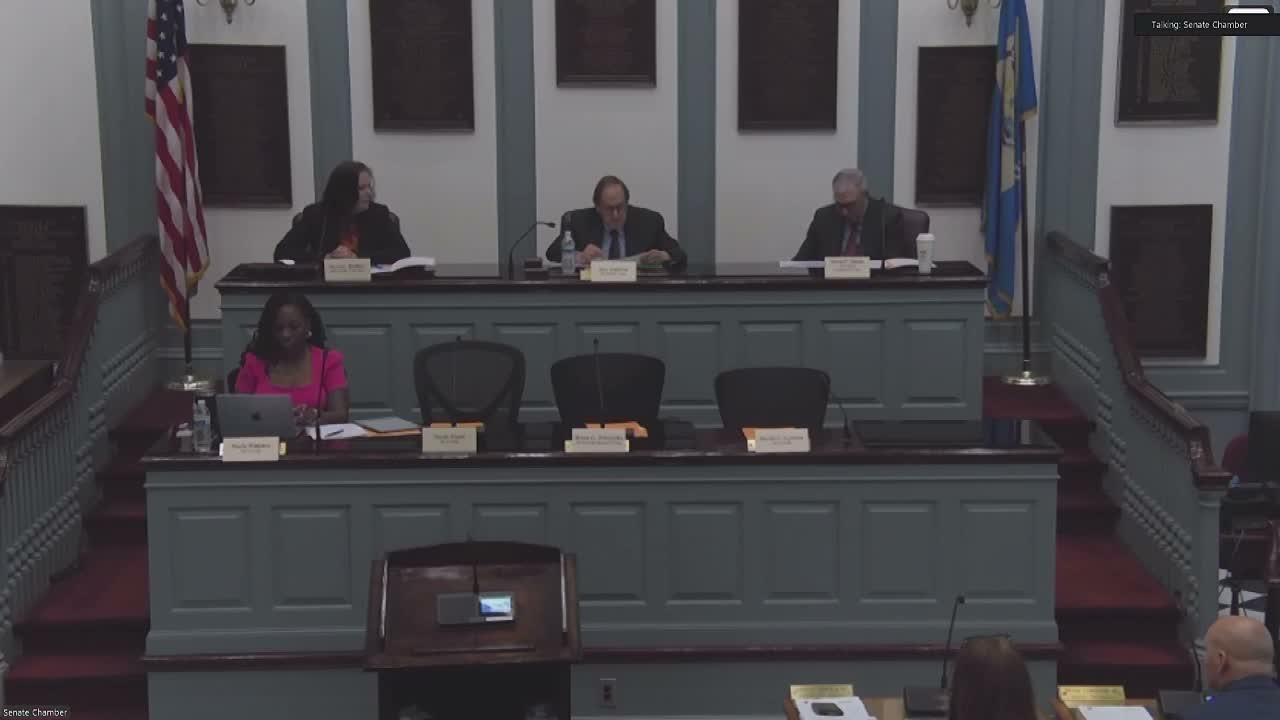
Senator Ray Siegfried convened the Senate Corrections and Public Safety Committee for a hybrid hearing focused on the "integrity of our level 4 work release program," where Tara Taylor, Commissioner of the Delaware Department of Correction, defended the department’s March transition of residents from the Plummer Center to the Community Corrections Treatment Center (CCTC) in Smyrna while community members and advocates raised operational and civil-rights concerns.
Taylor, introduced by the chair, said the closure follows a long-term decline in the level 4 population "since 2007" and that the overall level 4 population has fallen about 70% "from approximately 1,300 individuals to just 325 today." She described the move as planned and executed over several months, and said the Plummer Center formally closed when its work-release population declined to three residents. "This transition was completed as anticipated about a month ago," she said, and the relocation, she added, allows the department to "invest limited maintenance resources into our most modern facilities" and to redirect operating and overtime costs into programming.
Why it matters
Taylor said the shift creates opportunities to expand evidence-based services: DOC has added staffing in the risk-and-needs assessment unit, expanded cognitive behavioral therapy tracks, increased work-program coordinators and implemented DOC-operated daily shuttles between Smyrna and surrounding communities. She also provided a cost comparison cited at the hearing: roughly $340 per day to house a resident at the Plummer Center compared with about $2.85 per day for supervised home confinement, figures Taylor used to explain the fiscal drivers behind consolidation.
Research and oversight perspective
Dan O’Connell of the University of Delaware, invited as an expert witness, summarized reentry research and the evidence base for program design. He emphasized the risk-need-responsivity framework and the importance of dosage and fidelity: for high-risk individuals he said "200 plus hours" of focused programming is often required to change behavior, and that program-based residential or community treatment tied to cognitive behavioral therapy tends to show greater reductions in arrests than non-programmatic halfway-housing placements.
John Reynolds, Deputy Policy and Advocacy Director at the ACLU of Delaware, urged careful attention to the transition period, citing public-health risks in the weeks after release. "The mortality rate and risk is highest in those first two weeks," Reynolds said, adding that community trust and clear communications are essential as Plummer-related changes proceed.
Public comments and contesting views
Several public commenters challenged aspects of operations at CCTC after the transfer. Rochelle Wilson, who identified herself as a journalist and advocate, testified that men at CCTC have lost job opportunities, face understaffing and inflexible policies, and are subjected to repeated strip searches that she described as including "invasive bend over and cough procedures." Wilson said those practices raise "legitimate questions about proportionality, necessity, and constitutional protections against unreasonable searches." She urged DOC to restore leadership and practices from the Wilmington Plummer Center and to open direct lines of community communication.
DOC response and policy
Commissioner Taylor and DOC staff responded that security procedures are uniform across community corrections facilities. A DOC staff member cited the department policy on searches (DOC policy 8.32) and said search-on-return procedures are intended to detect weapons, drugs and contraband "for everyone's safety," a rationale the department said is tied to national correctional standards. Taylor acknowledged community concerns, said DOC had held town halls and quarterly meetings with advocacy partners, and noted that grievance tracking is in place — she said the department pulled grievances and found two official grievances this year related to work release at CCTC and committed to research specific community complaints.
Numbers and operational details cited at the hearing
- Level 4 population decline since 2007: about 70% (from ~1,300 to ~325). - Current utilization of level 4 capacity: about 40% across operating facilities (DOC estimate). - Plummer Center closure triggered when population fell to three residents (DOC statement). - Estimated capital needs DOC cited for maintaining Plummer: approximately $4,000,000 for accreditation requirements and roughly $8,000,000 in short-term capital improvements (figures provided by DOC). - Average stay at level 4 facilities: roughly 65–69 days (DOC estimate).
Next steps
Chair Senator Ray Siegfried said the committee will review the testimony and produce recommendations; the hearing concluded after a motion and second to adjourn. DOC told the committee it is tracking employment and placement data for residents and will report findings; the commissioner also offered ongoing availability to meet with advocates and families.
What remains unresolved
Community witnesses and the ACLU urged clearer, ongoing public reporting about employment placement rates, transportation use, and any instances where security practices may have impinged on residents’ rights. DOC said it will continue to engage partners and provide data updates but did not announce any immediate policy changes at the hearing.
The committee adjourned after concluding the record of testimony and public comment.