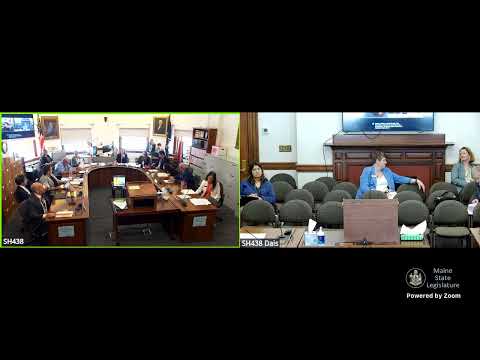
Maine Judiciary Committee Hears Hours of Testimony on LD 2239, a Ballot Measure to Designate School Sports and Facilities by Sex
Loading...
Summary
The joint Judiciary Committee held a lengthy public hearing on LD 2239, with dozens of proponents describing safety and fairness concerns for girls and opponents warning the measure would harm transgender students, create litigation risks and impose costs on schools. A committee motion to move immediately to work session failed and the public hearing was closed without a committee vote on the measure.
The Joint Standing Committee on Judiciary heard more than three hours of public testimony on the initiated measure LD 2239 — described in petition language as "an act to designate school sports participation and facilities by sex" — with proponents urging the change to protect girls’ privacy and fairness in athletics and opponents saying the measure would harm transgender students, create administrative burdens and invite litigation.
Sen. Anne Carney, Senate chair of the Judiciary Committee, opened the hearing and set a schedule for proponents to speak first, followed by opponents and then legislators if time allowed. Proponents included students, parents and petition organizers who described personal incidents and argued biological sex matters for competitive sports and private spaces.
"Girls should feel safe at school, and their privacy should be respected," said Catherine Collins of Winterport, one of the first public speakers. Several young athletes told the committee they had lost opportunities, medals or scholarships when biological males competed in girls’ events; former state Rep. Heidi Sampson, a co‑lead petitioner and executive director of the Maine Education Initiative, said the measure aligns with Title IX and the Maine Human Rights Act and mentioned an effective date provided in petition materials of 01/01/2027.
Leland Streiff, principal officer of the Protect Girls Sports in Maine ballot committee, summarized the petition’s main points and said the initiative simply reasserts sex‑based categories and protections. Proponents repeatedly requested clearer ballot wording from the Secretary of State and urged the committee to preserve what they called fairness and safety in schools.
Opponents included civil‑rights lawyers, medical and mental‑health organizations, education officials and LGBTQ advocacy groups. Michael Demicourt, a parent from Falmouth, said the measure would send a message that some children "do not belong," and Mary Bonauto, an attorney with GLAD, described LD 2239 as a "vague and blunt instrument" that could override protections in the Maine Human Rights Act and saddle districts with costs related to verification, monitoring and litigation.
Bonauto flagged a provision that would create a private right of action allowing students to sue schools for alleged violations, noting the fiscal note cites "significant costs" that could follow. Kit Thompson Crossman, executive director of the Maine Human Rights Commission, warned that narrowing the state law’s scope could increase threats against transgender students and that the commission’s existing guidance provides individualized paths to balance safety and fairness.
Medical and mental‑health witnesses — including testimony read for a pediatrician and statements from the American Academy of Pediatrics and the Maine Psychological Association — said exclusionary policies can worsen mental‑health outcomes for transgender youth and that inclusive sports and affirming environments are protective.
Committee members pressed witnesses on specific points: proponents emphasized biological differences and privacy; opponents raised practical questions about requiring original birth certificates for verification, costs for districts, and whether the initiative would expose schools to a wave of litigation. Several committee members noted uncertainty about how the measure would operate across ages, levels of competition and in schools that lack separate teams.
Towards the end of the meeting Rep. Jennifer Poirier moved to suspend the rules and go immediately into a work session on the petition, but a roll‑call vote failed, with 5 in favor and 8 opposed. The chair then closed the public hearing; the committee did not adopt a work session or take a formal vote on the substance of LD 2239 during the meeting.
What happens next: the public hearing record will be part of the legislative process for the citizen‑initiated measure; under the existing procedure, the legislature can choose to enact, amend, propose a competing measure or send the question to voters. The transcript record shows both strongly held personal testimony and repeated legal and administrative questions that committee members said will require further consideration.