Get Full Government Meeting Transcripts, Videos, & Alerts Forever!
Get email alerts on the Opioid Settlement topic
No spam. Unsubscribe anytime.
Iowa counties describe uses for opioid settlement funds as ISAC outlines distribution and litigation updates
Summary
County health and public-safety officials described local uses of opioid settlement dollars — from disposal bins and school prevention kits to jail-based counseling and rehab funding — while ISAC staff updated attendees on new distributions, PBM litigation-hold guidance, and an upcoming meeting about attorney backstop funds.
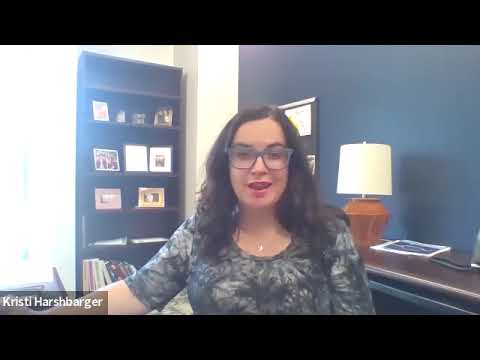
Christie Harshbarger, general counsel at the Iowa State Association of Counties, opened the ISAC opioid-settlement coordination call and provided three administrative updates: new distribution charts now posted on ISAC's opioid-resources page, guidance about litigation holds in the ongoing pharmacy benefit manager (PBM) lawsuit, and an upcoming meeting with the attorney general’s office to clarify formulas for returning or distributing backstop attorney-fee funds under the MOU.
Why it matters: Counties receiving varying settlement amounts are still determining how best to use limited yearly distributions. Harshbarger urged counties to consult county attorneys and Brown Greer, the settlement administrator, for account setup and legal questions and said ISAC will share contacts and examples in the chat.
County examples and local programs led the call’s discussion. Griffin Hickey, public health director for Buchanan County, said his office used funds to buy four pharmaceutical-grade disposal bins (bolted down with 24/7 video), curriculum kits for the Mendez Foundation’s "Too Good for Drugs" program for second graders through a Pathways partnership, and Deterra and DisposeRx products distributed at community events.
"We just purchased 4, the pharmaceutical grade disposal bins that we are placing in 4 locations within our county," Hickey said, adding the sheriff’s department checks the sites.
Deb from the Webster County Health Department described a suite of harm-reduction and enforcement-support purchases: DisposeRx and Deterra packs handed out with local resource cards, fentanyl-testing strips purchased for the Fort Dodge Police Department, 30 naloxone boxes (Narcan purchased separately), and a phone-extraction device she identified as the Apex R7 to support law-enforcement investigations. Deb said she would post vendor information in the meeting chat.
"We have purchased fentanyl strips for the Fort Dodge Police Department," Deb said, and confirmed the device name as "Apex R7." She also described partnering with the sheriff’s office and Fort Dodge police to site naloxone boxes in public locations.
Several counties described using funds for treatment and reentry support. A Blackhawk County participant reported contracting with Pathways to embed a counselor inside the county jail and working with a local nonprofit on reentry retraining. Todd Wilson of Wayne County said his county supports Circle of Freedom, a women’s rehabilitation center in Seymour, and is forming a local committee to coordinate services. Michelle from Woodbury County said the board approved funding for Agape, a long-term rehabilitation and transitional housing project.
Counties also discussed nonclinical support such as transportation to medication-assisted treatment: Buchanan County has reserved funds to assist with transportation to MAT providers in neighboring counties.
On legal and administrative points, Harshbarger explained a litigation hold as a step IT and county attorneys use to preserve potentially relevant documents and said Erin Dickinson, outside counsel, is recording which counties issued holds and the dates. She emphasized that not issuing a litigation hold for the PBM suit "won't impact any settlement dollars that you've already received or settlements that have already been settled, but haven't been distributed yet." Participants were also reminded that if they grant funds to outside entities they should use written agreements and oversight similar to ARPA best practices; Harshbarger said ISAC has a checklist and examples counties can reuse.
Several attendees raised questions about whether opioid funds can pay for residential treatment stays or deputy time to teach school prevention programs. Deb cited the MOU language — noting residential treatment and case management as permitted in the exhibit — and Harshbarger repeatedly advised counties to confirm with their county attorneys and, when appropriate, the assistant attorney general handling the settlement (Bill Pearson).
Smaller rural counties said limited annual allocations make it difficult to fund large programs, so they are discussing pooling funds and focusing on interventions that maximize reach. Shirley Vermais from Winneshiek County described an intercounty task force (behavioral health, public health, sheriff, police, emergency management) working to prioritize interventions.
The call closed with Harshbarger saying ISAC would schedule a follow-up in mid-November to focus on December 1 reporting and to provide additional guidance. She encouraged counties to reach out with questions and to use posted resources from Brown Greer for account and distribution details.
The next procedural step: ISAC will post Brown Greer contacts and vendor information from attendees in the meeting chat and hold a follow-up call in mid-November to walk through county reports and common questions.