Get Full Government Meeting Transcripts, Videos, & Alerts Forever!
Get email alerts on the Affordability topic
No spam. Unsubscribe anytime.
Greenwich-area lawmakers outline steps to ease housing and service costs for low-income families
Summary
At the Greenwich United Way legislative breakfast, state and local officials emphasized targeted bills, local programs and partnerships to help low-income households facing rising housing, child-care and health-care costs.
Demetra Gania Soterakis, an advisory-board member for Greenwich United Way, opened the forum and asked elected officials what specific actions and funding priorities they are advancing to help low-income families coping with rising housing, child care, health care, food and transportation costs.
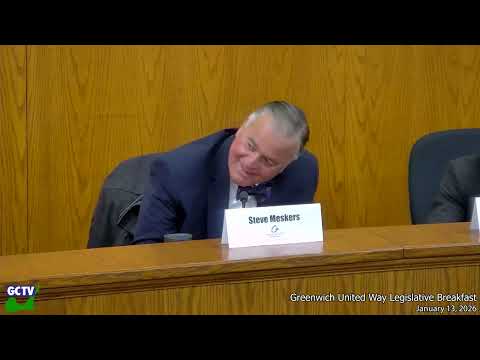
Representative Steve Meskers said there are no quick fixes to national price pressures but highlighted workforce development as a path to higher household income, noting recent changes that loosened apprenticeship ratios to create more on-the-job training opportunities. “We busted through that ratio and increased it,” Meskers said, describing the effort to expand apprenticeships into trades that pay well.
State Rep. Tina Corpus said nearly 22% of households in her district fall at or below the ALICE threshold and detailed 2025 legislative work she supported: bills to lower prescription-drug costs by increasing transparency of middlemen and exploring Canadian importation; measures to expand maternal-health services and Medicaid reimbursements for doulas; and a first-step special-education reform that directed additional funding to districts. She also noted a proposed $500 tax credit for home daycare providers that did not advance out of committee.
First Selectman Fred Camillo described local services and partnerships that assist residents directly, citing the Department of Human Services, the commission on aging, Greenwich Communities’ renovation and development projects and nonprofit partners including Jewish Family Services and Neighbor to Neighbor. Camillo pointed to planned additional units at McKinney Terrace and Macquarie Knoll as local efforts to increase affordable supply.
Officials emphasized measuring impact by looking at outcomes such as increased access to childcare slots, reductions in out-of-district special-education placements and progress on planned housing units. Soterakis closed the session by inviting attendees to continue follow-up conversations with officials after the event.
The forum did not record any formal votes or binding commitments; officials described proposals and next-step planning for the 2026 session.