Get Full Government Meeting Transcripts, Videos, & Alerts Forever!
Get email alerts on the Judicial Ethics topic
No spam. Unsubscribe anytime.
Panel Urges Greater Transparency and Enforcement Options for Judicial Ethics; Supreme Court Disclosures Draw Scrutiny
Summary
Accountability experts and journalists at the symposium reviewed judicial conduct processes, high-profile misconduct cases, and limits of current Supreme Court disclosure practices; speakers called for clearer enforcement mechanisms and more consistent public explanations of recusals and investigations.
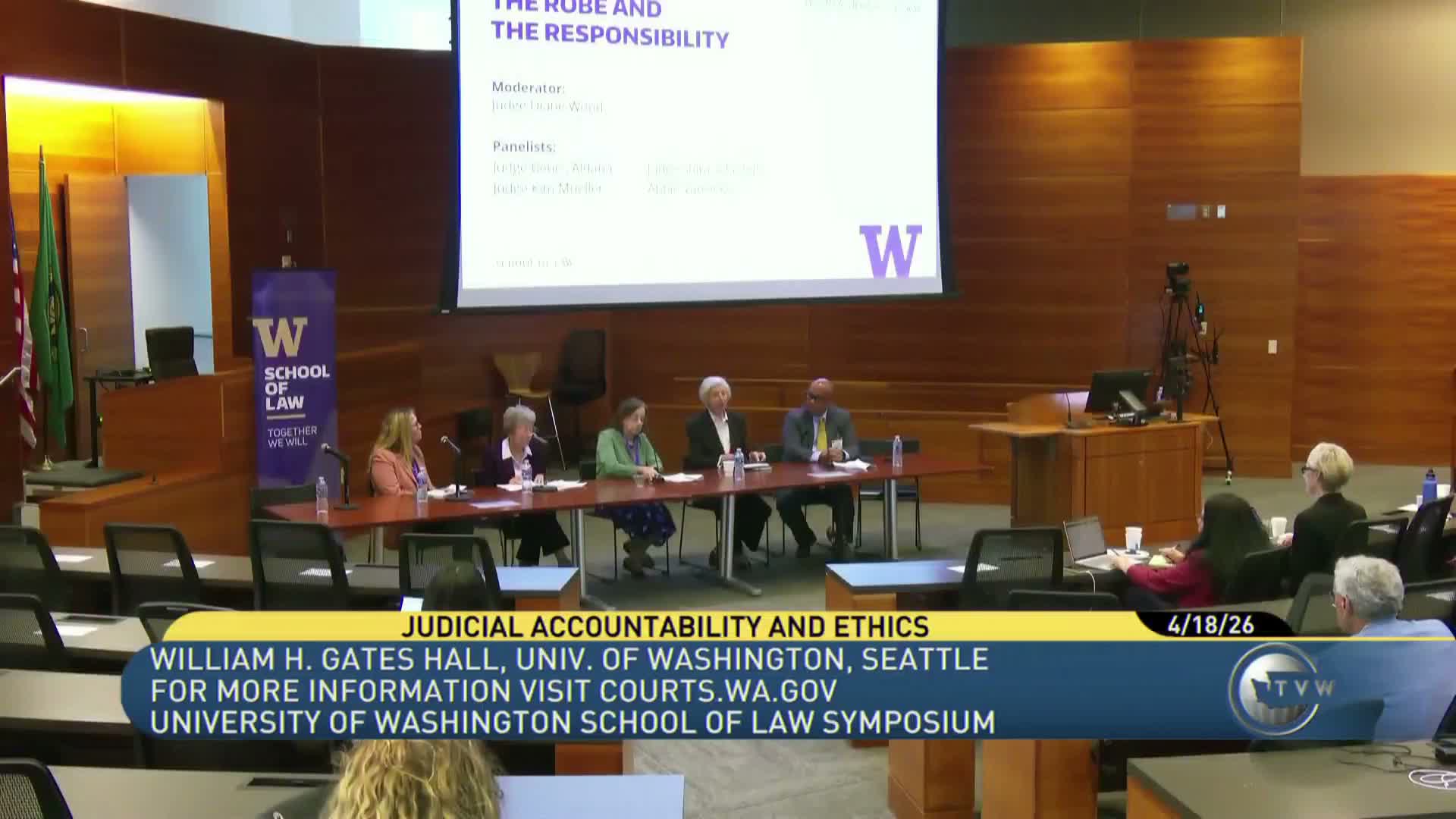
A symposium panel on judicial accountability examined how courts handle judicial misconduct and the limits of the current, largely confidential, disciplinary system and disclosure practices for high-level judges.
Speakers described the Judicial Conduct and Disability Act (28 U.S.C. §351) as the statutory framework for complaints against Article III judges, explaining that most complaints begin with a circuit chief judge and can lead to confidential investigations, public memoranda or referral for impeachment. One panelist recounted a recent Ninth Circuit investigation that produced a formal report and a referral for impeachment even after the implicated judge had resigned.
Panelists emphasized two persistent challenges. First, confidential processes can delay awareness of misconduct, sometimes until outside actors (reporters or U.S. attorneys) bring matters to light. Guests described examples where law clerks were reluctant to come forward because of power imbalances and career risk; panelists urged clearer, confidential reporting pathways and more active outreach by chief judges to make options known.
Second, Supreme Court disclosure rules and enforcement gaps generated extensive discussion. A reporter working the court beat described wide variation in how justices complete disclosure forms (gifts, travel and hospitality), and noted reporting continues to rely on document requests and investigative work because forms are delayed and sometimes sparse. Panelists said that consistent, timely disclosures and a mechanism to explain recusals publicly would help restore confidence.
Speakers debated remedies. Proposals included a nonpartisan retired-judges review panel to advise on ethics questions; more transparent memoranda explaining outcomes of formal investigations (while protecting baseless or malicious complaints); better training and remedial programs for judges with competence or wellness issues; and use of nomination hearings to clarify nominees’ approach to ethics. Panelists acknowledged constitutional and institutional limits on external oversight of an independent branch, but urged voluntary internal reforms and more consistent public explanations.
Panel organizers said they will continue work with state supreme courts, bar associations and the Judicial Conference to explore feasible transparency measures short of statutory overhaul.