Get Full Government Meeting Transcripts, Videos, & Alerts Forever!
Get email alerts on the Public Safety topic
No spam. Unsubscribe anytime.
Wyoming council declines one-year lease for automated license-plate readers after privacy pushback
Summary
After a lengthy presentation and questions about data access, retention, and vendor policy, the council voted against a one‑year lease with Flock Safety for four ALPR cameras; staff plans community engagement and may return to council if support develops.
The City of Wyoming on June 17 rejected a one-year lease proposal with Flock Safety to install four automated license-plate readers (ALPRs) at main city entrances, following a debate about privacy, vendor data policies and the timing of community outreach.
Police Chief Howard presented the proposed pilot as a public‑safety tool to support investigations and alerts for stolen vehicles, felony warrants and missing-person notifications. He emphasized the system would capture license-plate images and vehicle descriptors, would not use facial recognition and would not be a tool for routine traffic enforcement. Howard said the city would own encrypted data stored in the vendor’s cloud and proposed a 30‑day retention period with mandatory third‑party audits; the first‑year lease cost for four cameras was presented as $12,000, with approximately $2,000 estimated for audits.
Chief Howard also outlined a community-engagement plan — an online survey and an open house scheduled for June 25 — and said the contract would include a 30‑day opt‑out clause, with the council scheduled to revisit the contract on July 1 after community feedback. He told council staff had sought to capitalize on a vendor promotion that reduced certain installation fees if the agreement was signed by June 30.
Several council members, however, raised privacy and transparency concerns. One council member asked whether the vendor’s privacy policy could allow access to city data under broad circumstances; another said approving a contract before broad public input would send the wrong message. Council members requested independent reviews of Flock products, clearer policy language on data release, and better community outreach before a procurement decision.
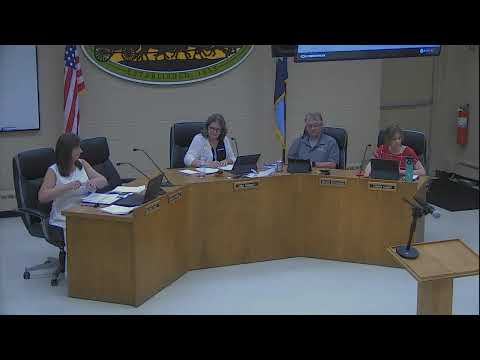
A roll-call vote on resolution 250659 (the one‑year lease with Flock Safety) was recorded in the meeting: Member Olmstead voted Aye; Member Lugar voted Nay; Member Yeager voted Nay; Mayor Iverson recorded Yes. The clerk concluded the contract would not go forward after the recorded votes.
Why it matters: the vote halts immediate implementation of ALPR cameras that staff argued could help solve and deter crimes; opponents cited concerns about vendor policies, data disclosure exceptions and the optics of approving a contract before completing community engagement and finalizing city policy.
Chief Howard said staff will carry out the planned community engagement (online survey and June 25 open house) and could return to council with results and a draft access-and-retention policy; counsel noted the council could call a special meeting if needed.
Ending: the motion to approve the pilot failed; council members asked staff to complete public outreach and refine policy language before a future vote.