Get Full Government Meeting Transcripts, Videos, & Alerts Forever!
Get email alerts on the Water Quality topic
No spam. Unsubscribe anytime.
Waldwick closes PFAS project, hires engineering firm to probe localized water discoloration
Summary
Borough officials said the town’s PFAS treatment work is closed out and that roughly $2 million of a $6 million project is forgivable; council authorized hiring HUM Engineering for a hydraulic model to investigate isolated discoloration and taste complaints and will collect resident reports to target testing.
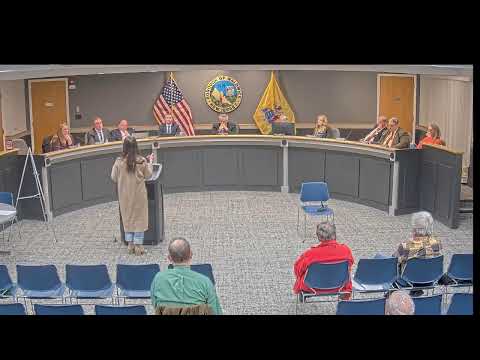
Mayor and borough officials told residents March 17 that Waldwick’s long-running PFAS treatment project is officially closed out after the New Jersey Department of Environmental Protection issued a termination of the administrative consent order.
Administrator Steve (functional_label: Administrator) said the project — about $6 million in total — included financing through the state’s I-Bank H2O program and that roughly $2,000,000 of the loan is forgivable. He added the borough expects additional settlement awards from PFAS litigation to be calculated later this month or next and may apply those funds to operating costs created by the filtration systems now in place.
Council and staff focused most of the discussion on continuing water-quality complaints: discoloration, metallic taste and odor limited to certain neighborhoods. The administrator said the borough has hired HUM Engineering and placed on the agenda a resolution to award a contract for a hydraulic model to analyze flow patterns and isolate problem areas; that model will inform targeted sampling or pipe replacement recommendations rather than guarantee an immediate fix.
A resident asked how the borough would collect complaint data from non‑internet users. Officials said they will publish an updated online reporting form, ask the Board of Health to assist with outreach, and encourage residents to contact the borough office by phone so engineers receive comprehensive complaint data ahead of the modeling work.
The borough said recent water-main replacement work (Hemlock/Evergreen completed; Sheridan Avenue nearly complete) should improve circulation in some neighborhoods, but staff will rely on the hydraulic model and resident reports to prioritize further work. The administration said testing and any resulting capital work would be subject to future budgeting and, where required, public bidding.
The decision to pursue the hydraulic model follows the borough’s closing of the PFAS administrative file and ongoing review of possible settlement distributions to offset operating and capital needs.
Next steps: the council approved moving the HUM Engineering contract to the agenda and instructed staff to collect resident complaints and share modeling outputs once available.