Lifetime Citizen Portal Access — AI Briefings, Alerts & Unlimited Follows
OSPI briefs board on inclusion gains and tools for supporting students with disabilities
Loading...
Summary
OSPI presenters told the board that Washington has increased inclusion of students with IEPs in general education settings and showcased case studies and tools for comparable‑content course substitutions that adjust depth/breadth/complexity rather than lowering standards.
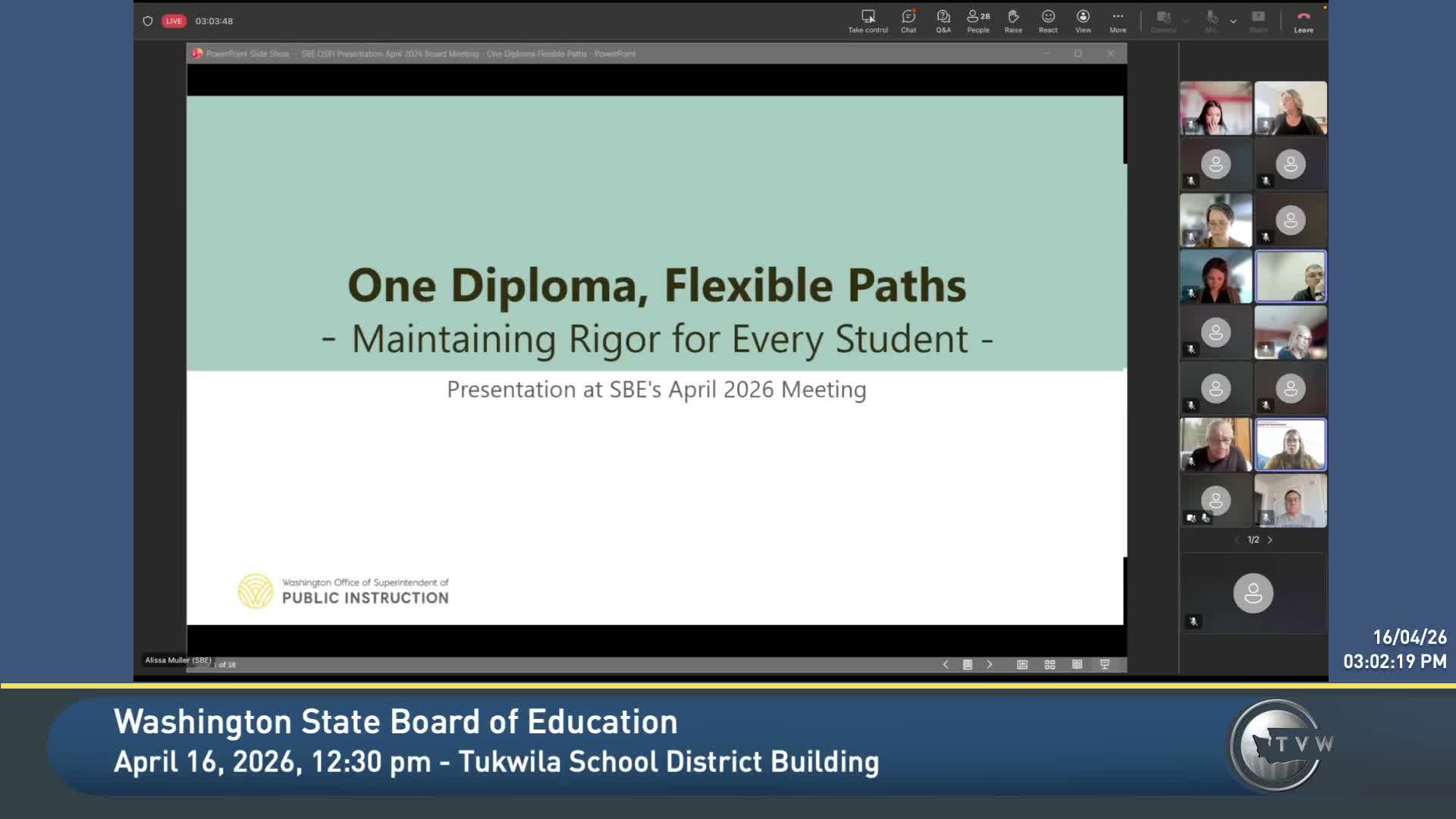
OSPI officials delivered a detailed presentation on inclusive instruction and the state’s approach to ensuring students with disabilities meet grade‑level standards through supports rather than waivers.
Alexandra (OSPI) framed the change: “An IEP at its core is a plan for access and progress,” she said, explaining the role of IEP teams in supporting grade‑level achievement and the shift away from waiving graduation requirements toward using comparable‑content course substitutions aligned with students’ high‑school‑and‑beyond plans.
OSPI summarized recent policy changes (House Bill 1599 removed assessment exit requirements; a 2020 WAC update replaced waivers with comparable‑content substitutions) and presented case studies that illustrate how teachers can adjust the depth, breadth, and complexity of a grade‑level standard while maintaining the standard itself. Maria Muto described operational tools that map grade‑level standards to WA AIM access points and teacher‑adjusted complexity levels to guide instruction and assessment.
Why it matters: staff said inclusion has grown substantially in recent years (citing an increase in students with significant cognitive disabilities included 80–100% of the day), and evidence shows students included with appropriate supports have comparable or better outcomes. OSPI emphasized systemic supports — coordinated advising, co‑teaching, universal design for learning (UDL), and pre‑planned comparable‑content options — as prerequisites for district IEP teams to lawfully document substitutions.
Board discussion: members voiced implementation concerns (staffing, rural access, funding) and equity questions (students with significant disabilities and Black students lag on inclusion metrics). OSPI staff recommended collaborative advising systems and model curricula to ensure IEP teams have viable comparable‑content options to document in IEP course‑of‑study plans.
Next steps: OSPI made case studies and supplemental resources available to district staff; board members asked staff to incorporate these implementation supports in any Future Ready rule or legislative recommendations.
Resources: OSPI referenced case studies for elementary and secondary ELA and math, and said additional subjects (science, civics) would be posted soon.