Public commenters accuse WDFW leadership of targeting commissioners; commissioner confirms federal lawsuit
Loading...
Summary
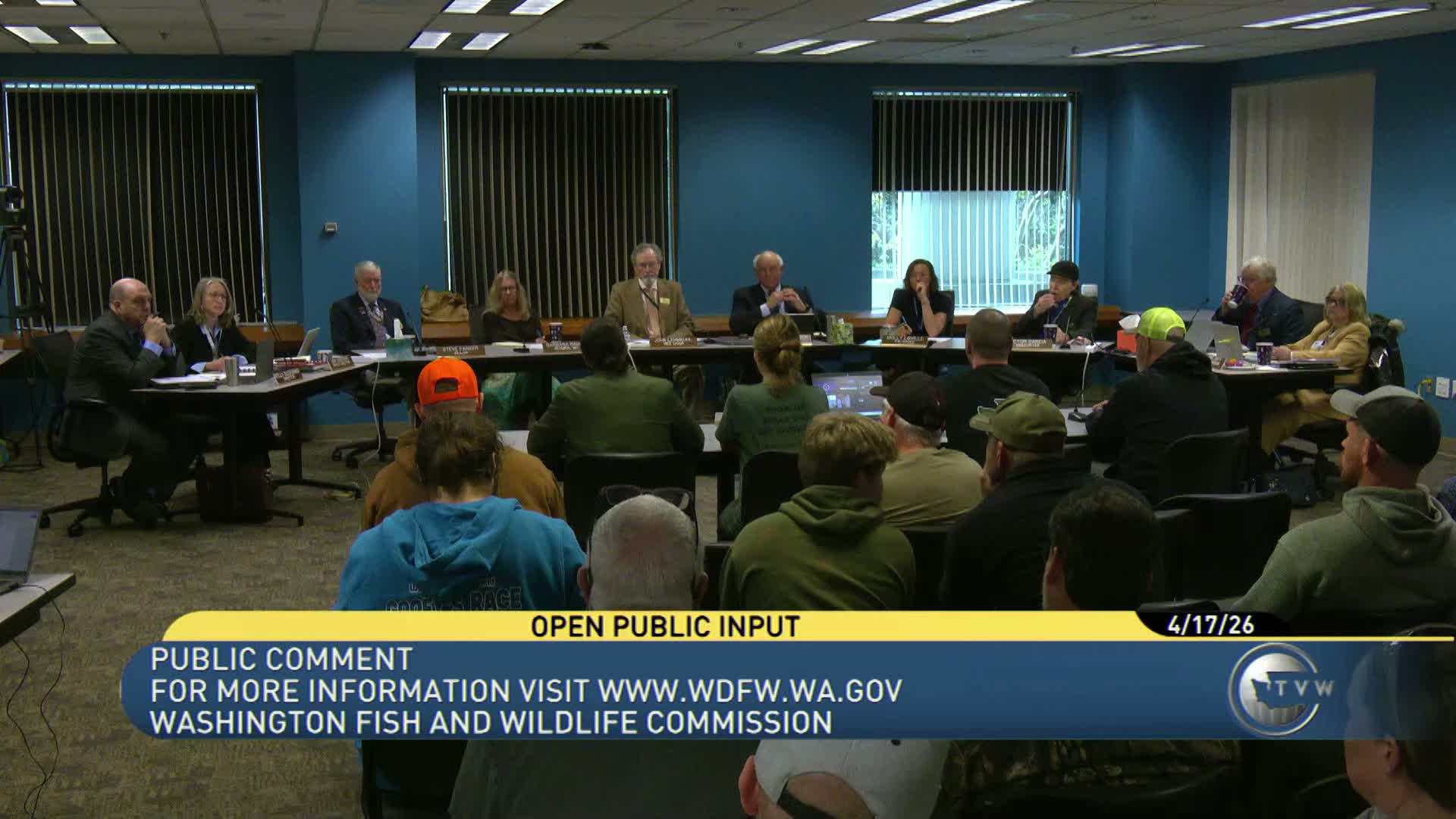
At the April 17 Washington Fish and Wildlife Commission meeting in Olympia, multiple public commenters alleged the department investigated commissioners for meeting with wildlife advocates; Commissioner Lorna Smith disclosed she filed a federal lawsuit naming the director and deputy director over alleged retaliation and First Amendment violations.
Fran Santiago Avila, science and advocacy director for Washington Wildlife First, told the commission it had filed a federal lawsuit alleging that Director Kelly Suswin and Deputy Director Amy Windrope used department resources to target commissioners who met with wildlife advocates. "This is not a dispute over wildlife policy," he said, and urged the governor to investigate and replace the director.
Claire Lopes Davis, executive director of Washington Wildlife First, described language in internal materials she called the "null memo" and said the director’s use of the term "collusion" risked defamation and chilled public participation: "If you challenge him, he might come after you next," she said.
Several speakers renewed calls for transparency and accountability. Corey Maxwell cited public-records releases and memos he said raised "unresolved questions" about overlapping relationships, legal representation and responsiveness to records requests. Greg King and other speakers pushed the agency to use hatcheries and other tools to support salmon recovery, while multiple commenters from hunting communities urged stronger predator management and restoration of seasons such as spring bear.
Commissioner Lorna Smith read a prepared statement confirming that on April 2 she filed a federal lawsuit naming Director Suswin and Deputy Director Windrope, saying she brought the suit because she believes her constitutional rights to free speech and free association were violated. Smith said she would continue to serve on the commission while the legal process proceeds and asked colleagues to respect it.
Chair Jim Anderson closed the public comment period after more than an hour of testimony that ranged from legal allegations against agency leadership to technical and values-based arguments about predator management, habitat protection and agency funding. The meeting recessed for a short break before staff reports.
What happens next: Smith said the legal matter is underway; the commission did not take any formal disciplinary action during the meeting. The record of public comment and the documents referenced (including the "null memo") are part of the public record, and the governor’s office and the courts may be potential next steps referenced by speakers and the commissioner.