Get Full Government Meeting Transcripts, Videos, & Alerts Forever!
Get email alerts on the Graduation Requirements topic
No spam. Unsubscribe anytime.
State Board debates graduation overhaul as staff proposes new ‘personalized pathway’ credit
Summary
Board members and staff spent the bulk of the meeting weighing a staff “straw” model that narrows core high‑school requirements and increases ‘personalized pathway’ (PPR) credits, including a proposed credit for a high‑school-and‑beyond/financial‑life‑skills course. Staff will take back unresolved questions — chiefly whether the new course should be a core requirement or a PPR and whether to combine it with CTE — to the Future Ready task force.
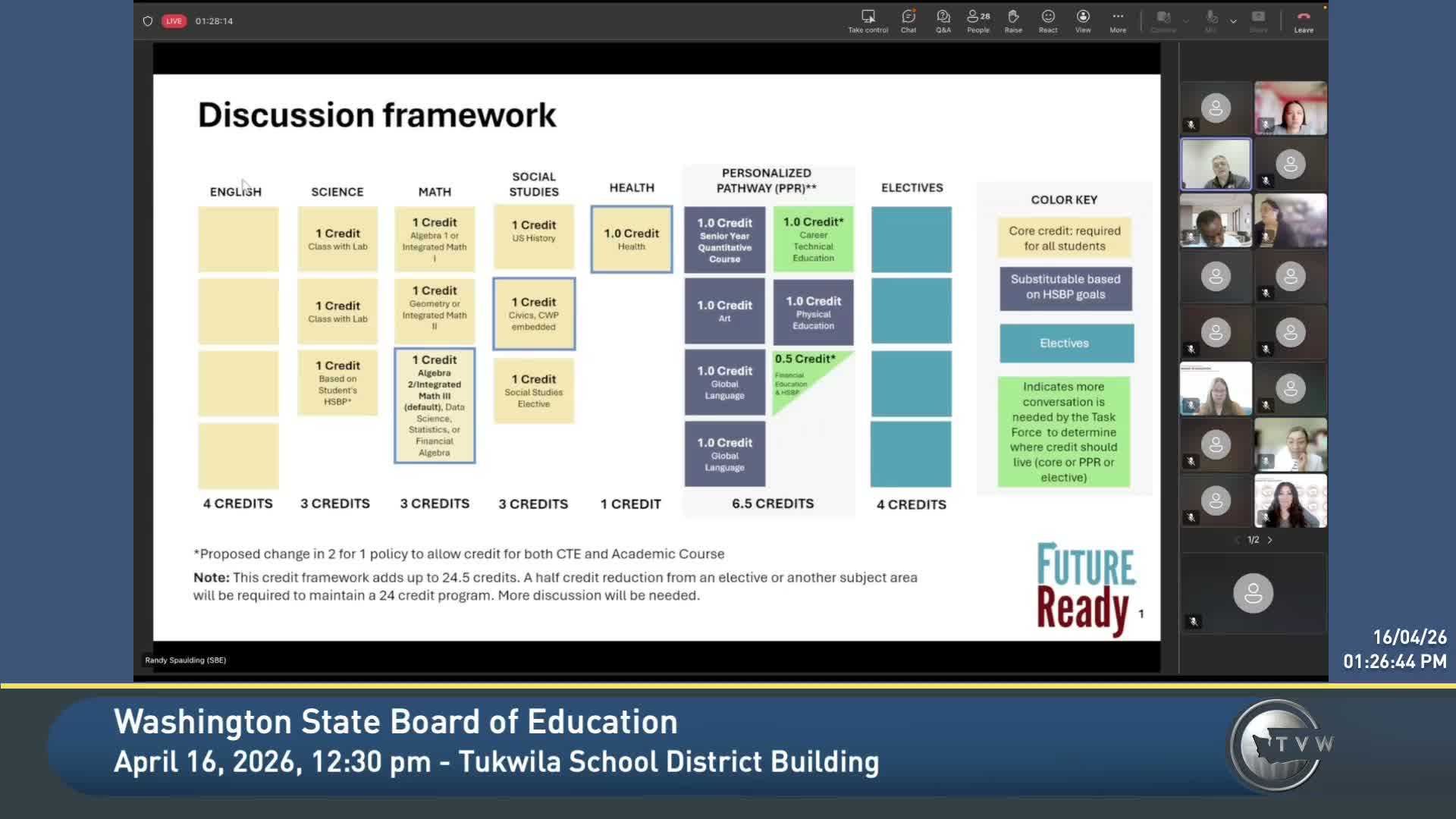
Board members spent an extended session debating a staff proposal that would shift some courses (for example, career and technical education and certain physical‑education credits) out of the state’s required core and expand the personalized pathway requirement that lets students tailor part of their program to post‑secondary goals.
The straw model presented by staff would keep a tighter core for subjects the agency sees as essential to preserving postsecondary options and increase the number of credits students would earn through a personalized pathway. Randy, the board’s executive‑level staff lead, said the model also includes “a high school and beyond—financial ed life skills” credit the agency would like districts to offer: “I think we got one decision we can take back to the task force, which is that, yes, we do want to have a credit for this combined experience,” he told the board.
Why it matters: staff framed the change as a way to ensure students leave high school prepared and to preserve options for college and career readiness. Supporters emphasized the synergy between financial literacy, life‑skills training and student planning, arguing the courses are often already embedded in career and technical education (CTE) pathways. Skeptics cautioned against mandating a new core course without resolving staffing and access gaps in small or rural districts.
Key debates and concerns raised: board members asked whether the proposed credit should be a core graduation requirement (failure to complete would withhold a diploma) or remain a PPR (a default course offered unless a student intentionally substitutes another pathway). Several members stressed that many districts lack the staff and funding to provide universal access to CTE‑certificated teachers or robust advisory structures, and they urged flexibility in how the credit could be delivered (for example, mastery‑based credits or fractional credits spread across four years).
Student and staff input: a student participating in the task force said an introductory, exploratory course in freshman year followed by a later reflective capstone would help students discover interests and return to refine their post‑secondary plans: “As a freshman, it’s an all‑encompassing discovery course. Then as an upperclassman, it’s a post‑high‑school focus course,” the student said.
Next steps: staff and the Future Ready task force will return with more detailed options, including whether the new credit should be core or PPR, whether to combine it formally with CTE, and model curricula to guide implementation. The board indicated it needs a decision on core vs. PPR by the June board meeting to align with the task‑force timeline and rulemaking deadlines.
Implementation trade‑offs: members repeatedly emphasized equity and implementation risks — rural and small districts may struggle to recruit CTE teachers and provide consistent counseling/advising. Several board members called for model curricula, implementation timelines, and district supports (including professional development and shared ESD resources) to accompany any change.
What’s next: staff will draft options and take them back to the task force; the board signaled support for creating a credit but left unresolved whether it would be a graduation‑core requirement or a personalized pathway option.