Lifetime Citizen Portal Access — AI Briefings, Alerts & Unlimited Follows
Votes at a glance: Senate approves a broad set of third‑reading bills and committee reports
Loading...
Summary
The Maryland Senate disposed of a long list of third‑reading calendar items, adopting multiple favorable committee reports and declaring passage on a range of House and Senate bills covering vehicle safety pilots, personnel, education, environmental studies, and local measures. Several bills passed by roll call tallies recorded in the transcript.
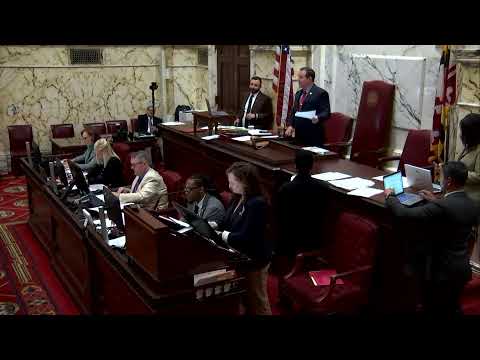
The Maryland Senate moved through large portions of its third‑reading calendar, reading titles, adopting favorable committee reports, and declaring final passage on numerous House and Senate bills.
What passed in this session (selected items)
- House Bill 107 — motor vehicle pilot program for intelligent speed assistance: reported passed (31 affirmative votes recorded).
- House Bill 141 — state personnel collective bargaining provisions: reported passed (29 affirmative votes recorded).
- House Bill 308 — corporations/associations and private mailboxes: reported passed (41 affirmative votes recorded).
- House Bill 315 — human relations provisions on income‑based housing subsidies: amendment adopted (technical fix) and bill declared passed (33 affirmative votes).
- Multiple local and administrative bills (examples): HB328 (Prince George's and Montgomery County financial disclosure requirements), HB423 (drug detection products in Prince George's County high schools), HB1076 (over‑the‑counter contraception access in higher education), and numerous third‑reading items on county bonds, procedural reporting, and criminal procedure matters all received committee adoption or passage during the calendar.
Procedure and floor practice
The clerk read each bill title, the presiding Chair called for discussion and then initiated roll calls where required; several committee reports were adopted without objection. A few items were set as special order for later in the calendar, and one motion to lay a bill over for a day was entertained and voted on per late‑session rules.
How votes were recorded
The transcript records several explicit tallies (examples above), and many other items were recorded as passed by the Chair after the roll call. On several bills senators sought to change recorded votes or asked to be marked excused; the Chair and clerk accommodated those requests in the floor record.
Next steps
Bills declared passed on third reading will proceed according to legislative process requirements (transmission to the other chamber or reconciliation where cross‑filed bills differ). Several items were special ordered to be taken up later in the calendar; the Senate recessed at the close of this transcript segment.