Get Full Government Meeting Transcripts, Videos, & Alerts Forever!
Get email alerts on the Floor Votes topic
No spam. Unsubscribe anytime.
Senate approves consent-calendar measures and several bills on final passage
Summary
On March 25, 2026, the Colorado Senate approved multiple consent-calendar House bills and moved several Senate bills on final passage, recording floor tallies for House Bills 10-70, 10-34 and 12-05 and for Senate Bills including 128 and 66 (laid over).
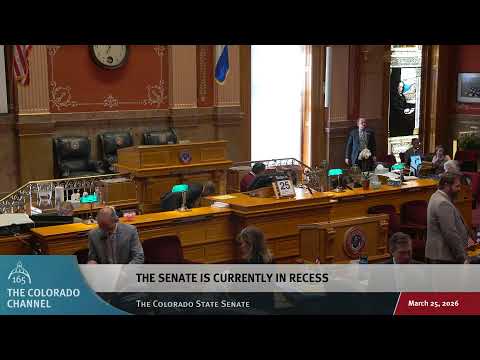
The Colorado Senate recessed into its morning session on March 25, 2026, and approved a slate of consent-calendar measures and several bills on final passage.
Clerk Schauffler read titles for the consent-calendar items, including House Bill 10-70 (third-party network lease agreements for dental services), House Bill 10-34 (modifications to environmental standards for certain irrigation equipment), and House Bill 12-05 (statutory changes reflecting the federal expansion of good neighbor authority agreements). Majority Leader moved the passage of all bills on the final-passage consent calendar; the motion carried.
Senator Zamora Wilson and another senator were recorded as no votes on House Bill 10-70; the clerk announced “with a vote of 33 ayes, 2 noes, 0 absent, 0 excused,” and stated that House Bill 10-70 passed. House Bill 10-34 was announced passed and, later, House Bill 12-05 was announced passed with the clerk reading a 35-0 tally for that item.
On separate motions, Senate Bill 128 (sales and use tax exemption for certain fees charged by destination management companies) was moved on third reading and final passage by Senator Snyder; the clerk recorded the roll and declared SB 128 passed. Senate Bill 66 (regulation of compounded weight-loss medications not approved by the FDA) was moved to the bottom of the calendar and laid over to March 26 by majority-leader motion.
The session continued with additional floor business and scheduling; the Senate recessed subject to return at noon.
The clerk's readings and the roll-call tallies provided the formal record of each action taken on the floor; where a senator asked to be recorded on the roll, the clerk noted those requests on the official tally.