Lifetime Citizen Portal Access — AI Briefings, Alerts & Unlimited Follows
Court hears arguments in Inner West Construction appeal over willful trenching violation
Loading...
Summary
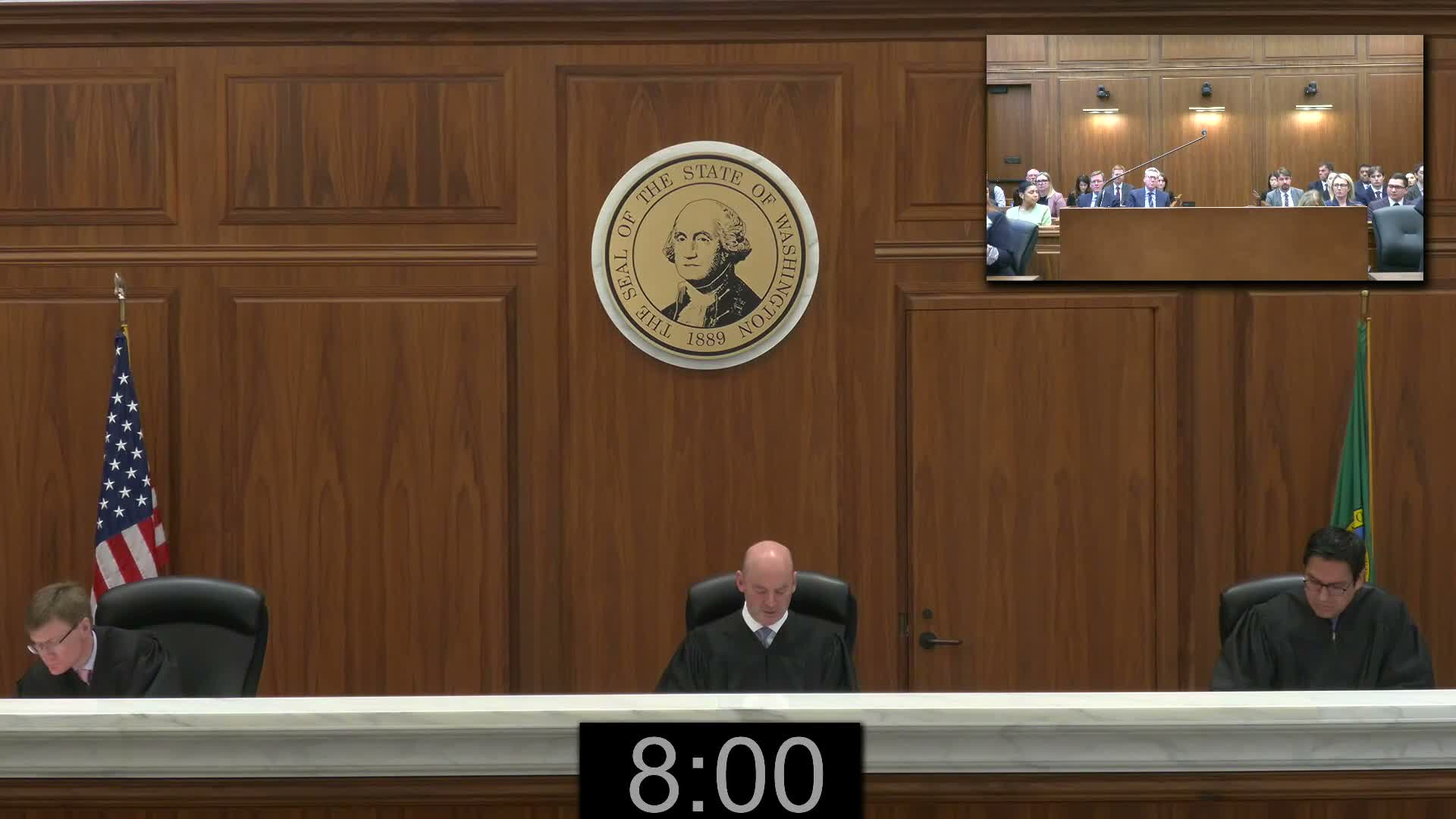
At oral argument before Other Court, Inner West Construction asked the court to reverse a Board finding that the company committed a willful trenching violation under WISHA, citing the company’s safety program; the Department of Labor and Industries urged affirmance, pointing to testimony that the foreperson deliberately declined to shore the trench.
Attorney Margarita Kootzen, representing Inner West Construction, asked the court to reverse a Board decision that affirmed a willful serious violation under WISHA, arguing the record lacks substantial evidence of the heightened mental state required for willfulness and that ICI’s active safety program undercuts a finding of plain indifference.
Kootzen told the panel that ICI maintained a site‑specific safety plan, had a safety director and coordinator on staff, kept safety equipment on site and conducted unplanned site safety audits. "They care about safety. They invest heavily in safety," she said, arguing those facts distinguish routine human error from the "plain indifference" or willfulness needed for the heightened classification.
William Schneeema, counsel for the Washington State Department of Labor and Industries, urged the court to affirm. "This is a routine substantial evidence case about protecting workers from the dangers of working in trenches," Schneeema said, pointing to testimony that a competent person on site chose not to shore a trench and directed a worker into a trench over four feet, which then collapsed. Schneeema quoted the foreperson's alleged instruction to the injured worker: "You and me will hit this real quick," using the remark to argue the foreperson deliberately disregarded the hazard and that the conduct can be imputed to the employer.
The panel questioned both sides about whether a Board finding that the trench was "four feet or more" suffices to trigger the regulation at issue and whether that factual finding, if accepted, supports a willful classification. Kootzen emphasized that the Board's stated finding was "four feet or more" rather than a larger measurement and stressed limits on reweighing testimony on appeal. Schneeema pointed to conflicting witness testimony (including the injured worker's account that the trench was well above his head) and argued the Board reasonably weighed that evidence.
Counsel also disputed the employer's status in the agency Serious Violator Enforcement Program (SVEP). Kootzen said her understanding was that ICI had been removed from the program; Schneeema responded that the employer remains on SVEP and that the outcome of the appeal would determine that status.
Both sides cited precedent and doctrinal distinctions: Kootzen relied on Board decisions the record references to separate the unpreventable employee misconduct (UEM) defense from the separate, heightened mental‑state element for willfulness; Schneeema urged deference under a substantial‑evidence standard and pointed to record details the Board relied on in finding willfulness.
After brief rebuttal exchanges were reserved, the panel submitted the case for decision.