Get Full Government Meeting Transcripts, Videos, & Alerts Forever!
Get email alerts on the Point Of Sale Ordinance topic
No spam. Unsubscribe anytime.
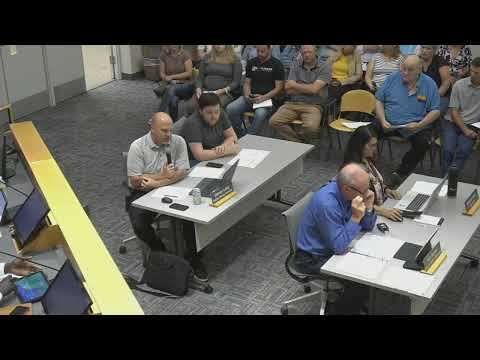
Austin council delays point-of-sale sewer inspection ordinance to March 1, 2026 after public concern
Summary
After extended public comment and council debate over costs, scope and rollout, Austin's council directed staff to bring back a rewritten point-of-sale sewer inspection ordinance with an implementation date of March 1, 2026; the motion passed 5–1.
The Austin City Council voted to delay implementation of a recently adopted point-of-sale ordinance requiring inspections of private sewer services and sump-pump systems, directing staff to return with a revised ordinance effective March 1, 2026.
Mayor Stephen M. King opened the discussion and asked staff to summarize the outreach. City engineer Stephen Lang told the council staff had invited about 100 people to a stakeholder meeting two weeks earlier, with roughly 35 attendees, and presented three paths: implement the ordinance as adopted, amend it to include a future effective date to allow more outreach, or modify the ordinance based on public feedback.
The matter drew sustained council debate and more than a dozen public comments. Council member Jeff said the ordinance had “raised more questions than it answered” and urged rescinding it to allow a committee review. Residents described difficulty locating old sewer connections, unexpected repair costs, and gaps in city records. Paula Walling, who identified herself as a homeowner on 4th Street, said she “spent over $2,000 trying to find the sewer” because older properties lack clear records.
Stakeholders pushed alternatives to point-of-sale enforcement. Chris (a resident who had submitted email questions) suggested pursuing repairs when streets are already being reconstructed to avoid piecemeal patching. Eric Romo, executive with the Southeast Minnesota Realtors Association, told the council point-of-sale ordinances “do not achieve what you’re trying to achieve” and asked for a pause on rollout to improve execution and homeowner protections.
Council members and staff discussed repair options and costs. Lang described three types of repair: full replacement, spot repair and internal liner installation; the city has used precision lining for spot repairs in prior projects at approximately $3,500–$5,000 depending on length. Residents noted larger repairs can be far costlier; one commenter cited a $29,000 repair from last year.
Members debated funding mechanisms. Lang said most state and federal grants apply to public infrastructure and private service lines are typically owned and maintained by property owners; options include a utility fee, assessments tied to property, or escrow at closing to allow sales to proceed while repairs occur. Lang also said the ordinance includes provisions for escrow dollars to allow repairs to be completed within 180 days where seasonal or contractor availability prevents immediate fixes.
Council member Mike moved to delay the ordinance’s implementation to March 1, 2026; the motion was seconded and passed on a roll-call vote of 5–1, with Council member at-large Austin recorded as the lone No vote. Council members and the city attorney clarified the action gives staff direction to prepare a new ordinance; it will require formal publication and ordinance readings before becoming effective.
The council asked staff to return with clearer pass/fail inspection criteria, frequently asked questions for homeowners and realtors, and language clarifying whether deed transfers (for example, in divorces or estate settlements) trigger the requirement. Officials emphasized they want to protect the city’s forthcoming $110,000,000 wastewater treatment investment while minimizing burdens on low-income homeowners.
The council’s direction is procedural: it postponed active enforcement and asked staff to draft clarified ordinance language and outreach materials for future council consideration.