Get Full Government Meeting Transcripts, Videos, & Alerts Forever!
Get email alerts on the Project Labor Agreement topic
No spam. Unsubscribe anytime.
Carlsbad board authorizes negotiations on Project Labor Agreement after hours of testimony
Summary
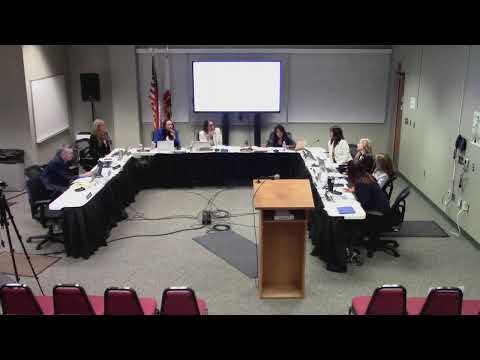
After a lengthy public comment period with dozens of trade‑union supporters and opponents, the Carlsbad Unified School District board voted 3–2 to authorize the superintendent to negotiate a Project Labor Agreement (PLA), directing staff to return with a draft for board consideration.
The Carlsbad Unified School District board voted 3–2 to authorize the superintendent to begin negotiating a Project Labor Agreement, following more than an hour of presentations and roughly 25 public comments for and against the measure. Trustee Rawlings made the motion and Trustee COC seconded; the motion carried with Rawlings, COC and Trustee Ward voting yes and Trustee Burbank and Trustee Emery voting no.
Supporters from labor unions and trades councils told the board a PLA would guarantee local‑hire goals, apprenticeship pathways, higher wages and benefits for workers on covered projects, and more predictable schedules and training standards for contractors. “A PLA keeps these dollars in our region and provides job opportunities for the local workforce,” said multiple trade representatives during the public comment period.
Opponents, including taxpayer‑advocate groups and some local contractors, warned the board that PLAs can reduce bid competition and raise project costs, citing studies that show mixed outcomes. Critics also said PLAs can divert bond funds away from classrooms and create political opposition to future bond measures.
District legal counsel explained that California’s public contract code allows PLAs for construction when specific statutory provisions are included (nondiscrimination, accelerated dispute resolution, no‑strike/no‑lockout clause, drug‑testing protocol and open bidding). Counsel also emphasized that many PLA terms (local hire goals, fringe payments, referral systems) are negotiable and that outcomes vary by context.
The board’s authorization only directs staff to negotiate a PLA; any final agreement must return to the board for approval. Trustees and staff repeatedly noted that details — including which projects would be covered, geographic boundaries for local‑hire preferences, training and apprenticeship provisions, and any class size or budget implications — will be negotiated and publicly disclosed before any adoption vote.
Board President Ward said the district seeks high‑quality contractors and predictable project delivery. Trustee Rawlings argued a PLA could help ensure experienced, trained workers on safety‑critical projects such as fire‑alarm and HVAC work. Trustee Emery and Trustee Burbank said they feared the potential cost and political ramifications and preferred more analysis and stakeholder testimony before committing to negotiations.
The authorization will allow the district to open formal talks with unions and other stakeholders; staff said it expects to present negotiation outcomes and a draft PLA back to the board for a vote if talks proceed.
The vote to authorize PLA negotiations followed a public comment period that included labor leaders, union members describing apprenticeship benefits, contractors, taxpayer advocates and residents expressing both support and concerns. The board noted the resolution does not implement a PLA — it only starts the negotiation process.