Get Full Government Meeting Transcripts, Videos, & Alerts Forever!
Get email alerts on the Cdbg Program topic
No spam. Unsubscribe anytime.
Lowcountry COG outlines 2026 CDBG priorities; Beaufort County eligible for community infrastructure and enrichment rounds
Summary
Michelle Knight of the Lowcountry Council of Governments summarized South Carolina's 2026 CDBG program, deadlines and funding priorities (infrastructure, enrichment, business development), and explained eligibility rules, performance thresholds and local low-to-moderate-income cutoffs for Beaufort County.
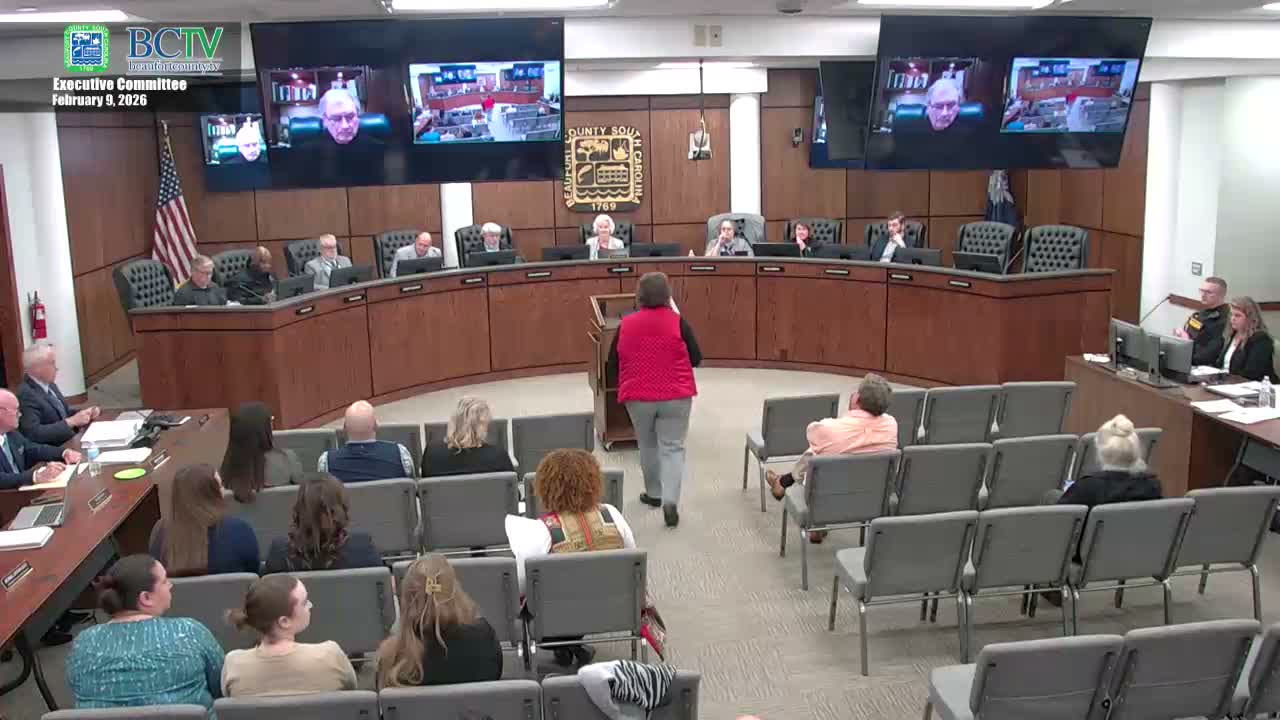
At a public hearing Tuesday, Michelle Knight of the Lowcountry Council of Governments gave Beaufort County Council an overview of the South Carolina Community Development Block Grant (CDBG) program for the 2026 funding round and reviewed program categories, deadlines and eligibility.
Knight said the state's CDBG allocation for 2026 is expected to be about $20.1 million for nonentitlement areas and summarized three program categories: community infrastructure (spring round; focus on water, sewer, drainage and roads; spring application-request deadline March 20), community enrichment/local priorities (fall round; parks, preservation, small quality-of-life projects) and business development (infrastructure for job-creating private investment). She also described a noncompetitive program for fully pre-permitted projects and described maximum request amounts and matching requirements. "The maximum that you can apply for under [community infrastructure] is $1,000,000 although waivers of that maximum threshold amount can be requested," Knight said.
Knight explained national objectives (benefit low-to-moderate income persons, prevent slum/blight, address urgent community needs) and that in Beaufort County a family of four with household income below $88,100 is considered low-to-moderate income for purposes of the program. She also described HOME consortium activities (rehabilitation, accessibility, affordable housing) and said the consortium will issue a housing-needs survey in the coming weeks.
Council members asked whether CDBG funds could pay for demolition of vacant dilapidated houses, failing septic systems and sewer extension into rural areas. Knight said demolition projects typically must be targeted at vacant, dilapidated properties identified by code enforcement and that larger brownfield or residential demolition projects generally require public ownership. Sewer extension is eligible where there is a clear priority and capacity from the utility (Beaufort-Jasper Regional Water & Sewer Authority), she said.
Why it matters: CDBG funds are a common federal source for infrastructure and housing projects that benefit low- and moderate-income residents. County staff and committees will rank potential projects and return a recommendation to council.
What comes next: Knight said application requests and committee rankings will be processed and returned to council; staff said the grants administrator will coordinate county applications with the Lowcountry COG.