Get Full Government Meeting Transcripts, Videos, & Alerts Forever!
Get email alerts on the PFAS topic
No spam. Unsubscribe anytime.
Vero Beach utilities outline PFAS history, testing limits and proposed pilot; mitigation costs estimated in tens of millions
Summary
Utilities staff reviewed PFAS testing history and proposed a pilot comparing ion exchange and granular activated carbon (GAC) to inform a longer‑term treatment strategy; preliminary capital and operating cost estimates cited a broad range ($14–$28 million) and staff warned about sampling sensitivity at parts‑per‑trillion levels.
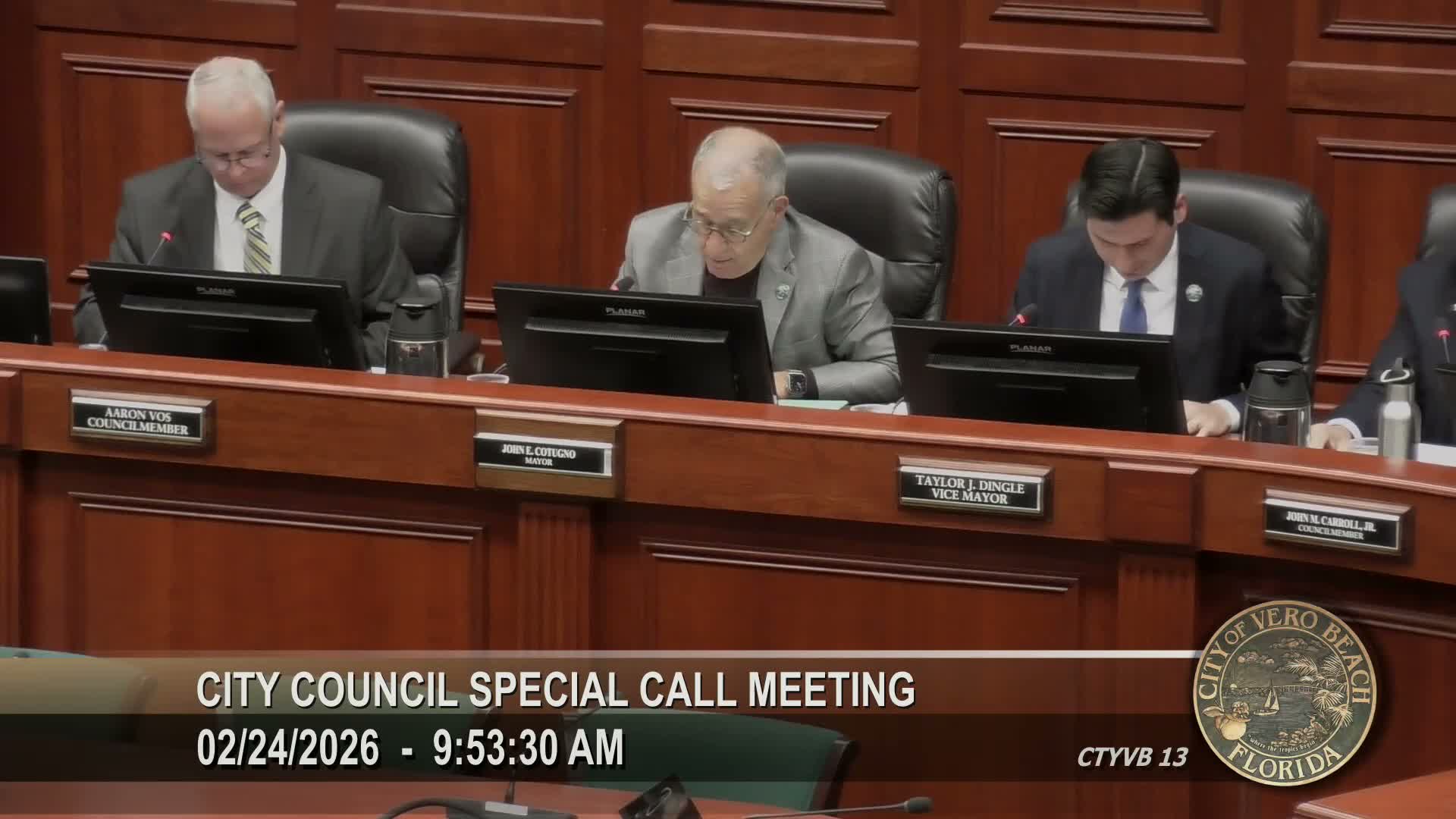
City utilities staff presented a technical briefing on per‑ and polyfluoroalkyl substances (PFAS), reviewed testing history and outlined a pilot program to evaluate treatment approaches.
The presenter described how earlier monitoring (UCMR3 in 2013) used higher reporting limits; with the U.S. Environmental Protection Agency’s (EPA) more stringent methods and lower reporting levels, previously undetectable concentrations can now trigger regulatory responses. The presenter noted that testing at parts‑per‑trillion sensitivity requires precise sampling protocols and clean blanks because commonplace contamination (for example, personal care products) can skew results.
To determine the most cost‑effective treatment, the city will run a pilot testing ion‑exchange systems and granular activated carbon (GAC) at representative sources, staff said. “This pilot project will look at both those processes to find out which is the cheaper to both construct and the cheaper to operate,” the presenter said. Staff explained the tradeoffs: reverse osmosis (RO) can be effective but is expensive and complicated by Florida’s typical groundwater chemistry and deep well production; ion exchange and GAC each have different capital and recurring costs and differing disposal requirements for spent media or resins.
High‑level planning estimates presented to council put broad mitigation scenarios in a $14,000,000 to $28,000,000 range depending on the approach and extent of additional infrastructure. Staff said the pilot’s goal is precisely to quantify capital and life‑cycle operating costs so future choices can be justified — including in litigation or cost‑recovery efforts if the city pursues claims against manufacturers.
Council members asked about whether existing plants could be expanded, how brine or spent media would be disposed, and whether deep injection wells or incineration would be required. Utilities staff noted the city’s deep injection capacity and that disposal options affect the comparative costs of treatment types.
Staff recommended proceeding with the pilot to establish site‑specific costs and operational parameters before committing to a full‑scale plant modification or to litigate for recovery of mitigation costs.