Get Full Government Meeting Transcripts, Videos, & Alerts Forever!
Get email alerts on the Governance Policy topic
No spam. Unsubscribe anytime.
Broward County school board debates whether members may introduce motions at meeting end; counsel outlines limits
Summary
Board members debated whether they may make motions or direct the superintendent at the end of a meeting without an agenda item, with General Counsel advising that state law does not bar motions but that district policy (10.20) and the scope of staff time can require formal agenda items; members asked the superintendent to review hiring practices and consider returning the policy to a workshop.
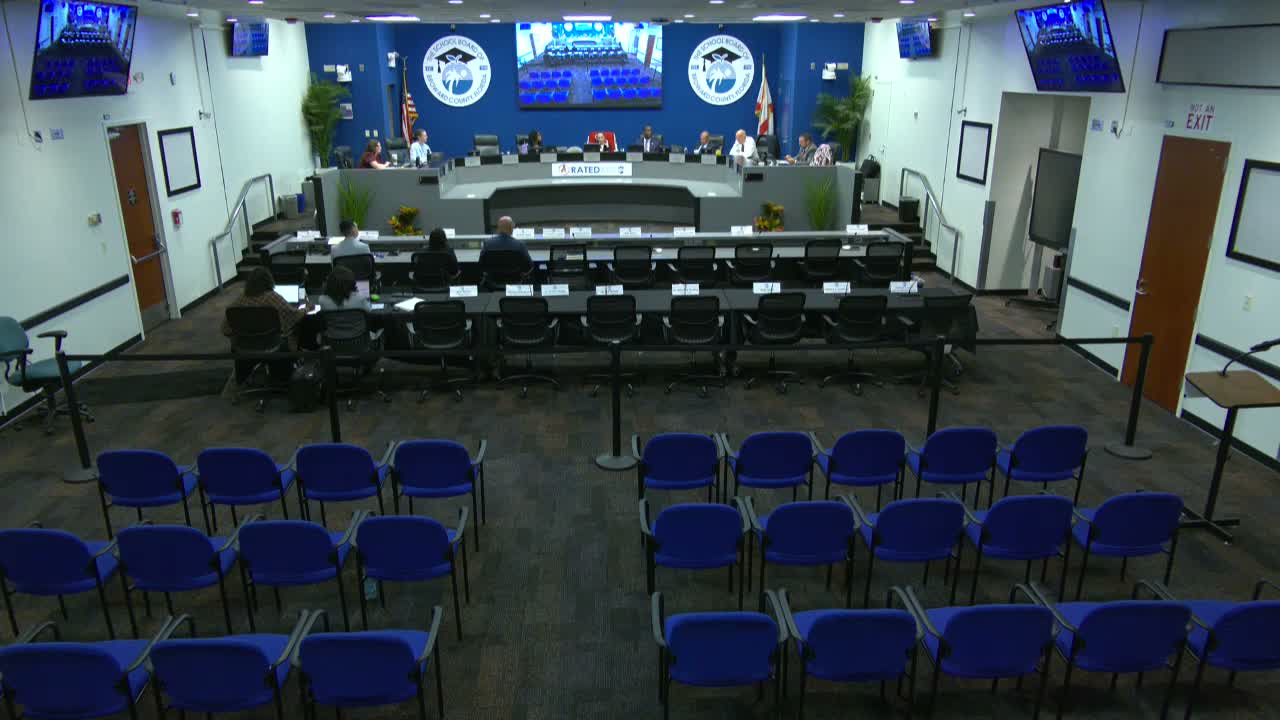
Board members at the March 24 special meeting of the Broward County school board engaged in an extended discussion about whether members can introduce motions — or direct the superintendent — at the end of a meeting when the subject is not on the published agenda.
The exchange began when a board member asked the superintendent to prepare a formal report on hiring practices and suggested a roughly three‑month turnaround. The chair then asked General Counsel Kathy Dupree Bruno whether motions or directives outside of agenda items are permissible. Dupree Bruno said there is no absolute legal barrier to making motions, but that board policy and consistent practice shape how the board operates.
"From a legal standpoint there's no reason why a motion can't be made," Dupree Bruno told the board, while also noting the board has policies and practices that have historically limited how items are brought forward.
Board members debated the interplay between state law and district policy. One member argued state law enumerates duties for school boards and cannot be nullified by policy, while others stressed the importance of following district policy 10.20 to protect public notice and input. Members raised practical limits: matters that require significant staff time, extensive backup materials, or important public notice (for example, school closures) should be processed as formal agenda items, General Counsel said.
Several members favored allowing limited, time‑sensitive directives at meeting end to improve efficiency, while others urged that the policy be reviewed and applied consistently so the public has opportunity for comment. The board did not take a formal vote on changing the policy but several members asked the superintendent to review hiring practices and to return with a report; some members suggested bringing policy 10.20 back to a workshop for possible revision.
The meeting record includes multiple references to state statutes during the exchange; the transcript contains a partially garbled numeric citation and also refers to duties assigned to school boards under state law. General Counsel emphasized that the district should follow state law and that policy can provide a consistent internal process so that board practice does not vary from meeting to meeting.
Next steps recorded in the meeting: the board asked the superintendent to consider the requested report on hiring practices and several members asked that policy 10.20 be reviewed and returned for discussion in a workshop setting.