Get Full Government Meeting Transcripts, Videos, & Alerts Forever!
Get email alerts on the School Start Times topic
No spam. Unsubscribe anytime.
Santa Rosa school board keeps current bell schedules after hearing on state start‑time rule
Summary
After a public hearing and staff analysis, the Santa Rosa County School Board voted unanimously March 5 to keep next year’s bell schedules unchanged, citing survey results under 50% in favor of changes and projected transportation and staffing costs that would add millions to the district budget.
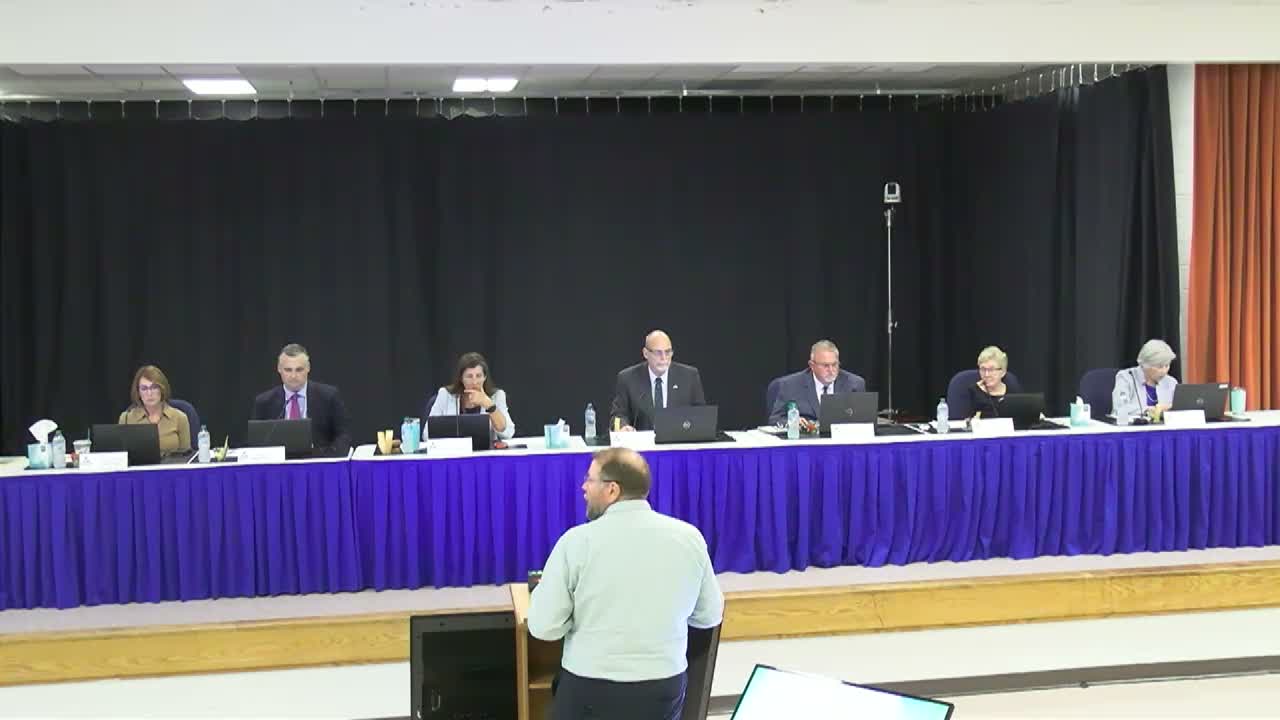
The Santa Rosa County School Board voted unanimously March 5 to retain its current bell schedules for the 2026–27 school year after a public hearing on a state rule requiring later start times for middle and high schools.
The board heard a staff presentation on the Florida statute and a district survey, then took comments from parents and community members. Transportation and finance staff told the board that, as modeled, moving impacted schools later while preserving the district’s three‑tier bus system would require about 24 additional buses and an estimated $2.9 million in recurring annual contract costs; shifting to a two‑tier plan raised projected costs to roughly $6.9 million, and a one‑tier compliance approach was modeled at more than $28 million.
"Given the financial constraints of the school district and our responsibility to remain fiscally sound, I'm recommending to the board that we stick with our current bell schedule for the 2026–27 school year," said the superintendent (staff presentation, March 5 public hearing). The board approved that recommendation by voice vote.
Why it mattered: Florida law (updated in 2023 and again the prior year) sets later default start times for middle and high schools and allows districts to file a report with the Department of Education documenting survey results, implementation strategies and financial impacts if they do not adopt the later times. The district said it had sent surveys to 5,168 student families at seven impacted schools, receiving about 1,072 responses (roughly 531 in favor, 360 opposed and 181 neutral). Transportation staff cautioned that many families and schools would be unintentionally affected by a change because of the region’s multi‑tier routing.
Parents gave varied testimony. David Grosso and other Gulf Breeze residents urged local swaps of elementary and middle‑school start times where geography allows, saying swaps would reduce household scheduling strain without adding routes. Several parents, including Courtney Christiansen, told the board they supported later start times for adolescent sleep and mental‑health reasons. Other speakers, such as Kyle Connolly, warned of limited local childcare and the logistics of staggered release times for households with students at multiple levels.
District finance director Catherine (presentation) said the district’s financial condition ratio was 6.41 as of January, but projected costs and inflationary pressures could reduce that figure to about 4.06 for budgeting purposes. Staff and transportation leaders also warned that the district currently faces driver‑and‑monitor staffing challenges; adding dozens of routes would require hiring or otherwise funding many more employees.
Board members said they sympathized with parents advocating change but noted fewer than half of survey respondents favored a move and that the district could not absorb the modelled costs without cuts or new revenues. One board member urged additional targeted outreach to the schools that would be unintentionally affected if a change were implemented.
What happens next: The board instructed staff to collect additional input from schools that would be indirectly affected and to present bell‑schedule options for the next school year on the May agenda if appropriate. The board did not adopt a schedule change tonight and formally approved the superintendent’s recommendation to keep the current bells for 2026–27.
Sources: District presentation and survey reported to the board; public comment at the March 5 meeting; voice vote recorded in the official minutes.