Get Full Government Meeting Transcripts, Videos, & Alerts Forever!
Get email alerts on the Budget topic
No spam. Unsubscribe anytime.
Albemarle supervisors weigh housing, agency grants and reserves in FY27 work session
Summary
Supervisors debated using contingency and one‑time funds to boost the Affordable Housing Investment Fund (AHIF), increase emergency relief and nonprofit support, and whether to reallocate economic development money; staff will return data on fuel reserves, economic development spending history and Dogwood Memorial funding.
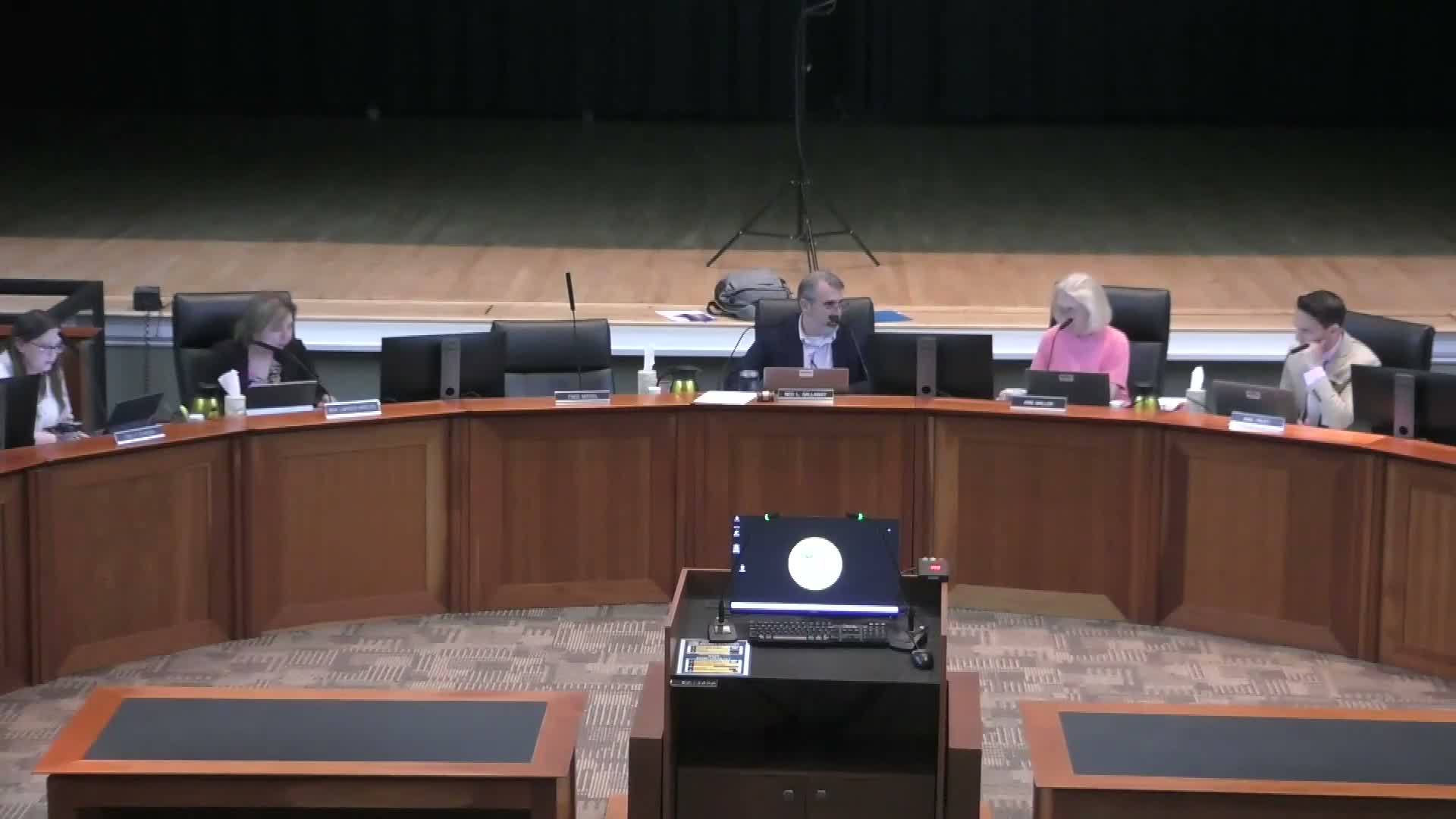
The Albemarle County Board of Supervisors spent much of its April 1 budget work session discussing where to place roughly $1.2 million in discretionary funds as it finalizes the fiscal 2027 proposal.
At the start of the session, Assistant Chief Financial Officer Andy Bowman outlined potential source buckets — reserve contingencies, one‑time funds and the board’s strategic priority reserve — and told supervisors there is financial capacity to reallocate modest amounts without jeopardizing the minimum reserve. Supervisors then debated whether to prioritize the Affordable Housing Investment Fund, one‑time or ongoing increases to the Albemarle County Emergency Relief Program (ACERP), and incremental boosts for arts and human services.
Several board members urged directing more funds to AHIF to expand affordable‑housing production. Supervisor Mike Pruitt argued that committing to a $10 million AHIF target — even phased over time — would provide policy clarity for developers and advocates. Supervisor Sally Duncan and others said AHIF increases should be matched with clearer process and performance data. ‘If the public wants good schools and services,’ Duncan said, ‘someone has to pay for it,’ a comment underscoring tradeoffs between tax policy and spending choices.
Supervisor Ned L. Galloway, the county executive and budget staff pushed back that some money is best held as contingency and that a portion of the board’s strategic reserve had been proposed to balance FY27. Galloway told the board staff is comfortable leaving the reserve in the $2.50–$3.50 range (per $100 of assessed value) and highlighted that ongoing economic development investments are sometimes needed to respond quickly to opportunities.
Board members asked for several follow‑ups to support decision making: a historical report of the Economic Development Opportunity Fund (how it has been plussed and drawn down), details on fuel costs and any fuel‑reserve exposure, clarifying the City of Charlottesville’s contribution to the Dogwood Vietnam Memorial project, and additional data on nonprofit agency funding metrics. Staff agreed to return those items before the board’s April 22 adoption date.
No final reallocations were made at the April 1 session; several supervisors said they were open to shifting one‑time dollars if the board reaches agreement on priorities in the coming weeks. The board will take additional budget votes at its April 15 and April 22 meetings.
Ending: Staff will provide the requested follow‑up analyses on economic‑development fund history, fuel exposure, accountability metrics for agency grants and the Dogwood Memorial funding status ahead of the board’s next budget decision points.