Get Full Government Meeting Transcripts, Videos, & Alerts Forever!
Get email alerts on the Smart Bond topic
No spam. Unsubscribe anytime.
Bond oversight panel says SMART program delivered facilities but flagged design, inspection and communication failures
Summary
Bond Oversight Committee reviewed the SMART program’s final quarterly report, saying $1.5 billion of roughly $1.7 billion in program spending is complete and praising technology and safety upgrades while urging better project readiness, design review and transparency before seeking another bond.
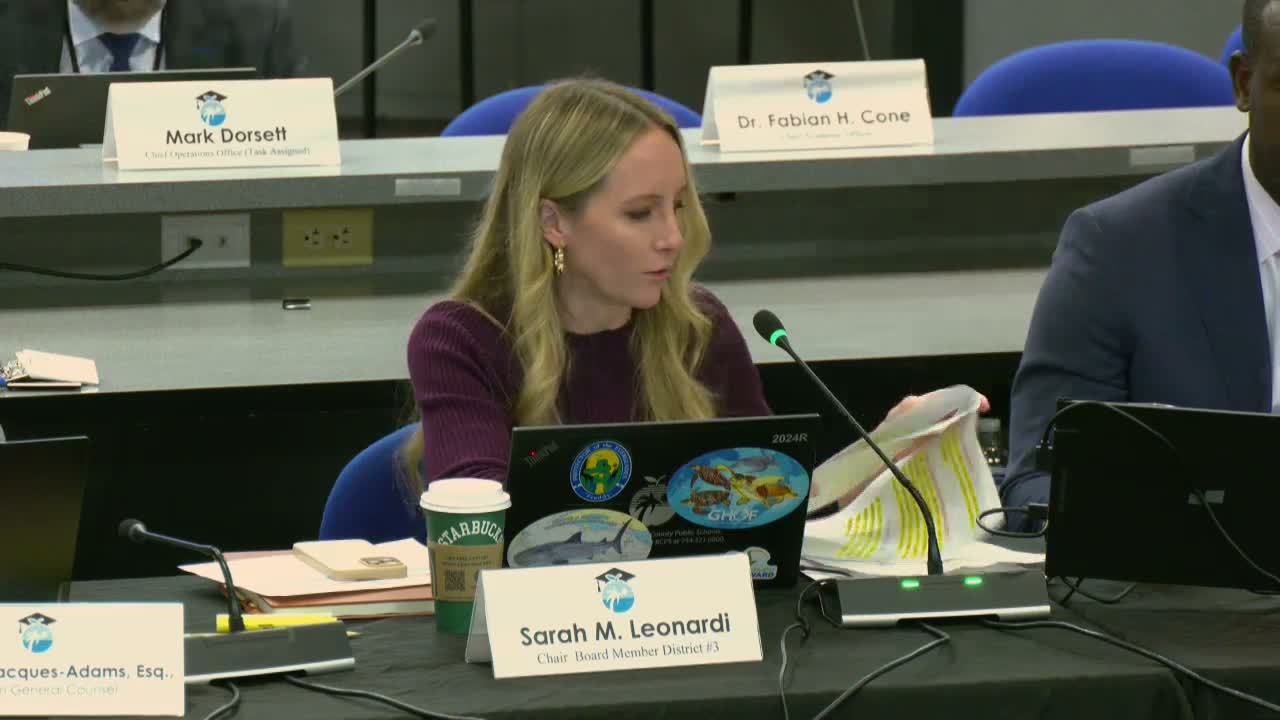
The Bond Oversight Committee reported to the Broward County School Board on Feb. 17 that the district’s SMART program delivered wide-ranging facility upgrades but also produced costly delays and design changes that undercut public confidence. Committee members said the program, originally a voter-approved $800 million general-obligation bond, grew with added capital to roughly $1.7 billion in executed projects and that approximately $1.5 billion has been spent.
Committee presenters and members highlighted visible gains: classroom technology upgrades pushing device ratios close to 1:1, restored arts and music spaces, upgraded athletic and safety infrastructure and new single points of entry at schools. Bond oversight members credited outreach and contractor training that reportedly funneled about $600 million back into the local economy and trained local contractors to navigate district procurement.
At the same time, oversight members and several board members described systematic shortcomings. The committee urged that future capital programs ensure projects are “shovel ready”; that designers and processes account for regulatory and inspection changes; and that schedule and budget risks be managed upfront. Board members pressed staff to produce concise public-facing materials — one-page summaries and short videos — to explain where taxpayer money went and to start rebuilding trust before asking voters for more funding.
The board heard multiple accounts of projects that were changed midstream after final inspections required additional devices or sprinkler heads, producing change orders and schedule slippages. Staff said some inspector findings reflected changes in code or personnel over time and indicated a mix of county and outside (CAP Government) inspectors have been involved. Board members asked the district auditor and program staff to report back with a clearer timeline of inspections, design approvals and when code changes occurred.
Public comment was sharply critical: a longtime facilities adviser, Natalie Lynch Walsh, said planning faults as far back as the 2014 bond approach contributed to scope changes and poor outcomes at schools including Stranahan and Northeast. Board members acknowledged failures and emphasized steps already under way — an external oversight panel, quarterly reporting and a communications toolkit — but urged faster, concrete action to restore the public’s confidence so a future bond could be successful.
Next steps: board members asked staff to return with a concise public summary of the SMART program finances and a plan for a standing external review body to provide independent feedback on future capital programs. The Bond Oversight Committee’s report attachment lists projects, budgets and projected completion dates for remaining work.