Get Full Government Meeting Transcripts, Videos, & Alerts Forever!
Get email alerts on the Tax Policy Distribution topic
No spam. Unsubscribe anytime.
Committee member says Trump-era tax changes overwhelmingly favored the wealthy and warns worker provisions expire in 2028
Summary
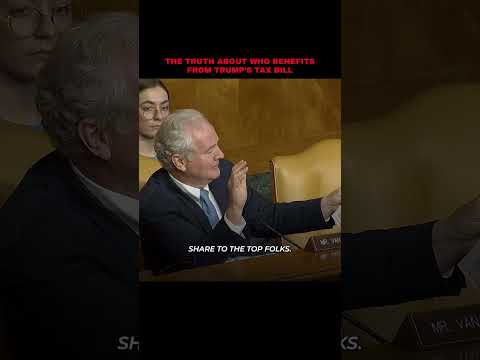
A committee member told a hearing that a chart shows the Republican "Trump" tax bill concentrated most benefits with wealthy households — citing 72% to the top 20% and 22% to the top 1% — and warned that worker-focused provisions such as tax relief on tips are temporary and set to expire in 2028.
A committee member told a hearing that a chart shows the Republican "Trump" tax bill concentrated the majority of benefits with the country’s wealthiest households and warned that tax relief aimed at working people is temporary and set to expire in 2028.
The member listed worker-focused provisions — "No taxes on tips," "No taxes on auto loans," and "No taxing on seniors" — and contrasted them with what the member described as permanent cuts benefiting higher-income taxpayers. The member said the bill was "an extension of the previous Trump tax bill that provided the overwhelming share to the top folks."
Quoting figures from a chart the member referenced, the committee member said, "72% of the benefits went to the wealthiest 20%" and added, "A whopping 22% of the benefits went to the top 1%." The member argued those benefits for the wealthy were permanent under the bill, while provisions aimed at workers were not made permanent.
The member said some worker provisions "will expire in 2028," and attributed the inability to make them permanent to limits in the reconciliation process and cost allocations: "We were not able to because of the reconciliation and and cost allocations that we were given." The member also suggested that when the temporary provisions lapse in 2028 "this distribution table will get even worse." The member offered to share the chart with the witness, saying, "I'm happy to share it with you."
The transcript records the member addressing the witness as "Director Vought," but it does not include a clear, separate recorded response from that witness in the provided excerpt. The chart the member cited is not included in the transcript and no data source for the figures was specified during the exchange.
The hearing excerpt centers on distributional questions — who benefits from recent tax changes and whether relief for lower- and middle-income taxpayers is permanent — and leaves unresolved the witness's response and the provenance of the specific percentages the member cited. The member said they would share the chart to support the claims.