Get Full Government Meeting Transcripts, Videos, & Alerts Forever!
Get email alerts on the Short Term Rentals topic
No spam. Unsubscribe anytime.
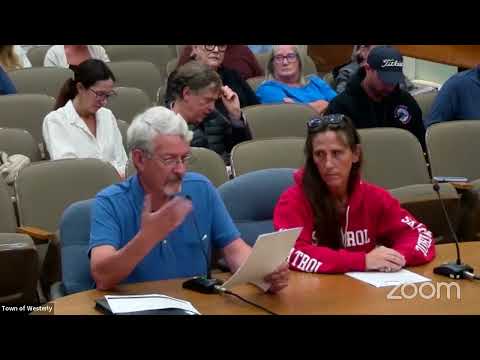
Westerly council approves $500 annual short‑term rental registration fee after contentious public hearing
Summary
After a multihour public hearing in which residents and hosts debated neighborhood impacts, legal risks and economic tradeoffs, the Wesley Town Council voted to raise the annual residential short‑term rental registration fee from $50 to $500 and referred broader zoning changes to the planning board.
Wesley Town Council voted on Sept. 16 to raise the annual registration fee for residential short‑term rentals from $50 to $500 amid extensive testimony from residents, property owners and legal counsel.
The ordinance hearing drew hours of public comment both for and against the change. Town Manager (speaker 19) told the council the increase would pay for software to monitor listing sites and staffing to enforce registration, estimating vendor costs at “between $30 and $40,000 per year.” He also said state law now requires an annual fire inspection for short‑term rentals.
Supporters of stricter limits and a higher fee described neighborhood problems they attribute to unregulated short‑term rentals: repeated turnover, added parking and trash burdens, and noise. “There’s constant transience and an influx of strangers in and out of my neighborhood,” said Brenda Haginson, a resident of Hobart Street, who urged tighter restrictions and said a $500 fee is “very nominal” compared with added town costs.
Opponents—including many hosts and an attorney representing property owners—said the measure risked harming small businesses, tourists and long‑standing rental owners and raised legal concerns. Michael Minot, an attorney appearing for property owners, cited Rhode Island statute 42‑63.1‑14 and argued parts of the proposed ordinance could be preempted by state law and generate litigation.
Council debate centered on two goals the council framed as compatible: (1) stopping unchecked growth of short‑term listings in residential neighborhoods and (2) protecting residents who have already invested in lawful rentals. After discussion the council limited action that night to the fee increase while sending zoning and boundary questions to the planning board for further work. The council’s amendment raised the annual registration to $500 and removed other substantive changes pending planning board review.
The motion to approve the ordinance as amended passed by roll call; the clerk recorded the measure as approved with one recorded no vote (Councilor Shalaba). The chair closed the public hearing and said the planning board would next work on any geographic or regulatory overlays.
The council and administration said the fee increase will allow the town to purchase monitoring software to detect unregistered listings and to improve enforcement. The town manager said the software will compare commercial listing site data to the town registry and trigger notice and enforcement procedures for apparent violators.
What happens next: the council referred broader zoning amendments and overlay district language to the planning board for drafting and public hearings. The fee increase is the only immediate change adopted that night; additional regulatory changes will require separate hearings and votes.