Lifetime Citizen Portal Access — AI Briefings, Alerts & Unlimited Follows
Cary council weighs setting a ceiling on town manager spending and quarterly reporting
Loading...
Summary
Council discussed three staff options to change how spending authority is delegated: keep current practice with added reporting; reduce manager/deputy limit to $500,000 and require reporting over $300,000; or set a $750,000 ceiling for manager/deputy with reporting above $500,000. No final vote was taken; staff will return with a staff report.
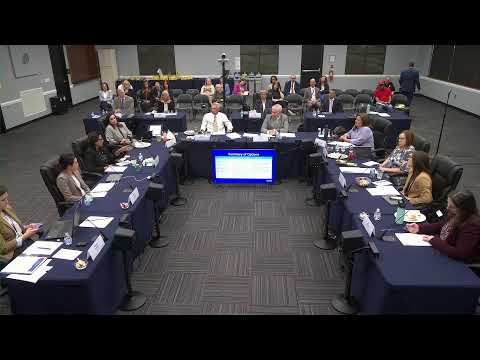
Town staff briefed Cary Town Council at the April 16 work session on proposed changes to the town’s delegation-of-authority resolution and standard procedure, offering three options to change who can sign contracts or expend funds without separate council approval.
Interim Manager Russ (S3) framed the issue as statutory and procedural, and Lisa (S13) explained why state statutes require delegation of authority to be enacted as an ordinance or resolution rather than an internal policy. Russ reviewed past changes to delegation since 2011 and said the current practice allows the town manager and deputy to sign contracts above $500,000 while assistant managers and directors hold lower thresholds.
Staff presented three policy options: (1) keep current delegation and add reporting for contracts above $500,000, (2) lower manager/deputy authority to assistant-manager level and report anything above $300,000, or (3) set a new ceiling for manager/deputy at $750,000 and require reporting for anything above $500,000. Russ said option 3 is the easiest to implement in the town’s Oracle routing system; staff noted option 2 more closely matches peer municipalities.
Council members asked for regular, consolidated reporting (quarterly spreadsheet) showing contract amounts, purposes and recipients. One council member said a simple quarterly packet would satisfy oversight needs without requiring full staff reports for every large contract. Councilors also discussed audit recommendations from peer cities and the need for an emergency carve-out so urgent procurements (for example, a water-line break) would not be delayed.
No formal decision was made; several council members expressed support for either option 2 or 3 with lower reporting thresholds and asked staff to return with a staff report and additional analysis, including the expected number of additional council agenda items and the staff time required to implement reporting.