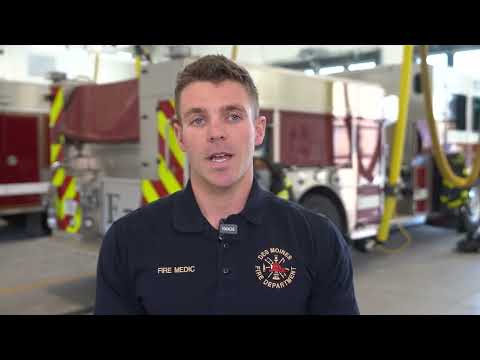
Medics say prehospital blood transfusion stabilized stabbed security officer before arrival at Methodist ER
Loading...
Summary
Emergency medics described giving a unit of blood on-scene that helped stabilize a security officer who had '0 vital signs,' allowing transport to Methodist ER where doctors administered additional units; the program relies on donors and a partnership with LifeServe.
Emergency medics described using a prehospital blood transfusion that helped stabilize a security officer who had been stabbed, allowing the patient to reach Methodist ER for further care.
The presenter said the chain of survival for severely injured patients 'begins at the scene' and that delays in getting patients to the hospital can be fatal. He credited donors and a partnership with the blood center LifeServe for enabling field transfusions: 'the blood that's being infused, that is only possible because of the the generous donors who donate blood and specifically donate blood with with our blood center, LifeServe.'
An agency official who responded on Medic 4 said crews staged, identified the patient as critical and prepared blood before transport. 'I was on medic 4 responding to the COC. As we arrived, we were instructed to stage...and once we got confirmation, we heard that there is a stabbing victim,' he said, describing how his crew brought the wounded security officer to him and how the team moved quickly to prepare and administer blood.
The same responder recounted finding the patient without measurable signs of life: 'I had 0 vital signs. Blood arrived, and I just knew it was go time. I was able to give 1 unit of blood by the time I arrived at the back doors of Methodist ER.' Another agency official said the transfusion on scene 'kind of leveled him off until he could get to the hospital' and that the patient later received '30 or more units of blood during the whole process.' 'I'm not sure that he would have survived without it,' the responder added.
Speakers framed the prehospital transfusion as both a clinical advance and a programmatic achievement. One responder said the goal in EMS is to 'improve patient care, improve the professionalism of our medics, give them the tools and the skills and the training that they need.' The presenter called prehospital access to blood 'probably the single biggest advance in trauma care' in recent decades, saying it increases survival for patients who otherwise might not make it to definitive care.
A responding medic later said he met the same patient standing and talking, and described the recovery as 'very rewarding.' The presenters emphasized that the program depends on a reliable donor supply and the partnership with LifeServe to get blood to crews on scene.
No formal policy votes or actions were recorded in the transcript; speakers characterized the account as a field incident that illustrates how on-scene transfusions can buy critical time for trauma centers and potentially save lives.