Get Full Government Meeting Transcripts, Videos, & Alerts Forever!
Get email alerts on the Utility Rates topic
No spam. Unsubscribe anytime.
Ontario council adopts water, sewer and solid‑waste rate increases after public hearing; average bill rises about $8.65
Summary
After a Proposition 218 hearing and public comment, the Ontario City Council voted 4–0 (Wapner absent) to adopt a two‑year rate plan that staff says will raise an average residential combined utility bill by about $8.65 per month; the clerk reported written protests but found no majority protest.
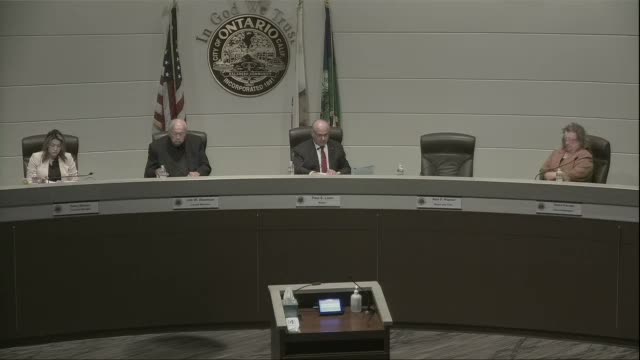
The Ontario City Council voted 4–0 on Oct. 7 to adopt changes to water, sewer and solid‑waste service charges following a noticed Proposition 218 public hearing and staff presentation of a two‑year rate plan.
Utilities General Manager Scott Burton told the council the combined enterprise budget for water, recycled water, sewer and integrated waste is about $195 million and that rate drivers include higher energy and chemical costs, capital improvements and higher vendor pass‑throughs (staff cited roughly a 9% increase in some costs). Burton said the recommended change would increase the average single‑family residential bill by about $8.65 per month, which he described as roughly a 7% increase on an average $150 monthly bill.
The city clerk reported written protests received prior to the hearing: 39 letters regarding water, 37 regarding sewer and 37 regarding solid waste. The clerk said the number required to constitute a majority protest would equal 26,213 (as tabulated for this hearing) and that a majority protest did not exist for any of the three proposed charges, allowing the council to proceed.
During public comment, several residents and community groups urged the council to delay increases or find alternative funds. Chris Robles of FAIR Ontario and others criticized timing and outreach and questioned whether recent allocations for the sports complex lessened the need for new rates. Michael Rios and others presented back‑of‑envelope calculations contrasting household impacts with the $27 million cited on the consent calendar for sports‑complex utilities.
In council deliberations members emphasized infrastructure investment and long‑term reliability. The city manager and Burton stressed that enterprise funds must cover costs of service and that water resources investments (groundwater wells, desalter, recycled water) and integrated‑waste operations are key cost drivers. Councilmember Perrotta moved to adopt the resolution to impose the proposed rates; the motion was seconded and passed on an electronic vote, 4–0, with Councilmember Wapner absent.
The council directed staff to continue outreach about low‑income and senior discounts and to promote available rebate programs and conservation incentives that can reduce bills.