Get Full Government Meeting Transcripts, Videos, & Alerts Forever!
Get email alerts on the Rezoning topic
No spam. Unsubscribe anytime.
Commission denies rezoning of triangular 0.6911-acre lot to commercial business, 4-1
Summary
The commission voted 4-1 to deny a request to rezone a narrow 0.6911-acre triangular parcel owned by the Robinson Living Trust from agriculture/open space to commercial business, citing conflicts with the comprehensive plan, minimum-lot-size and setback requirements and lack of sewer access.
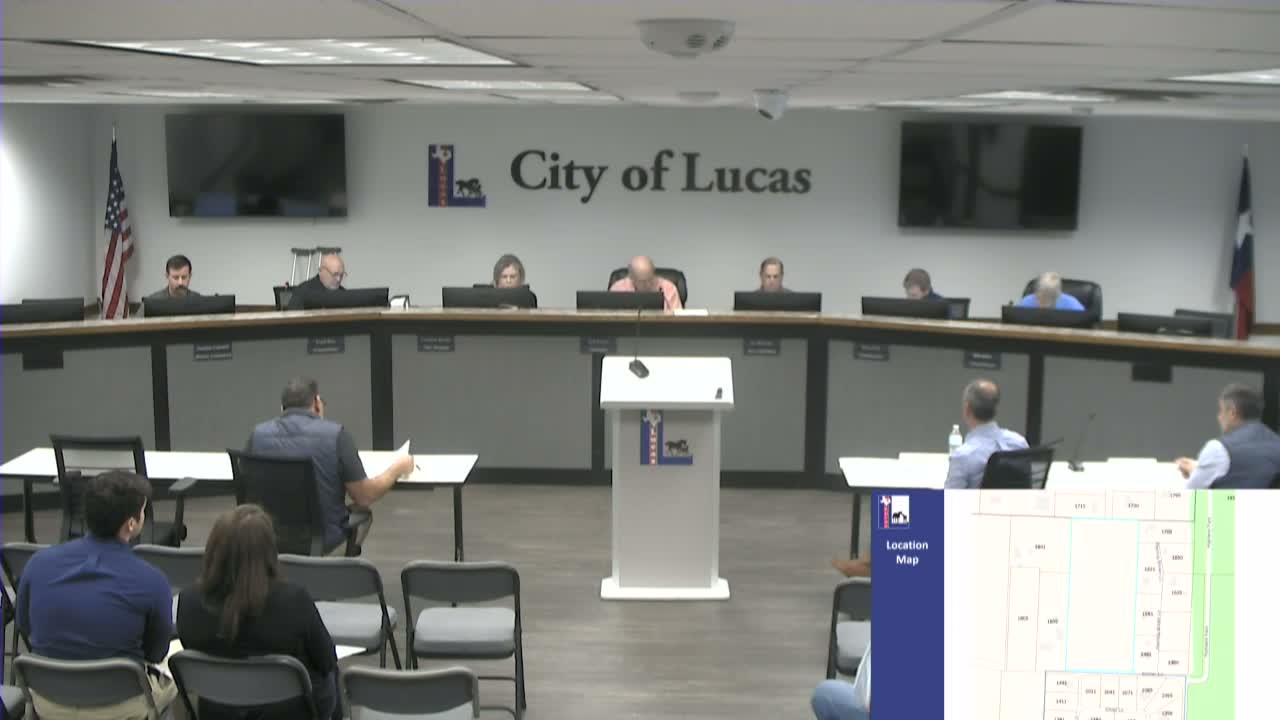
The Lucas Planning & Zoning Commission on March 12 denied a request from the Robinson Living Trust to rezone a triangular 0.6911-acre parcel from agriculture/open space to commercial business, by a vote of 4-1.
Staff explained the lot is essentially a triangle abutting residential property and said that, as presented, it fails to meet required setbacks and minimum lot-size standards for commercial zoning. The staff presentation noted that commercial lots with city sewer must be at least 30,000 square feet and lots without sewer must be at least 43,560 square feet; the parcel under consideration lacks sewer access. Commissioners discussed that the lot is a legal nonconforming parcel and that rezoning to commercial could leave the owner unable to build without variances from the Board of Adjustments.
Property owner Mark Robinson told commissioners he had no immediate plan for the parcel but that rezoning to commercial would create future options. Commissioners were divided on whether recent rezoning of a nearby tract (the Haggard tract) should factor into their vote, but multiple members said they were unwilling to grant zoning that conflicts with the master plan and city ordinance. One commissioner expressed concern that giving commercial zoning without the ability to build would harm the owner; another said rezoning could maximize value by enabling sale to a developer but still raised practical buildability issues.
A motion to deny the rezoning was made and seconded and carried 4-1. The commission took no further action on the lot.