Get Full Government Meeting Transcripts, Videos, & Alerts Forever!
Get email alerts on the Development topic
No spam. Unsubscribe anytime.
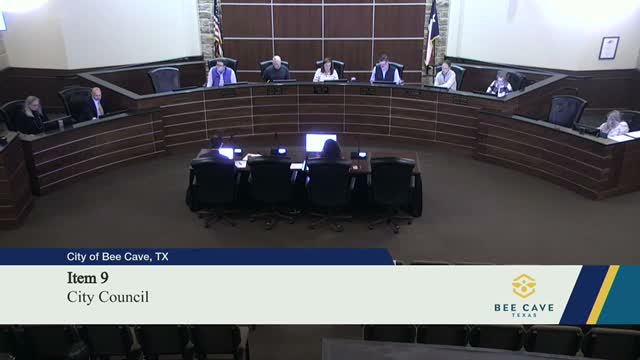
Council to return resolution on Spanish Oaks PID waiver, staff directed to use 2:1 ratio
Summary
Council directed staff to bring back a draft resolution that would exempt the Spanish Oaks PID from selected new PID policy provisions, asking staff to prepare the exemption using a 2:1 value-to-lien ratio and a construction-bond basis for consideration at the next meeting.
Council members instructed staff to return a tailored resolution next meeting to consider limited exemptions for the in-flight Spanish Oaks public improvement district.
City staff explained the Spanish Oaks PID was created before the new PID policy and that two provisions—value-to-lien ratio and construction-versus-reimbursement bond mechanics—would be problematic if applied midstream. The city’s bond counsel noted that statutes do not allow the city to unilaterally dissolve a PID and that dissolution typically requires a landowner petition.
Developer representatives and PID consultants discussed prior appraisals. A consultant from Sundance Analytics said the last appraisal showed a 2.3:1 value-to-lien ratio and asked for flexibility but recommended council adopt a practical threshold. “I would prefer you say 2 to 1 because we’re using assumptions here,” the consultant said, noting appraisals can vary and that small differences generally do not affect bond buyers.
Several council members expressed reluctance to create a broad precedent in granting waivers, but most supported bringing a narrowly tailored resolution back. Staff was directed to draft the resolution with a 2:1 value-to-lien ratio and to specify a construction-bond issuance basis so the council can consider the exemption formally at its next regular meeting.