Lifetime Citizen Portal Access — AI Briefings, Alerts & Unlimited Follows
Paxton Welber: wild ice skating is a growing part of Alaska’s outdoor economy
Loading...
Summary
Paxton Welber, cofounder and outreach chair of the Wild Ice Skate Club of Alaska, told a House-hosted "lunch and learn" that wild ice skating has moved from isolated outings to an organized community that supports tourism, small businesses and safety norms; he described equipment, safety practices and the sport’s appeal.
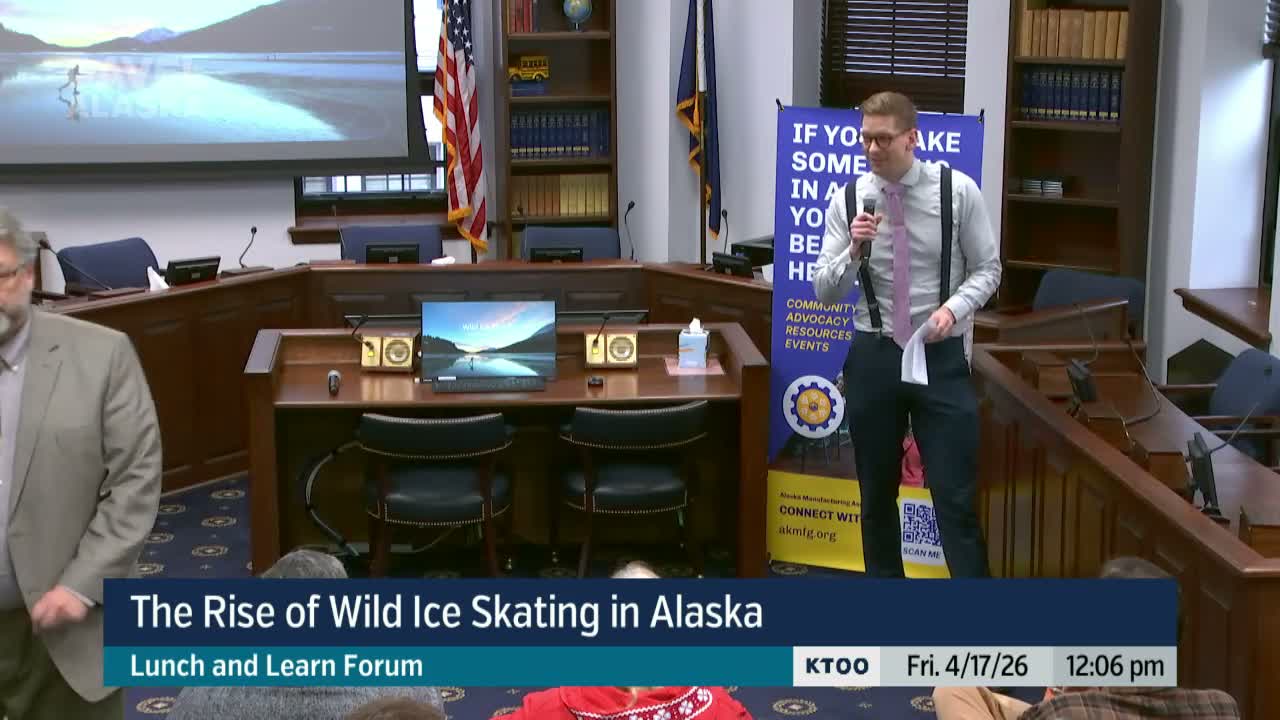
Paxton Welber, cofounder and outreach chair of the Wild Ice Skate Club of Alaska (WSCA), told a legislative "lunch and learn" hosted by Rep. Kai Holland that wild ice skating has moved from scattered, one-off outings into a broader community with commercial and tourism potential. "It's about going on ice... it's adventuring," Welber said, defining the sport as skating on naturally formed, unmaintained ice.
Welber described three development stages—individual "spark," small-group "flame," and community/infrastructure "fire"—and said Alaska is entering the "fire" stage, with more shared information, safety practices and businesses supporting the activity. He said the club’s outreach and media— including a short film that drew national attention—helped broaden interest. "We found this niche that has been massively underappreciated and there's a huge amount of public interest," he said.
On equipment and safety, Welber demonstrated a Nordic skate and explained why the design suits outdoor ice: the skate clips to common cross-country ski boots so skaters can walk between ice patches, and the long, stable blade makes covering long distance efficient. For safety testing, he recommended a simple, immediate tool: an ice pole. "If the pole goes through in the water in 1 or 2 firm hits, then you know that the ice is kind of thin," Welber said. He also urged carrying rescue claws, throw ropes and warm dry clothes; on remote trips he said he sometimes carries a stove and sleeping bag as a precaution.
Welber answered audience questions about speed and stopping. Tracking with GPS, he said, shows peak speeds "over 20 miles an hour" on good ice and tailwind conditions, while typical nordic-skate peaks are "around 20, 25 miles an hour." For stopping he listed techniques from hockey stops to gentler "pizza" stops and cautioned that Alaska's silt-heavy ice is hard on blades, so skaters often favor a flowier style to protect edges.
Why it matters: Welber and the moderator, Tim, argued that wild ice skating can help brand Alaska as a year-round destination, broaden off-season tourism, and support local small businesses that provide equipment, tours and media. Welber urged general support for Alaska small business and for efforts that make the sport accessible and safe.
The session closed with offers to continue conversations after the event; organizers thanked attendees.