Get Full Government Meeting Transcripts, Videos, & Alerts Forever!
Get email alerts on the Transportation Speed Enforcement topic
No spam. Unsubscribe anytime.
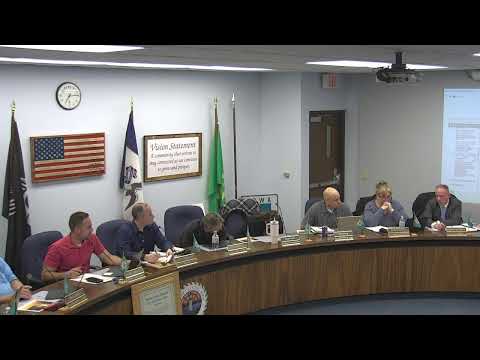
Clinton committee directs police to study school-zone speed cameras after Genoptec briefing
Summary
After a presentation on statewide permitting and 2023 speed data, the Committee of the Whole voted 6–1 to allow the police department and vendor Genoptec to pursue DOT permitting details and return with implementation parameters for automated enforcement in school zones.
The Committee of the Whole voted to authorize the police department to study automated speed-enforcement cameras for school zones after a presentation by Jay of Genoptec and Chief Jerian.
Genoptec told the council that Iowa Department of Transportation permitting requirements will be released in early April and that municipalities will be able to submit permit applications beginning July 1. Jay said the company’s 2023 field data showed large numbers of speed violations during school hours, noting, “You overall, you had over, you know, 15,000 speeders in 5 days” in some locations and thousands more who exceeded posted limits by 15–20 mph in the top school zones. Chief Jerian framed the goal as safety: “If you save 1 life, it’s worth it.”
Council members asked about who would pay for installation (Genoptec said the vendor funds installation and retains equipment ownership), the distribution of fine revenue (Genoptec described a roughly 65/35 split favoring the city in the company’s current model), and whether citations would affect insurance records (presenters said the fines are administrative and do not go on driving records). The council also received examples from larger Iowa cities and warnings that DOT reevaluated and reduced some existing camera programs in 2024.
Officials walked through how enforcement windows would operate: cameras can be configured to run when school is in session (typical hours cited were 7 a.m.–4 p.m.). Fines described in the presentation were a flat $75 for 10–20 mph over, $100 for 20–25 mph over and $250 for speeds exceeding 25 mph; speakers said the fines are administrative, not criminal, and do not affect insurance.
Councilors probed revenue and equity concerns, asking whether cameras simply shift fines to travelers passing through rather than residents. Presenters acknowledged that citations fall disproportionately on nonresidents in some locations but said the primary aim is changing driver behavior. Genoptec representatives described a 30-day public-warning period before enforcement.
The council approved a motion to let police and the vendor research permitting parameters and return with a formal proposal and contract for council consideration. Roll call recorded one dissent (Councilmember Lee); the motion otherwise passed on a 6–1 vote.
Next steps: staff will work with Genoptec to compile DOT permit requirements, local locations that meet DOT criteria, projected device configurations and draft contract language to present to the council at a future business meeting.