Lifetime Citizen Portal Access — AI Briefings, Alerts & Unlimited Follows
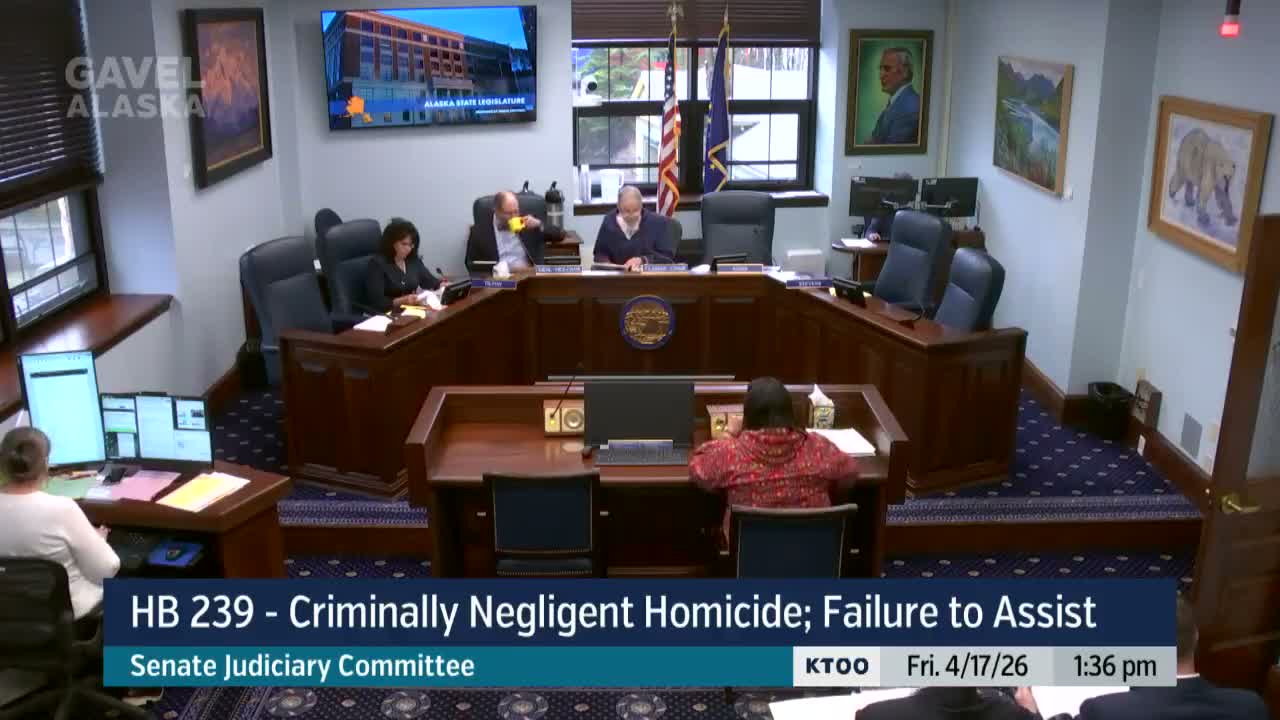
Senate Judiciary adopts House Bill 239 committee substitute as working document; staff to correct drafting errors
Loading...
Summary
The Senate Judiciary Committee on April 17 adopted committee substitute (version g) for House Bill 239 as its working document, incorporating provisions on age-of-consent image-sending exceptions, AI-generated child sexual abuse material, assault-kit tracking and organized theft while flagging drafting errors and scheduling an amendment deadline of April 24.
The Senate Judiciary Committee on April 17 adopted committee substitute version g for House Bill 239 as its working document and set the measure aside for further amendment and review.
Committee staff provided an overview showing the CS incorporates multiple separate bills and significant changes: portions drawn from House Bill 101 (age-of-consent provisions and close-in-age exceptions), Senate Bill 247 (obscene child-abuse material), House Bill 62 (assault examination-kit tracking), House Bill 242 (assault by a health-care worker), and provisions addressing organized retail theft and marijuana conviction-record access. Brianna Kekarik, staff to Chair Klayman, told the committee that several original sections of the underlying bill were deleted and new sections inserted to reflect these incorporations.
Chair Senator Klayman and staff noted drafting errors in the CS. The chair said sections 19 and 20 were likely not intended and may be deleted in the amendment process, and he flagged a drafting error in section 63 related to Title 28 provisions on failure to stop after an injury or death in an accident. Kekarik said she would prepare a more detailed sectional analysis and a staffer would double-check language for consistency.
Senator Keel questioned the CS’s change to the close-in-age exemption for sending explicit images. Kekarik said the change was requested to mirror a six-year close-in-age exemption used elsewhere in the package so consensual partners within that gap would not be criminalized; Casey Schroeder, senior assistant attorney general for the criminal division, clarified the bill does not change the existing four-year difference for 13–15-year-olds as they relate to 16-year-olds and said staff would confirm whether the image-sending language is symmetric.
Representative Kopp, the bill sponsor, described the bill as having grown from a narrowly focused hit-and-run proposal to encompass broader victim protections and criminal reforms, including reforms addressing AI-generated child sexual-abuse material, enhanced charges for organized theft rings, assault-kit tracking to improve victim notice and participation, and mechanisms to ease access to employment and housing for people with historical marijuana convictions.
Chair Klayman removed his objection and announced that the committee had adopted House Bill 239, version g, as the working document. Members were advised to submit any amendments electronically by Friday, April 24 at 5 p.m.; the committee scheduled its next meeting for Monday, April 20 at 1:30 p.m.
The committee did not take a final vote on the measure at the April 17 meeting; the CS was adopted as the working draft for further amendment and review.