Lifetime Citizen Portal Access — AI Briefings, Alerts & Unlimited Follows
Norwich Public Utilities outlines investments, grants and customer assistance as pressures rise
Loading...
Summary
Norwich Public Utilities told councilors it is pursuing major capital projects funded by outside grants — including nearly $20 million for wastewater and $20 million in PHMSA gas grants — while maintaining community assistance and planning for scalable EV readiness.
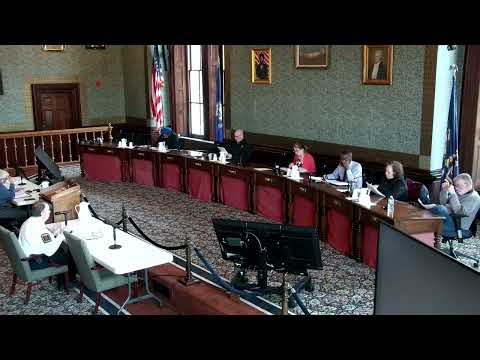
Norwich Public Utilities (NPU) presented its budget and strategic priorities at the council’s departmental hearing, highlighting reliability, grant‑funded capital projects and programs that return revenue to the city.
General Manager (S9) said NPU serves about 25,000 customers and 50,000 meters and emphasized the utility’s priorities: reliability, customer service and competitive rates. He told the council that NPU keeps 10% of gross revenues as a payment to the city — a comparatively high return — and that the utility is making major capital investments to avoid higher costs later.
S9 described several grant and loan results: drinking water SRF funding, Clean Water Fund grant support for the wastewater treatment plant (nearly $19 million), and two PHMSA awards totaling $20 million to accelerate replacement of aging cast‑iron gas mains. "This was transformational for the gas division," he said, explaining the grants allow the city to shrink a 20‑year replacement timeline to roughly five years.
On customer support, S9 outlined roughly $2.5 million in direct assistance programs — including TVCCA partnerships and the Community Assistance Rate that offers qualifying customers up to a 10% discount (plus another 10% for autopay). He said about 2,400 customers are enrolled in the assistance rate, producing approximately $700,000 in customer savings.
Councilors asked about readiness to charge electric school buses and other EVs. S9 said the utility could technically provide charging infrastructure but that the capital cost to fully convert bus fleets would be enormous; instead, NPU is designing substations and projects to be modular and expandable so future capacity can be added without oversized upfront purchases.
S9 also described NPU’s work on economic development projects — including preparing feasibility and design work for large potential industrial customers — and confirmed statutory protections that maintain the utility’s gas franchise rights in Norwich and Preston.
The council and NPU discussed regional projects such as proposed wind and battery storage developments; S9 said such developments could create opportunities (including taxable local assets and storage that would pair with intermittent generation) but emphasized that participation depends on regional power‑supply agreements and cooperative membership decisions.
The council did not vote on NPU items at the hearing; commissioners and staff requested follow‑up on specific capital timelines and enrollment figures for assistance programs.