Lifetime Citizen Portal Access — AI Briefings, Alerts & Unlimited Follows
Appeals panel hears dispute over whether worker was a "seaman" in West v. Fisherman's Finest
Loading...
Summary
An appellate panel heard competing legal arguments over whether appellant Manel West qualified as a "seaman" under Chandris, affecting his ability to pursue Jones Act claims, and whether portions of the case were properly appealed as final or are interlocutory. Counsel disputed whether separate land-based shipyard work breaks seaman status or whether the injury was indivisible across assignments.
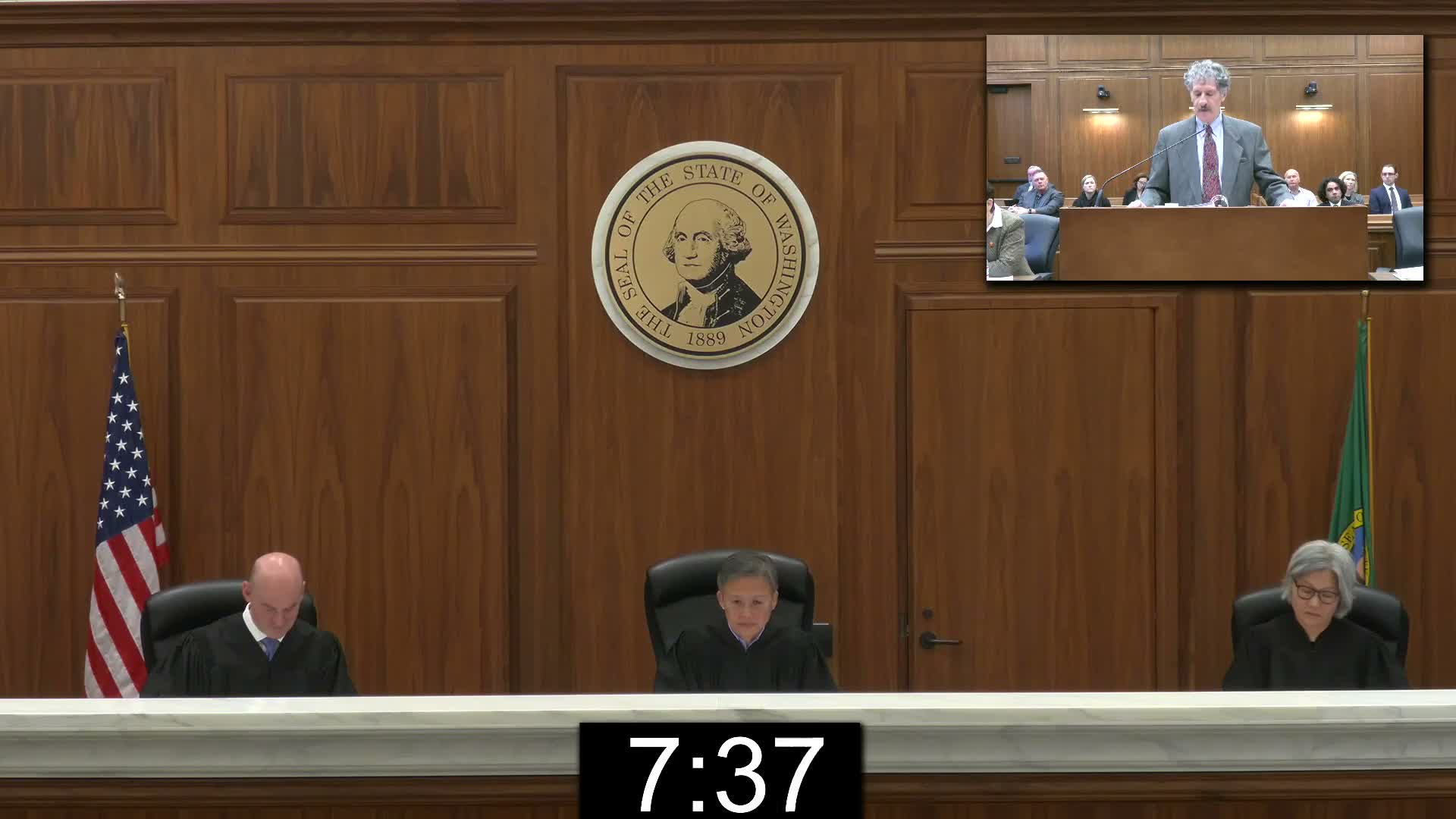
An appellate panel heard oral argument in West v. Fisherman's Finest over whether appellant Manel West was a "seaman" at the time he first developed symptoms while working and whether the appeal was properly treated as a final order.
Appellant counsel Timothy McCready told the court that West's record shows three employments in a roughly three-month period — two fishing trips to Alaska and an intervening shipyard assignment — and corrected an earlier filing to state the second fishing trip lasted 20 days. "Facts are important. Facts are stubborn, as John Adams said," McCready said, summarizing the employment timeline and noting the record lacks a written contract for the first fishing trip that was requested but not produced.
McCready urged the court to consider the totality of the circumstances across the employment window rather than allowing separate written contracts to be dispositive. He argued that whether a worker is a seaman under the Chandris standard is a question that can raise differing inferences appropriate for a jury when the facts are ambiguous. He also pressed that the injury began with numbness and was later exacerbated into pain and disability on the second fishing trip, a factual development that, McCready said, could preserve Jones Act remedies even if some work was land-based in between.
Respondent counsel Svitlana Spivak told the panel the appeal turns on a narrow legal question: under Chandris, when a worker accepts a new assignment that changes the nature of his duties entirely, the court should consider only that new assignment for status. She said West signed off the vessel, terminated that employment, then signed a separate shipyard agreement to perform different essential duties. "This appeal turns on a very narrow proposition," Spivak said, arguing the Chandris exception applies because the shipyard assignment differed in nature and control from vessel service.
Spivak contrasted conditions aboard the vessel — 16-hour shifts with the crew on board and maritime rules that applied — with dockside shipyard work governed by hourly pay and the Fair Labor Standards Act, where an employee could come and go. She argued those differences support treating the shipyard work separately when determining maritime status.
The panel pressed both sides on two linked issues: (1) whether the superior court's ruling addressed only seaman status during the shipyard work or instead disposed of all claims, and (2) whether West's later worsening of symptoms while at sea could create a question of fact sufficient to avoid summary judgment. One judge asked how the court could have dismissed the entire suit if a subsequent exacerbation on the vessel might qualify the plaintiff as a seaman at that later time; Spivak replied that the exacerbation theory was not properly preserved below and that West elected to appeal the order as final under the appellate rule.
The panel also discussed appealability and procedural posture, including whether the matter should be dismissed as non-final and remanded for further proceedings. Spivak argued the exacerbation claim was not fully briefed or preserved in the trial court; McCready countered that a stipulation seeking final judgment had been submitted to the trial court but not entered, and that treating the order as nonfinal would be a red herring that should not preclude review. He again urged reversal and remand, emphasizing the indivisibility argument about the injury's progression.
The court resolved a brief procedural dispute over argument time, allowed rebuttal opportunities, and concluded oral argument after counsel's final remarks. The panel did not issue a decision from the bench; disposition will follow in a written opinion.