Audit panel hears uneven rollout of Arizona school interoperability systems; vendors point to training and procurement gaps
Loading...
Summary
The Joint Legislative Audit Committee reviewed a special audit and vendor testimony showing that Arizona’s school interoperability program works in some counties but has uneven implementation, procurement questions and local disputes (including a $450,000 payment dispute with Pinal County).
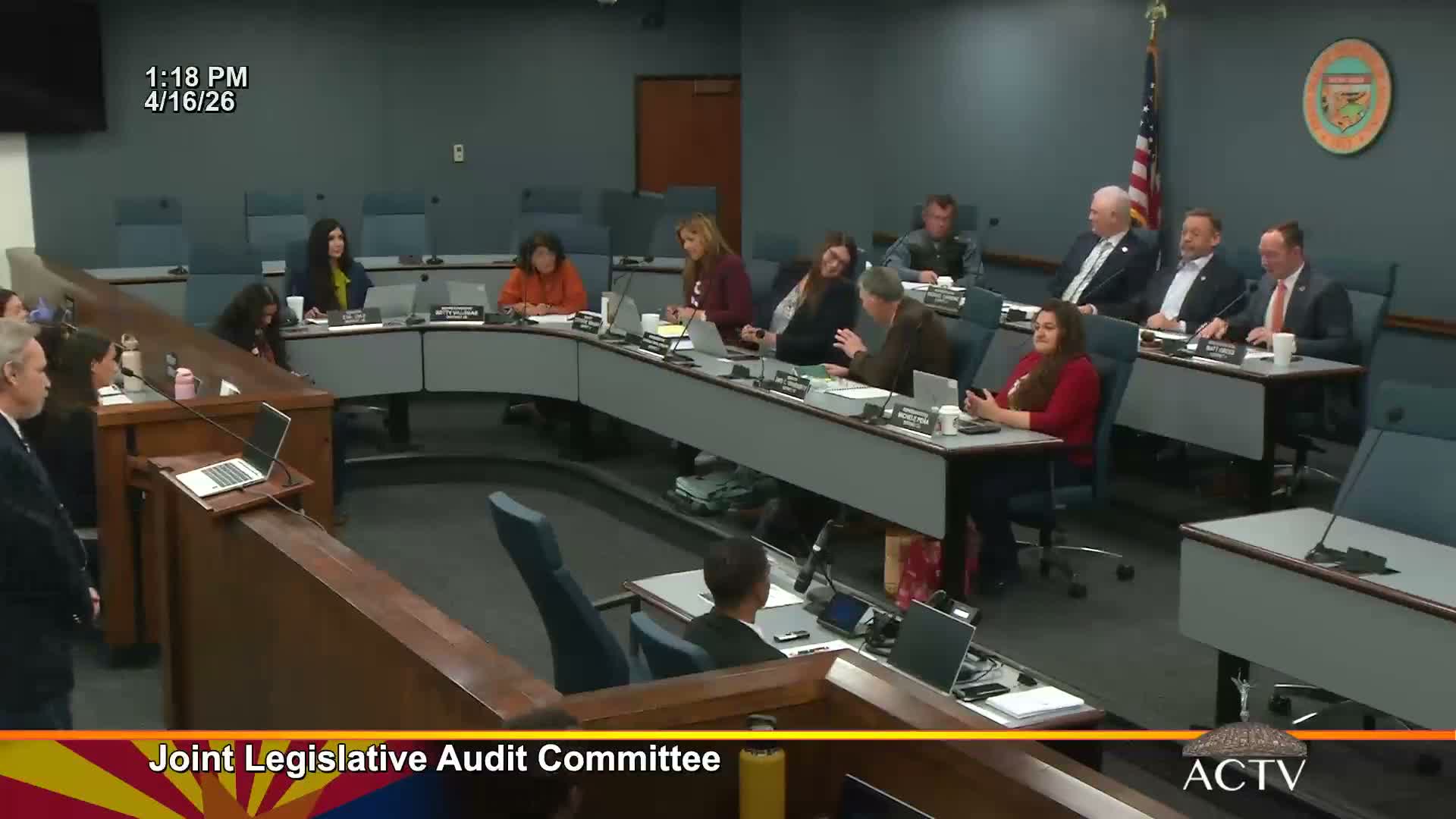
The Joint Legislative Audit Committee on April 16 heard testimony from the Auditor General and three vendors about Arizona’s school safety interoperability program, concluding the technology can improve response but that implementation and procurement have been uneven.
Lindsey Perry, the Auditor General, summarized JLAC’s special audit of the School Safety Interoperability Fund and systems, saying the office tested a sample of systems and examined whether fund expenditures were statutorily authorized, whether purchased systems met statutory requirements and whether procurement followed applicable standards. Perry told the committee that 12 of 14 law‑enforcement agencies provided requested follow‑up information but that La Paz and Pinal County did not. The audit report and a 4‑page highlights memo were in members’ packets for reference.
Senator Kevin Payne, who sponsored the appropriation after studying mass‑shooting after‑action reports, described demonstrations he’d seen in Yavapai County and urged wider adoption. “I want this everywhere,” Payne said, describing a panic‑button demonstration that alerted multiple dispatch centers and provided live camera and floor‑plan context to responding officers (Senator Kevin Payne).
Chrissy Coffey, chief executive officer of Mutual Link, told the committee her company’s platform connects schools, multiple PSAPs and law enforcement in parallel with 9‑1‑1, shares floor plans and live video on invitation, and creates push‑to‑talk channels across agencies. Coffey said Mutual Link has contracts in roughly 10 counties and that the platform can markedly reduce response time when it is operational and used. She disputed some audit test results as reflecting local operational readiness problems rather than an absence of technical capability.
Motorola Solutions representatives said their Maricopa County contract (procured in 2023) has deployed panic‑button technology to six county‑island schools and that Yuma County has installed systems in about 20 schools. Navigate360 told the committee that Cochise County is a success case: Ryan Sladek said 60 of 69 Cochise schools have completed an initial implementation phase, with ongoing phases for cameras, Wi‑Fi and device options.
Committee members pressed vendors on several consistent themes: (1) procurement and whether counties followed competitive bidding procedures; (2) the audit finding that only two of the tested systems demonstrated all five emergency functions auditors tested; (3) local operational readiness—floor plans, MOUs, training and staff turnover; and (4) a contract dispute between Mutual Link and Pinal County, where about $450,000 remained unpaid according to the committee’s packet. Mutual Link characterized the Pinal contract as 98% complete and said the county terminated the agreement after declining to allow final end‑to‑end testing; the company said many installations remain in use even while the dispute is unresolved (Chrissy Coffey; Mutual Link).
Members and vendors repeatedly framed the problem as “people and process” as much as technology: training, MOUs, PSAP and school coordination, and turnover were cited as frequent causes of implementation failures. Several members said the state needs clearer, consistent standards. Chair and members said they expect proposed legislation to direct the Department of Education or a School Safety Center to establish rules of the road and ongoing oversight for interoperability deployments.
The committee noted that some sheriff’s offices invited to testify did not appear or submitted insufficient responses to auditors (La Paz, Pinal, Mohave), and several members said more regular follow‑up is needed. The committee scheduled site tours (Yavapai County was specifically invited) and urged vendors and counties to provide additional documentation verifying how systems meet the audit’s statutory criteria.
The hearing closed with no formal votes; members said follow‑up briefings, documentary submissions and site tours will be requested as the audit team and JLAC continue oversight.