Lifetime Citizen Portal Access — AI Briefings, Alerts & Unlimited Follows
Sponsor says single rear license plate would save state money; committee members raise enforcement and safety questions
Loading...
Summary
Representative Mike Jones introduced HB 2,589 to require a single rear license plate; supporters cited multi-state precedents and fiscal savings (fiscal note cited $2.8 million), while law-enforcement and safety concerns prompted requests for more outreach and possible exemptions for commercial vehicles and ride-share services.
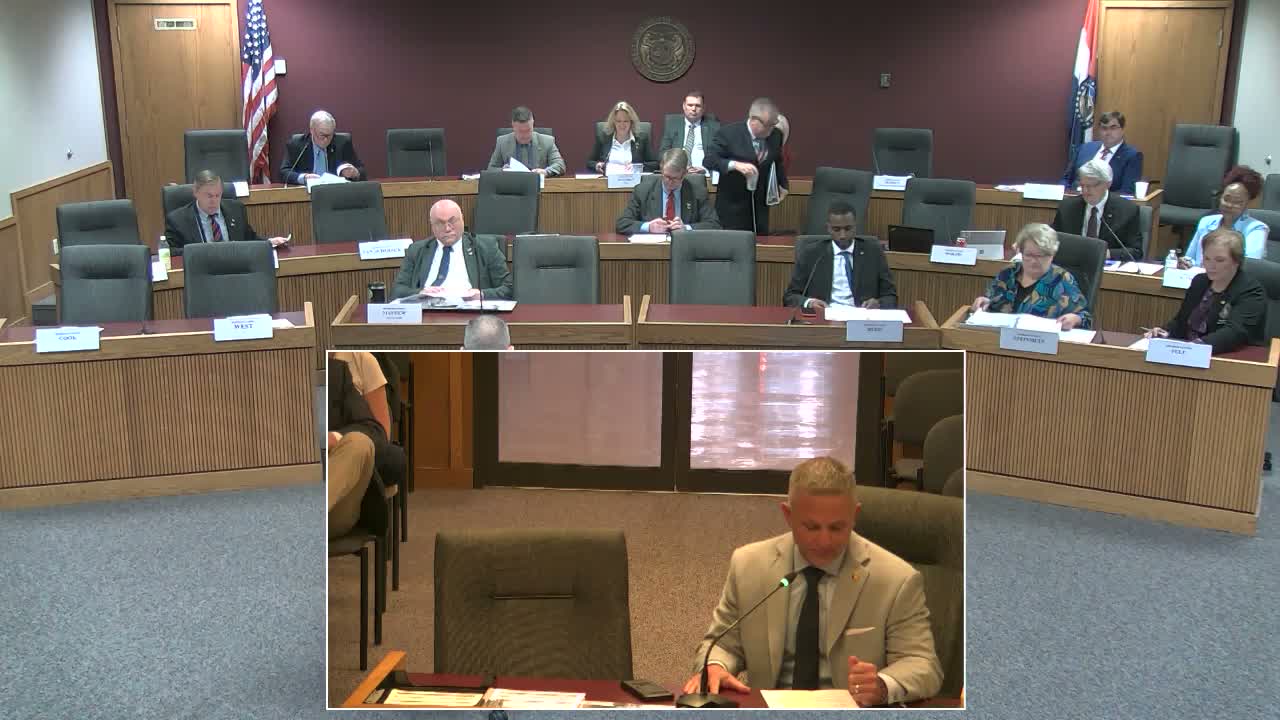
Representative Mike Jones (House District 12) told the Committee on Government Efficiency that House Bill 2,589 would require only a single license plate mounted on the rear of a vehicle, calling it "a simple and practical update to Missouri law."
"This bill makes a simple and practical update to Missouri law by requiring only a single license plate at the rear of the vehicle," Jones said in his opening remarks. He said many other states already require only a rear plate and argued the change would save money and remove a minor practical burden for vehicle owners.
Committee members raised a range of operational and safety questions. Representative Mayhew pointed out that commercial vehicles licensed over 12,000 pounds currently are treated differently and suggested the bill be amended to ensure every vehicle still displays at least one plate somewhere. Representative Jacobs said a prior discussion with the highway patrol indicated opposition and urged additional law-enforcement outreach before the committee advances the bill. Representative Boiko raised concerns about registration stickers and the potential for misuse or fraud if the front plate is eliminated.
Supporters, including Representative Murphy and others, argued that many states have moved to a single-plate standard without major problems and that savings would be meaningful. During discussion Representative Walton cited the fiscal note showing estimated savings of $2,800,000 even after accounting for an additional Department of Revenue employee. Sponsor Mike Jones acknowledged differing estimates were offered on the floor (one member referenced approximately $400,000; the fiscal note cited in committee was higher) and said he would work with members on technical fixes and exemptions (for example, vehicles-for-hire) where needed.
The committee questioned operational impacts—camera enforcement, evidence for victims of stalking, law-enforcement visibility and ride-share identification—and several members suggested narrowly tailored exemptions or further consultation with state troopers and local agencies. The sponsor agreed to seek additional input and supply further information to the committee.
No formal committee vote on HB 2,589 is recorded in the transcript; the chair closed the hearing after a period of questioning and thanked the sponsor for presenting the bill.
Representative Mike Jones said he would accept technical changes and additional outreach and that, if advanced, the bill would be revised to address concerns raised by law enforcement and members.