Get Full Government Meeting Transcripts, Videos, & Alerts Forever!
Get email alerts on the Centralized Facilities topic
No spam. Unsubscribe anytime.
Lowell subcommittee backs studying a centralized city–school facilities department, with workers’ jobs protected
Summary
A joint Lowell City facilities subcommittee agreed to report a motion supporting study of a centralized facilities department that would not eliminate union positions; members debated privatization and emphasized apprenticeships and trade staffing shortages.
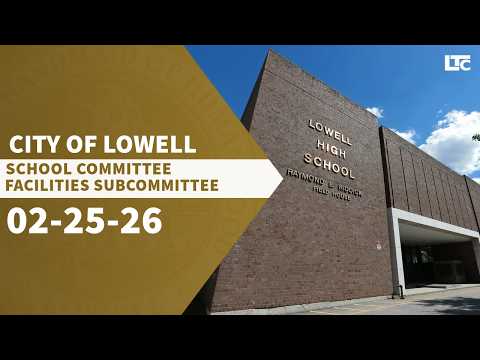
Councilors and school committee members at a Feb. 25 joint facilities subcommittee meeting agreed to advance a proposal to study a centralized facilities department to manage school and city building maintenance, while adopting language intended to protect existing unionized positions.
The motion, introduced by Councilor Robinson, sought to make clear that “as a result of the creation of a collaborative centralized facilities department, not 1 of our unionized employees will lose a position.” The motion was moved by Councilor Robinson and seconded by School Committee member Del Rossi and Councilor Scott; a roll call was taken though the transcript does not record a full named tally.
Why it matters: Lowell leaders said the city has invested in schools in recent years — Councilor Dakota noted the council has committed "over $72,000,000 to school facility improvements" since 2022 — but members said day-to-day maintenance remains challenged by a shortage of skilled trades and an expanding backlog of work orders. Participants proposed combining management while protecting current employees and expanding training and apprenticeship pipelines.
Councilor Robinson framed the proposal as collaboration, not privatization. “If we're talking about a centralized department that oversees the upkeep, maintenance, cleanliness, facilities that we all use in the city, we need all hands on deck,” Robinson said, adding he “would never support outsourcing or privatization of any function of this.”
School committee members said the scope matters. Del Rossi warned the original language appeared to transfer administrative and HR authority to the city and urged careful drafting: "If all this motion was was for the facilities and for the city and the school to collaborate, I'm all for it. This does not just combine the facilities. It combines administrative and human resource rights to the city of all this school funds." She asked that job descriptions and training be addressed before any vote.
Superintendent Liam Skinner and facilities staff described the current work-order process and gaps. Skinner explained the SchoolDude system and said most work orders are closed efficiently; he added some trades remain scarce. "We don't have a skilled elevator person. We don't have a skilled locksmith. We don't have sufficient painters or plumbers or carpenters," he said.
Speakers and public commenters emphasized practical steps: expanding trades staff, hiring master plumbers and HVAC technicians, and pulling vocational students into apprenticeships. Councilor Dakota noted recent data on work orders growth — FY2023: 551; FY2024: 1,900; FY2025: 3,200; and 2026-to-date: 1,500 — and said about 46% of calls were HVAC and plumbing, arguing that a hybrid model of master tradespeople plus apprentices would be cost-effective.
Union leaders and school employees urged protections and process clarity. Pina Maggio, a Lowell Public Schools employee and union vice president, said custodians were being treated unfairly and called for protocols that respect workers. A union president identified in the transcript as George asked the bodies to formally take privatization off the table to reduce anxiety among members.
Councilors responded in varying tones: some urged expressly removing privatization from consideration to reassure workers; others cautioned that removing it might limit negotiating options, and recommended keeping all solutions on the table during planning. City Manager Golden offered administration support to gather and vet proposals with the superintendent.
Next steps: The subcommittee agreed to reconvene in three to four weeks, meet with unions and stakeholders (including 17o5 and UTL), and produce a draft diagram of responsibilities and staffing to guide further decisions. The motion to report the committee’s intent and protect union positions was brought forward and taken up by roll call; the transcript records several "yes" responses but does not provide a full named vote tally.
Ending: The subcommittee emphasized collaboration, data-driven drafting of duties, and apprenticeship and training programs as central components of the next stage of work.