Get Full Government Meeting Transcripts, Videos, & Alerts Forever!
Get email alerts on the District Finance Audit topic
No spam. Unsubscribe anytime.
Auditors give Griffin‑Spalding an unmodified opinion, flag prior‑period accrual error tied to software change
Summary
Auditors reported a clean opinion on the district’s FY25 financial statements but logged a finding tied to an unreversed prior‑period accrual after the district implemented new payroll/accounting software; district leaders described new preapproval controls for federal grant drawdowns.
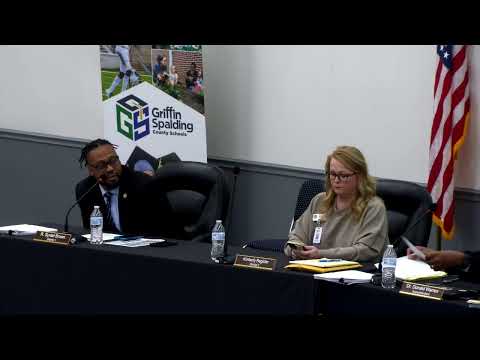
Auditors from Malden and Jenkins told the Griffin‑Spalding County Board of Education at its Feb. 10 work session that the district’s fiscal 2025 financial statements received a clean (unmodified) audit opinion, but the firm reported a single finding tied to a prior‑period accounting adjustment.
The auditor, Hope Pendergrass, said the finding arose after the district implemented a new financial system (Munis) and moved payroll and pay schedules. An adjustment for the prior fiscal year was not reversed in time, producing a technical misstatement that required a prior‑period adjustment and the return of drawn federal funds that had been estimated but not actually expended. Pendergrass emphasized that “there was no money missing” and the general fund did not bear the cost, but GDOE required the corrective entry because of its effect on grant carryover.
Board members pressed finance staff on the differences between prior guidance and the auditor’s approach, and on what controls the district has put in place. Finance director Mr. Jones (identified in the meeting as the district finance lead) and auditors said year‑end drawdowns are sometimes done on an estimated basis, especially for salary accruals tied to summer pay, but that the timing of multiple operational changes contributed to the oversight. Jones described new procedures requiring preapproval and a monthly reconciliatory review: expenditure reports now go to program managers for review and sign‑off before drawdowns, and biweekly reviews with federal‑programs leadership were instituted to catch anomalies earlier.
Superintendent Dr. Donald Warren told the board the district has started biweekly internal control reviews involving federal programs and finance staff and offered to brief board members in small groups on the revised process. Several board members asked for written documentation of the new approval steps and requested that the controls be reviewed at an upcoming board retreat.
The board voted earlier in the meeting to approve the consent agenda, which included accepting the audit presentation packets; the vote was recorded as 5–0.