Get Full Government Meeting Transcripts, Videos, & Alerts Forever!
Get email alerts on the County Hospitals topic
No spam. Unsubscribe anytime.
Lawmakers consider bill aimed at leveling the playing field for county hospitals
Summary
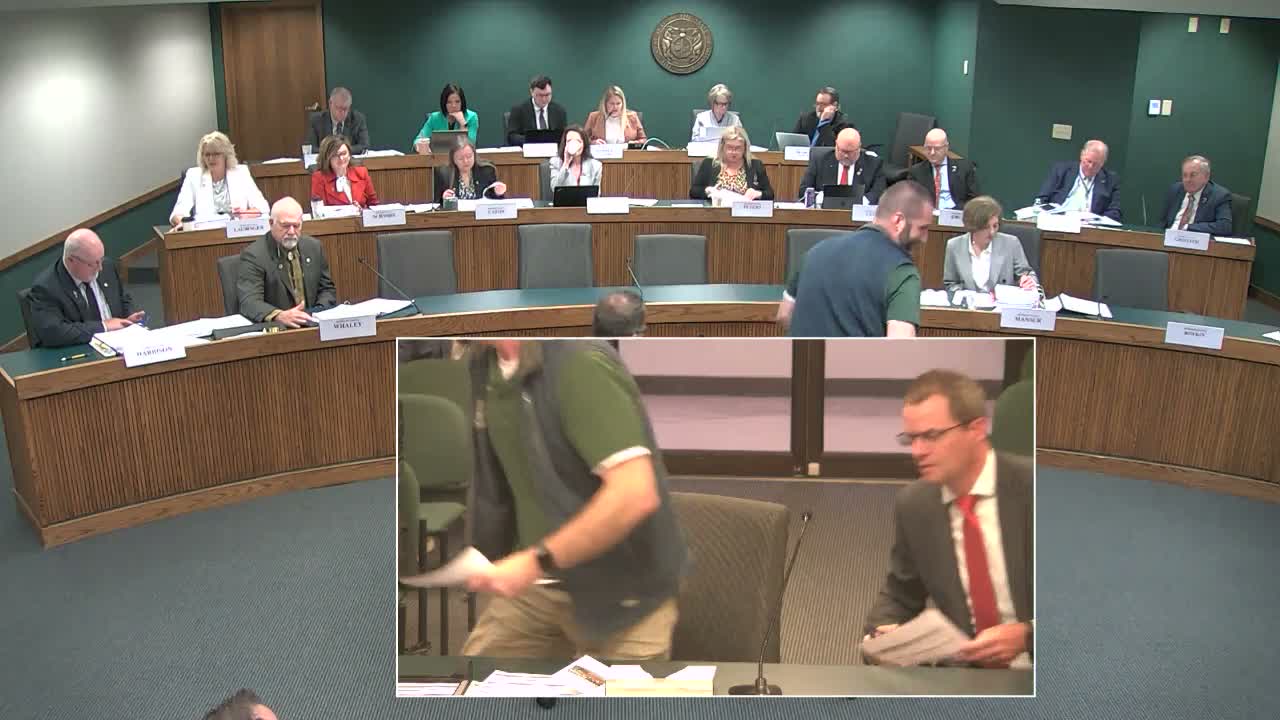
Representative Don Mayhew presented House Bill 2,903 to change reporting, board-constitution, and open-records provisions affecting county and district hospitals, seeking parity with privately held hospitals. Supporters from Phelps Health argued the changes would reduce administrative burdens and protect sensitive competitive information.
Representative Don Mayhew told the committee House Bill 2,903 is intended to address competitive disadvantages faced by county and district hospitals when competing with private systems. "It simply boils down to fairness," he said, arguing county hospitals are subject to public-entity rules the private competitors are not.
Dr. Casey Burton, executive director for research and governmental affairs at Phelps Health, testified in support and said county and district hospitals face statutes and reporting requirements that now operate as burdensome "extra baggage." Burton cited three principal recommendations forming the bill's core: align board-member qualifications with state standards to reduce conflict-of-interest risks; move an annual financial-reporting deadline later in the year (six months after fiscal-year end) to match state-auditor timelines; and add narrowly tailored carve-outs to the Sunshine Law to prevent competitive misuse of strategic planning, wage and compensation data, and certain contracts.
Jason Shenafield, Phelps Health CEO, said the bill is intended to free hospital leadership to focus on patient care by reducing time spent responding to records requests and monthly board preparation. Committee members questioned how the bill preserves transparency while protecting competitive information; witnesses said monthly financial reports and core community-accountability materials would remain publicly available while narrow commercial carve-outs would prevent bad-faith competitive exploitation.
The hearing concluded after committee questions; the transcript records supportive testimony and industry explanations but no committee vote on the bill in this segment.