Lifetime Citizen Portal Access — AI Briefings, Alerts & Unlimited Follows
Presenter tells committee Dogs for Our Brave trains service dogs through long, costly program and seeks state support
Loading...
Summary
An executive director for Dogs for Our Brave briefed a legislative committee on a 24-month training program for rescued service dogs, saying training costs top $50,000 per dog and lifetime support can total $75,000–$125,000 per veteran-team. Members pressed on fundraising and facility expansion plans.
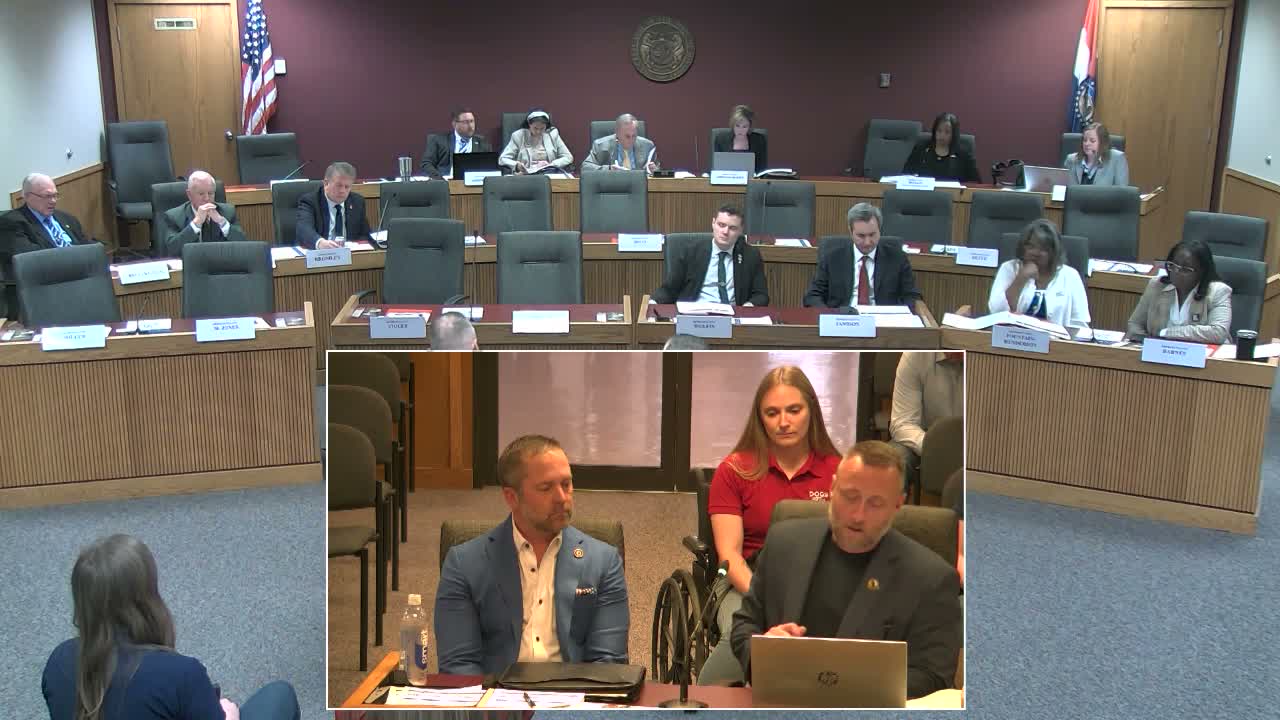
An executive director of Dogs for Our Brave told the Infection Armed Forces Committee that the nonprofit’s service-dog program pairs rescued dogs with veterans and provides lifetime team support, but that the work is expensive and time-consuming.
"It's a 24 month training process," the presenter said, adding that training alone costs "$50,000 plus" and that the organization is investing roughly "$75,000 to $125,000 into every VST team" over the life of the team. The presenter described core daily-living skills the dogs are trained to perform — retrieval of keys and clothing, opening and closing appliances, bracing and a "get help" command — and said the program aims to reduce isolation and improve veterans' confidence.
The presenter said the organization bases its approach on a "mind, body, spirit" training model and tailors the final six months of training to the veteran’s specific needs. "As long as they continue to need another service dog, we're gonna provide that service dog for them for the life of the veteran," the presenter said.
During questions, Representative Washmore asked about fundraising and requested a field trip; the presenter said most funding has come from private donations and occasional large fundraisers and that the group has not yet built major corporate partnerships. The presenter said the current training facility is about 1,700 square feet and that a new 17,000-square-foot facility planned for later this year would raise capacity from roughly eight dogs to about 15.
Committee member Murphy Brumley asked what would happen if a veteran dies while still owning a service dog; the presenter said decisions would be made case-by-case, with the veteran’s family given priority, and that older dogs might be repurposed as pets or re‑trained for other veterans.
The presenter sought state partnership to expand reach in Missouri and said the group hopes to align more closely with other veteran-service organizations. The committee offered to follow up; the chair thanked the presenters and signaled further conversations offline.
The presentation and Q&A combined demonstration, program detail and funding questions; no formal action or vote was recorded during this session.