Get Full Government Meeting Transcripts, Videos, & Alerts Forever!
Get email alerts on the Forensic Audit topic
No spam. Unsubscribe anytime.
Forensic review: auditors find documentation gaps and about $984,000 in unreclaimed YEP expenses
Summary
Wipfli auditors told the Kankakee SD 111 board they found pervasive documentation gaps in the Youth Empowerment Program (YEP) accounting and identified roughly $984,000 of district‑funded expenses that were not submitted for reimbursement; the district has filed a claim with the Court of Claims and expects about $1.1 million pending appropriation.
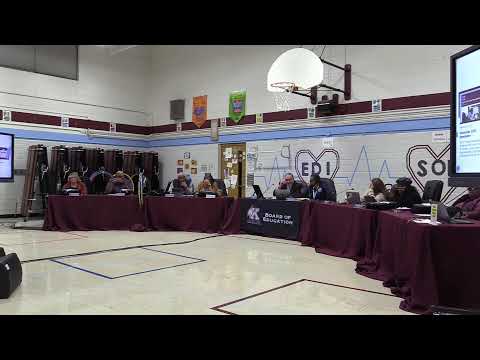
Wipfli directors presented a phased forensic review of the Youth Empowerment Program (YEP), telling the Kankakee SD 111 Board of Education that financial records in the district’s accounting system showed extensive documentation gaps and a large sum of reimbursable expenses that had not been claimed.
"Overall, within the accounts that we looked at related to the grant, there were 3,482 different transactions," Christina Solomon said. "In general, out of the 3,482 transactions that we reviewed, we noted some level of deficiency on almost 98% of those." Solomon described missing timesheets for payroll items, limited itemized invoices for services, journal entries without supporting explanations, and a lack of documented review or approval on many transactions.
Mark Corey, Wipfli’s forensic services lead, told board members the audit used Skyward accounting records and that reviewers identified a delta of roughly $984,000 in expenses that appeared to have been incurred under the YEP grant but were not submitted for reimbursement before the grant closed. Corey said the firm worked to assemble records that could still be submitted.
Board members asked whether paper records might change the findings. Corey and Solomon said the team relied primarily on Skyward because paper files from that period were not well organized and locating them would have required a costly, open‑ended search. "The fact that they weren't in Skyward doesn't mean that those [paper] documents didn't exist," Corey said, "but it wasn't maintained in Skyward." Wipfli therefore did not undertake a full paper‑records excavation given uncertain payoff.
The board was told that because claims were not submitted during the grant period, the district pursued recovery through the Court of Claims. A board member reported a judgment/stipulation for a higher amount than initially submitted and said the district expects an award of about $1,100,000, but distribution depends on a legislative appropriation and comptroller disbursement.
Board President Bolland emphasized responsibility for timely submissions: "We didn't submit it on time," he said, noting that submitting reimbursements contemporaneously would likely have reduced the district’s exposure. District leadership said new processes are in place—receipts, timesheets and annual grant audits—to prevent recurrence.
The presentation included recommendations to strengthen documentation standards, require contemporaneous approvals for payroll and vendor charges, and maintain clearer audit trails in Skyward or a designated document‑management system. The board said it may ask auditors and staff follow‑up questions and review recommended policy changes in finance or policy committee meetings.
The board did not take a formal vote on policy changes during the meeting; auditors said they would provide additional follow‑up materials and that staff would continue working the Court of Claims matter.