Get Full Government Meeting Transcripts, Videos, & Alerts Forever!
Get email alerts on the Energy Policy topic
No spam. Unsubscribe anytime.
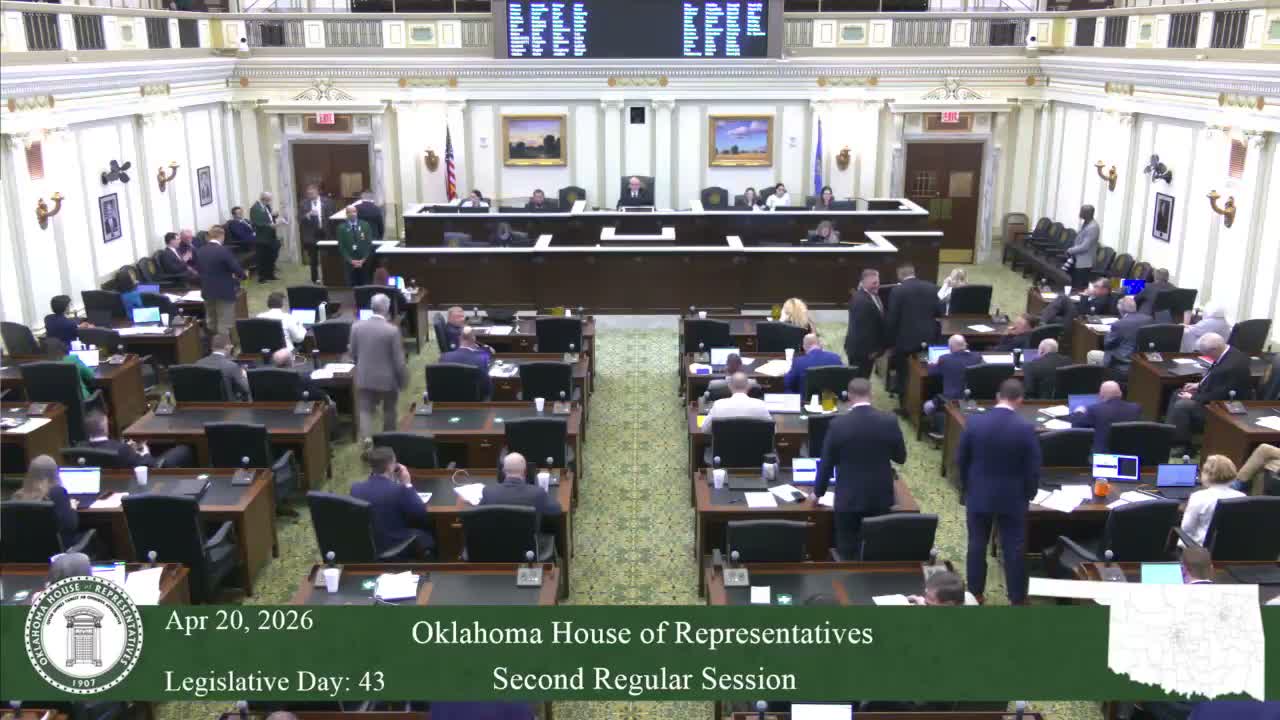
House approves Senate Bill 14 39 limiting certain climate-related claims against oil and gas; opposition says it shields industry from accountability
Summary
The House passed Senate Bill 14 39 after extended debate about whether the measure would bar suits tied to alleged climate harms; proponents said it prevents speculative lawsuits, opponents called it a carve-out that limits accountability. Final vote was 74–16.
The Oklahoma House approved Senate Bill 14 39 on final reading after prolonged debate about its scope and effect on liability for alleged climate-related harms. The bill’s sponsor said it is intended to protect the state’s energy industry from speculative litigation.
Pro Tem Moore, the bill’s floor sponsor, described the measure as creating stability by "shutting down speculative claims, tying liability to actual violations of emissions, and provable harm." He argued the bill prevents courts from being clogged by cases that lack provable, actionable harm.
Representative Alonzo and other opponents framed the bill as removing legal accountability from large corporations and shifting costs to taxpayers and families. "This is a bill about accountability," Alonzo said. "Do we stand with Oklahoma families, cities, and taxpayers who deserve the ability to seek justice? Or do we stand with a policy that removes that right?" he asked.
Members also debated the bill’s language, including a clause that lists several causes of action "but is not limited to," raising concerns about breadth and whether the bill might be used to dismiss claims beyond the intended scope. Representative Archer noted federal greenhouse gas reporting (40 CFR 98) is already required for covered facilities; the sponsor said unlawful discharges covered by federal rules would not be exempted.
After final debate and roll call, the clerk announced 74 ayes and 16 nays, and the presiding officer declared the bill passed. Supporters said the measure preserves affordable energy and prevents speculative legal exposure; opponents said it risks placing industry above the law.
The transcript does not record technical amendments or implementation steps; members urged further clarity on definitions such as "greenhouse gases" and on how the bill would interact with existing federal reporting and negligence law.