Get Full Government Meeting Transcripts, Videos, & Alerts Forever!
Get email alerts on the Utilities Governance topic
No spam. Unsubscribe anytime.
Senate approves bill letting outside counties appoint voting members to large municipal utility boards
Summary
Senate Bill 2,102 requires large municipal electric utilities that serve significant populations outside their home county to add a voting board member representing those outside counties; debate focused on whether the measure targets a single utility and concerns about accountability and proportionality.
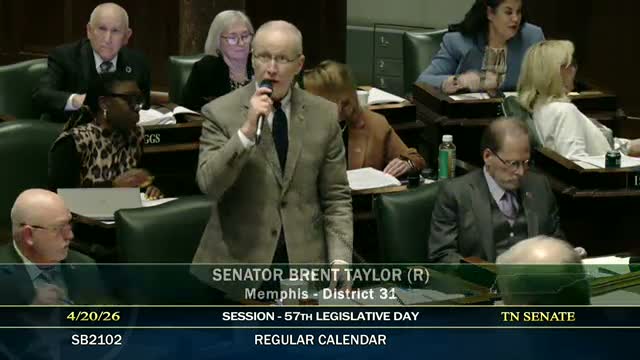
Nashville — The Senate narrowly approved Senate Bill 2,102 on third reading, a proposal to allow county mayors in certain outside counties to appoint one voting member to the board of large municipal electric utilities that serve 50,000 or more customers outside their home county and at least 3,500 customers in the appointing county.
Sponsor Senator Taylor said the measure is about ensuring representation for ratepayers: "If you believe that people who pay electric rates should be represented on the utility board, then you should vote yes." (Senator Taylor)
Opponents, including Senator Yarborough and others, argued the bill is targeted at a single utility (NES) and warned it could transfer power away from the locally elected board and reduce accountability. Senator Yarborough said the legislation risks creating disproportionate voting power for outside counties and described it as a "power grab" targeted at one municipality. (Senator Yarborough)
Supporters, including Leader Johnson and Senator Pote, cited problems experienced during a severe ice storm and said constituents in surrounding counties lacked direct representation on the utility board. Senator Pote said his constituents had "no voice" and called the measure an accountability fix. (Leader Johnson; Senator Pote)
After extensive floor discussion and adoption of a committee amendment to add conditions for qualification, the bill passed by roll-call (Ayes 21, Nays 11).