Get Full Government Meeting Transcripts, Videos, & Alerts Forever!
Get email alerts on the Micromobility topic
No spam. Unsubscribe anytime.
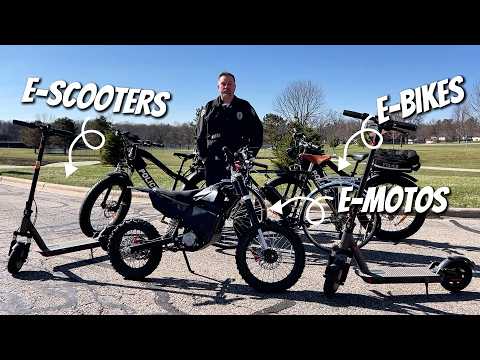
Verona police chief explains e‑bike classes, legal limits for e‑scooters and electric mini‑motorcycles
Summary
Chief Tresser of the Verona Police Department and a local bike-shop representative outlined the three classes of e-bikes, said Wisconsin treats e-bikes as bicycles, and warned that electric mini‑motorcycles are not allowed on Verona streets or bike paths and may prompt police contact.
Chief Tresser, chief of the Verona Police Department, said the department is clarifying how different electric micromobility devices are treated under Wisconsin law and under local enforcement. “They may seem similar, but the laws are very different,” Tresser said, and the department warned that riding certain electric mini‑motorcycles in public can lead to police contact.
Allie, a representative of Atkins Rona Bicycles Shop, described the three classes of e-bikes, saying, “The first class of e bike is pedal assist only up to 20 miles per hour. The second class of e bike is pedal assist and throttle assist up to 20 miles an hour. And the third class of e bike is pedal assist up to 28 miles per hour.” The distinctions affect how the vehicles are used and where they are permitted.
Tresser said e-bikes are considered bicycles under Wisconsin law and therefore must follow the same rules of the road, including obeying traffic controls and yielding where required; e-scooters are legal when riders follow traffic laws and ride responsibly. He told listeners that electric mini‑motorcycles — described in the briefing as e-motors — are treated differently: they are not legal on Verona’s streets, sidewalks or bike paths, may be used only on private property with permission, and riding them in public will prompt police contact, he said.
A staff member emphasized safety measures for anyone using micromobility devices: “Wear a helmet, obey traffic laws, stop at stop signs, and watch for others,” the staff member said, noting that streets and trails are shared spaces.
The briefing did not cite a specific Wisconsin statute or ordinance; the department characterized the rules as state law and local enforcement practice. Officials did not announce any new ordinances or changes to enforcement policy during the remarks.