Get Full Government Meeting Transcripts, Videos, & Alerts Forever!
Get email alerts on the Charter Schools topic
No spam. Unsubscribe anytime.
Resident urges board to resist new charter school, board explains limited oversight role
Summary
A public commenter told the Nassau County School Board a new charter school is unnecessary and would drain local funding; board members and staff clarified that under current state law charter schools operate under their own boards and the district's role is limited to providing certain services.
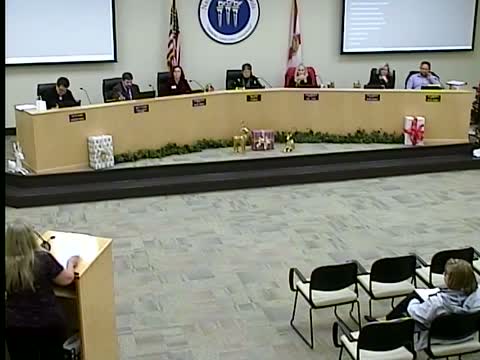
Karen Dodson addressed the board during public comment on Dec. 11 and urged members to oppose the establishment of another charter school in Nassau County. “We certainly do not have any failing schools in Nassau County,” Dodson said, arguing local schools offer varied programs and that a second classical-style charter is unnecessary. She warned that charter schools “divert funding from public schools” and emphasized that the district must continue supplying administrative and educational services to charters while receiving limited administrative reimbursement.
Dodson cited administrative costs and alleged that the district can charge at most a 5% administrative fee to charter schools. She also argued that charter operators do not follow the same state guidelines in the same way public schools do and that creating a charter during a likely millage expiration would strain district finances and staff in areas such as ESE, IT and test administration.
Board and staff clarified the district’s limited oversight role under current state law: charter schools operate under their own boards of directors and are largely autonomous, though the district must provide certain ESE and administrative services. Dr. Burns and other staff noted the law has changed from prior years and that the district’s authority over charter approval is constrained.
The board also discussed the Cornerstone charter application and was told written comments were due that day; staff warned that the public comment window is for comments rather than a question-and-answer session. Staff proposed returning proposed policy language on related matters (for example, military regalia) in January.
Why it matters: The exchange underscores local concerns about district resources and the limits of the board’s authority when charter applications are filed under current state law. The transcript records community opposition and staff explanation of statutory constraints but no district-level denial or approval action at the meeting.
Next steps: Comments on the Cornerstone application were due the day of the meeting; staff said policy changes or recommended language (where needed) will be brought back to the January meeting for board consideration.